A chipped tooth can happen in a single moment – biting unexpectedly on a hard olive stone, taking a knock during sport, or finding an old filling has given way. Although a small chip may not hurt, it can catch on your tongue, alter the look of your smile or leave the tooth more vulnerable to further damage. There are several effective ways to fix chipped teeth, but the right choice depends on how much tooth structure is affected, where the tooth sits, your bite and the long-term result you want.
At Slievemore Dental, treatment is planned around more than covering a visible flaw. A careful assessment helps protect the tooth, restore comfortable function and create an aesthetic result that blends naturally with your smile.
First, assess whether a chipped tooth is urgent
A tooth chip is not always a dental emergency, but it should not be ignored. Contact a dentist promptly if the tooth is painful, sensitive to hot or cold, sharp, loose, bleeding, or if a large piece has broken away. These signs can suggest that the inner tooth tissue, nerve or root may be affected.
If possible, keep any broken fragment in milk or saliva and bring it to your appointment. Do not try to glue it back yourself. Over-the-counter temporary repair kits can sometimes cover a sharp edge briefly, but they are not a substitute for clinical treatment and may complicate a precise repair.
Until you are seen, avoid biting on the affected side, choose softer foods and protect your cheek or tongue from a sharp edge with orthodontic wax if needed. Same-day assessment is particularly sensible after a blow to the face, even when the tooth initially seems fine. Trauma can occasionally cause problems that develop later.
7 ways to fix chipped teeth
1. Smoothing and polishing a very minor chip
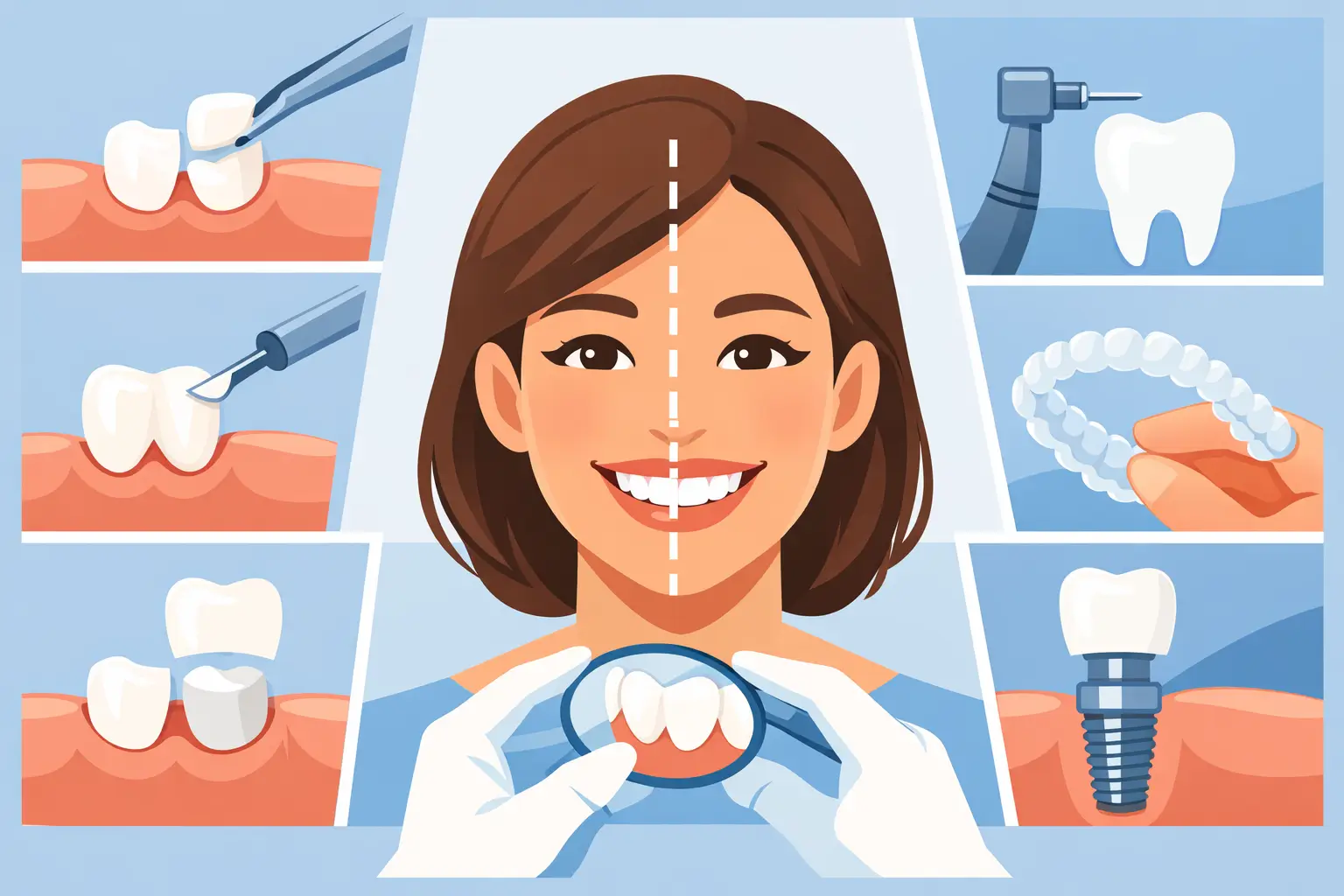
When only a tiny amount of enamel has chipped, reshaping and polishing may be all that is required. Your dentist gently smooths the rough area and refines the tooth’s edge so it feels comfortable and looks balanced.
This is the most conservative option because no restoration is added. However, it is only suitable where smoothing will not make the tooth look noticeably shorter, uneven or out of proportion. It also will not address deeper cracks, decay or weakened enamel.
2. Composite bonding for a natural-looking repair
Composite bonding is one of the most common solutions for small to moderate chips, particularly on front teeth. A tooth-coloured resin is carefully layered onto the damaged area, shaped to recreate the missing enamel and polished to match the surrounding tooth.
High-quality bonding is an artistic as well as clinical procedure. The shade, translucency, surface texture and edge shape all influence whether the repair disappears into the smile or looks flat and obvious. Digital photography and detailed shade selection can help achieve a refined result.
Bonding is usually minimally invasive and can often be completed in one visit. The trade-off is that composite can stain, wear or chip over time, especially for patients who grind their teeth, bite pens or frequently eat hard foods. It can, however, often be repaired or refreshed conservatively.
3. Reattaching the tooth fragment
If the broken piece is intact and arrives quickly, it may sometimes be possible to bond it back into position. This can preserve your own enamel and provide an exceptionally natural colour match.
Fragment reattachment is not appropriate in every case. The piece must fit well, the fracture pattern needs to be favourable, and the tooth must be stable. Your dentist will also assess whether the repair is likely to withstand your bite or whether a more protective solution would offer greater longevity.
4. A ceramic veneer for chips and cosmetic concerns
A veneer is a thin, individually crafted ceramic shell bonded to the front surface of a tooth. It can be an excellent option where a chipped front tooth is also discoloured, worn, unevenly shaped or affected by several previous composite repairs.
Ceramic has beautiful light-reflecting properties and resists staining better than composite. Veneers can therefore offer a highly natural, durable aesthetic result when planned carefully. They are not simply a cover-up: the tooth, gum line, facial proportions and bite all need to be considered.
Some veneers require a small amount of enamel preparation, although the amount varies by case. Once a tooth has been prepared for a conventional veneer, it will generally need a restoration in the future. This makes conservative assessment essential, particularly for younger patients or those with minimal damage.
5. A crown when the tooth needs full protection
If a substantial portion of the tooth has fractured, or if a large old filling has weakened the remaining structure, a crown may be recommended. A crown covers the tooth above the gum line and is designed to restore strength, shape and appearance.
Modern ceramic crowns can be made to look remarkably lifelike, with detailed attention to colour, contour and translucency. They are often a sensible choice for back teeth that absorb strong chewing forces, as well as front teeth that have been extensively damaged.
Crowns involve more preparation than bonding or a veneer, so they are not usually the first choice for a tiny chip. The benefit is protection where a smaller repair could fail repeatedly or leave the tooth at risk of splitting further.
6. Root canal treatment followed by restoration
A deep chip can expose or inflame the pulp – the soft tissue containing the tooth’s nerve and blood supply. Symptoms may include lingering sensitivity, spontaneous pain, swelling or a darkening of the tooth. In these cases, root canal treatment may be needed before the visible damage is restored.
The aim is to remove infection or damaged pulp tissue, preserve the natural root and allow the tooth to function comfortably again. Depending on how much healthy tooth remains, the final restoration may be composite bonding, a veneer or a crown.
This is why a painless chip still deserves an examination. A dentist can use clinical tests and digital imaging to determine whether the tooth is healthy beneath the surface, rather than judging the problem by appearance alone.
7. Orthodontic or bite treatment for repeated chipping
When teeth chip more than once, the question is often not simply how to repair them, but why they are breaking. A heavy bite, crowding, a protruding tooth, night-time grinding or acid wear can place excessive pressure on particular edges.
In some situations, orthodontic treatment can improve tooth position and bite balance before cosmetic repairs are completed. For patients who clench or grind, a custom night guard may protect bonding, veneers and natural enamel. Addressing the cause can make the final result more predictable and reduce the cycle of repeated repairs.
How a dentist chooses the right repair
The best solution is rarely determined by the size of the chip alone. A small chip on a front tooth may be highly visible and call for meticulous aesthetic planning, while a similar defect on a molar may need stronger protection because of chewing forces.
Your dentist will look at the depth and direction of the fracture, the tooth’s vitality, existing fillings, gum health and how your upper and lower teeth meet. They will also discuss your expectations. Some patients want the most conservative same-day option; others prefer a ceramic restoration designed for colour stability and long-term aesthetics.
For more complex damage, a multidisciplinary approach can be valuable. Restorative, cosmetic and bite considerations should work together, particularly when several teeth are worn, fractured or affected by old restorations.
Can a chipped tooth heal by itself?
Enamel does not regenerate, so a chipped tooth will not grow back. Very minor roughness may not require a restoration, but it should still be checked to ensure there is no crack or damage beneath the surface. Leaving a sharp or fractured edge untreated can irritate soft tissues and may allow the chip to worsen over time.
Avoid filing the tooth at home. Even a small amount of unnecessary enamel removal can change the bite, increase sensitivity or make a later repair less conservative. A precise repair starts with preserving as much healthy tooth structure as possible.
A chipped tooth does not have to become a lasting source of discomfort or self-consciousness. Prompt, gentle assessment gives you clear options – from a simple polish to a digitally planned restoration – and helps you choose a result that feels secure, functions comfortably and looks like your own smile.