A veneer should not look like a veneer. The most successful dental veneers Dublin patients choose are designed to look proportionate to the face, believable in daylight and comfortable in everyday life – whether you are speaking in a meeting, laughing with friends or enjoying a meal.
Veneers can make a meaningful difference to a smile affected by chips, worn edges, uneven shape, small gaps or long-standing discolouration. They are not, however, a one-size-fits-all cosmetic treatment. A refined result begins with careful assessment of your teeth, gums, bite and expectations, followed by a plan that protects as much healthy tooth structure as possible.
What are dental veneers?
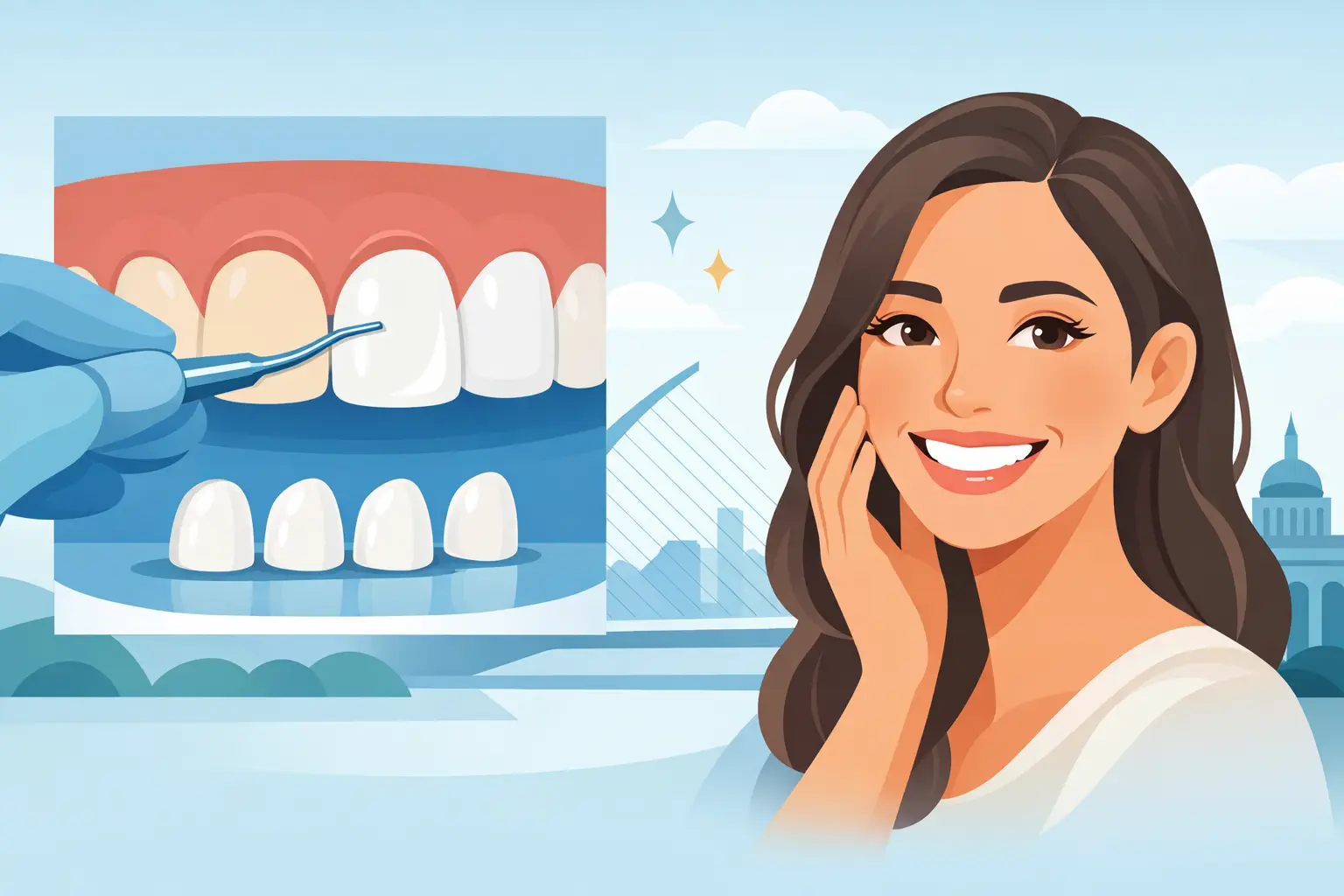
A veneer is a very thin, custom-made facing bonded to the front surface of a tooth. Modern porcelain veneers are often chosen for their ability to reflect light in a way that closely resembles natural enamel. They can be made individually to improve one tooth, or planned across several visible teeth to create a more balanced smile.
Composite veneers use tooth-coloured resin rather than porcelain. They can be an excellent option in the right circumstances, particularly where changes are modest, treatment needs to be more conservative, or a repair may be required. Porcelain is generally more stain resistant and retains its surface finish for longer, while composite can often be repaired more easily. The right material depends on the condition of your teeth, the degree of change required and how you use your bite.
Veneers are commonly considered for teeth with minor fractures, irregular contours, spaces between teeth, enamel wear, or colour that has not responded as hoped to whitening. They can also help create greater visual symmetry where tooth size or shape is naturally uneven.
When veneers may not be the first choice
A cosmetic concern is not always best solved with veneers. If teeth are healthy but slightly crowded or spaced, orthodontic treatment may create a more conservative improvement by moving the natural teeth into a better position. Whitening may be sufficient for generalised staining, while composite bonding can address a small chip with minimal intervention.
Teeth with extensive decay, large failing fillings or significant structural damage may need a crown or another restorative solution instead. If a tooth has active gum disease, untreated decay or pain, these issues must be stabilised before cosmetic work is considered. Healthy gums are fundamental to an attractive, long-lasting veneer result.
Your bite matters too. People who clench or grind their teeth can still be suitable for veneers, but they may need a protective night guard and a carefully managed design. Where there is severe tooth wear or a complex bite relationship, veneers may form only one part of a wider restorative plan. A dentist should never plan front teeth in isolation when the way your whole mouth functions tells a different story.
The planning behind natural-looking veneers
Natural aesthetics are about far more than selecting a bright shade. A well-planned smile takes account of facial proportions, lip movement, gum levels, the shape of neighbouring teeth and the warmth or translucency of your existing enamel. Teeth that are too white, too uniform or too bulky can draw attention for the wrong reasons.
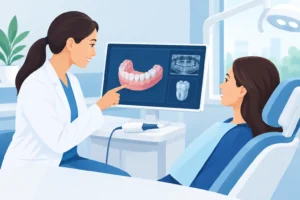
At Slievemore Dental, digital workflow can support precise planning before treatment begins. Digital records, photographs and bite assessment help the clinical team understand how your teeth meet and how a proposed change will sit within your smile. In some cases, a diagnostic preview or temporary trial smile can help you assess the intended shape and length before the final restorations are made.
This stage is particularly valuable when several teeth are being treated. It allows changes to be discussed clearly, rather than relying on vague ideas of a ‘perfect’ smile. You may prefer a subtle refinement that preserves individual character, or a more noticeable improvement. Both can be appropriate, provided the result is healthy, functional and suits you.
What the veneer treatment process involves
Treatment usually begins with a detailed consultation. Your dentist will examine the teeth and gums, discuss your concerns, review your dental history and assess whether veneers are clinically appropriate. X-rays or digital scans may be recommended where they add useful information.
For porcelain veneers, a small amount of enamel is often shaped to create space for the restoration and avoid an over-contoured result. The amount varies considerably. Some cases require minimal preparation, while others need more careful reshaping to correct position, colour or form. It is important to understand that conventional veneer preparation is irreversible, even when it is conservative.
Once the teeth are prepared, precise impressions or digital scans are used to create the veneers. Temporary veneers may be placed where appropriate while the final porcelain is being produced. At the fitting appointment, each veneer is checked for fit, shade, shape and bite before it is bonded securely to the tooth.
The process should feel unhurried. Small adjustments at the planning and fitting stages can have a significant effect on comfort and appearance. If you are nervous about dentistry, tell your dentist from the outset. A calm pace, clear explanations and gentle care can make treatment far more manageable.
How long do veneers last?
Porcelain veneers can last many years with thoughtful planning, excellent bonding and consistent aftercare. Their lifespan is not fixed. It is influenced by bite forces, oral hygiene, dietary habits, smoking, teeth grinding and whether the surrounding tooth and gum tissues remain healthy.
Veneers do not decay, but the natural tooth around them still can. Brushing twice daily with fluoride toothpaste, cleaning between the teeth and attending regular check-ups and hygiene visits help protect the margins where veneer and tooth meet. If you grind your teeth, wearing a professionally made night guard is a practical way to reduce unnecessary pressure.
Avoid using veneered teeth as tools to open packaging or bite hard objects. Very hard foods are not forbidden, but repeated force on the front teeth increases the risk of chipping any restoration, as well as natural enamel. If a veneer becomes chipped, loose or uncomfortable, contact your dentist promptly rather than waiting for a routine appointment.
Questions to ask before choosing dental veneers in Dublin
The decision to have veneers should feel informed, not rushed. Ask what alternatives could achieve your goal, how much tooth preparation is anticipated and what maintenance will be needed in the years ahead. You should also ask how your bite has been assessed, especially if you wake with jaw tension, have worn teeth or know that you clench.
It is reasonable to discuss shade in detail. Many patients want a brighter smile, but a bright result can still look natural when it harmonises with skin tone, facial features and the teeth that will remain untreated. If whitening is planned for other teeth, it is usually best to complete this before the final veneer shade is selected, as porcelain itself will not whiten later.
Cost should be transparent and considered alongside longevity, material quality and clinical expertise. The lowest initial fee does not always represent the best value if planning is limited or the result requires early replacement. Equally, more extensive treatment is not automatically better. The most conservative option that safely meets your aims is often the right one.
A well-designed veneer treatment respects the teeth you have while helping you feel more confident showing them. The next helpful step is a proper clinical conversation: bring the features of your smile you would like to change, and leave with a clear understanding of what is possible, what is sensible and what will protect your oral health for the long term.