A chipped front tooth and a heavily cracked molar may both affect confidence, yet they need very different solutions. Understanding crowns versus veneers differences helps you ask the right questions before committing to cosmetic or restorative treatment. While both are custom-made restorations designed to improve a tooth’s appearance, they protect and replace very different amounts of tooth structure.
The right choice is not simply about which option looks better. It depends on the health of the tooth, the amount of enamel remaining, your bite, any existing fillings or root canal treatment, and the result you would like to achieve. A careful clinical assessment and digital planning process allow your dentist to recommend a treatment that looks natural while supporting long-term function.
Crowns versus veneers differences at a glance
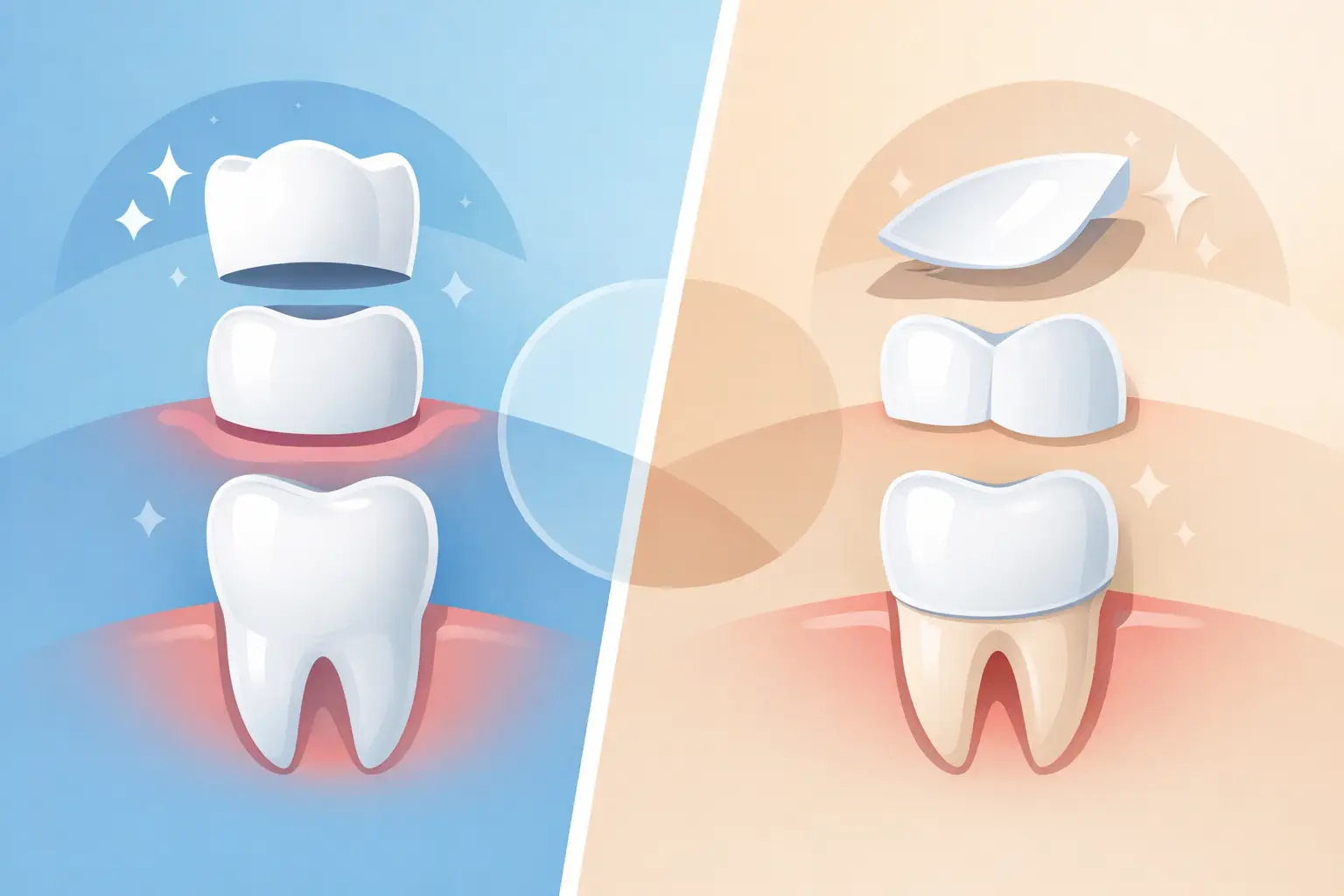
A veneer is a thin shell, usually made from porcelain, that is bonded to the front surface of a tooth. It is primarily an aesthetic treatment, used to improve the visible part of a smile. Veneers can refine shape, close small gaps, improve symmetry, and disguise stains or minor chips that cannot be corrected through whitening or composite bonding alone.
A crown covers the entire visible portion of a tooth, rather than just its front surface. It is a restorative solution used when a tooth has been significantly weakened, broken, worn, heavily filled, or treated with a root canal. A crown restores the tooth’s shape and appearance, but its central purpose is to protect the remaining tooth from further damage.
In simple terms, veneers tend to be selected for healthy teeth that need aesthetic refinement, while crowns are selected when a tooth needs more comprehensive structural support. There are exceptions, however. A tooth that appears only mildly discoloured may have hidden cracks or extensive old restorations, making a crown the safer option. Equally, a front tooth with a small cosmetic concern may not need a veneer at all.
How much tooth preparation is involved?
This is one of the most meaningful differences between crowns and veneers. Conventional porcelain veneers usually require a small amount of enamel to be shaped away from the front and edge of the tooth. The preparation is deliberately conservative, creating enough room for porcelain while maintaining a natural profile and a secure bond.
Some cases may be suitable for minimal-preparation or no-preparation veneers, but these are not appropriate for every smile. If porcelain is added without adequate planning, teeth can look too prominent or the gumline can become difficult to keep clean. The aim should be a refined, believable result rather than simply making teeth whiter or larger.
A crown requires more preparation because it must fit around the whole tooth. The dentist carefully reduces and reshapes the outer surface to make space for the crown material. Although this is more invasive than veneer preparation, it may be the most conservative long-term choice when the alternative is repeatedly repairing a weak, heavily restored tooth.
For either treatment, preserving healthy tooth structure remains a priority. Digital scans, photographs, bite records and, where appropriate, a trial smile design can help show how much preparation is likely to be needed before treatment begins.
Strength, function and bite forces
Crowns are engineered to withstand substantial chewing forces. They are frequently used on back teeth, where biting pressure is greatest, and on teeth that have lost strength because of decay, fractures, large fillings or root canal treatment. Modern ceramic crowns can be highly lifelike, including on visible teeth, while providing full coverage and protection.
Veneers are strong once bonded to healthy enamel, but they are not intended to reinforce a tooth that is already structurally compromised. They work best where there is sufficient sound enamel and a stable bite. If a tooth is cracked, has a very large filling, or has been weakened by previous treatment, a veneer may be more likely to chip, debond or leave the underlying tooth vulnerable.
Bite assessment matters greatly. People who clench or grind their teeth can place excessive pressure on both crowns and veneers. This does not automatically rule out treatment, but it can change the material choice, design and protective aftercare. A custom night guard may be advised to reduce the risk of porcelain fracture and protect your natural teeth as well.
Appearance: can crowns look as natural as veneers?
Yes. Both crowns and veneers can be designed to look exceptionally natural when they are planned around your facial features, lip movement, surrounding teeth and gum contours. The quality of the result depends on more than the final porcelain. Shade selection, tooth proportions, the health of the gums and the way light moves through the material all matter.
Veneers are often associated with cosmetic smile makeovers because they allow detailed control over the front surface of a tooth. They can correct subtle variations in colour, shape and alignment without orthodontic treatment in selected cases. They are particularly effective for teeth that are naturally small, worn at the edges, uneven, or resistant to whitening.
Crowns can achieve a similarly refined result, particularly when a front tooth needs full coverage. A well-made crown should not look opaque, bulky or noticeably different from adjacent teeth. It should be designed to blend into the smile while restoring comfortable function. Where several teeth require treatment, the dentist will consider the overall smile rather than designing each tooth in isolation.
Longevity and maintenance
Neither a crown nor a veneer is a lifetime restoration, but both can serve well for many years with attentive care. Their lifespan depends on oral hygiene, diet, grinding habits, the condition of the tooth underneath and the precision of the fit. Porcelain itself does not decay, but the natural tooth at the edges of the restoration can still develop decay or gum disease.
Daily brushing with fluoride toothpaste, cleaning between teeth and regular dental examinations are essential. Avoid using restored teeth to open packaging, bite fingernails or chew hard objects. If you notice a change in the bite, a rough edge, looseness, sensitivity or bleeding gums around a restoration, arrange an assessment promptly rather than waiting for discomfort to become severe.
Crowns may eventually need replacement if the margin becomes worn, decay develops underneath, or the supporting tooth changes. Veneers may need replacement because of chipping, staining at the edges, gum recession or changes elsewhere in the smile. Replacement planning should always take account of how much healthy tooth structure remains.
When another option may be better
A crown or veneer is not automatically the first answer to every aesthetic concern. Professional whitening may be the best first step for generalised tooth discolouration. Composite bonding can be a more conservative option for small chips, minor gaps and subtle shape changes, although it may stain or wear more readily than porcelain.
Orthodontic treatment may be preferable when crowding, spacing or bite imbalance is the main concern. Moving teeth into a healthier position can reduce the amount of drilling needed for later cosmetic refinements. If a tooth is severely broken, infected or missing, treatment may instead involve root canal care, a post and crown, or an implant-supported restoration.
For patients with multiple worn, damaged or failing teeth, isolated cosmetic treatment can be insufficient. A wider restorative assessment may be needed to consider bite stability, jaw comfort, gum health and the relationship between all teeth. This is where coordinated, specialist-led planning can make a meaningful difference to predictability and longevity.
Choosing with confidence
The most reliable decision comes from diagnosing the tooth before choosing the treatment. Your dentist should assess the condition of the enamel, existing restorations, gums and bone support, as well as how your teeth meet when you bite and speak. It is reasonable to ask why one option is recommended, how much tooth preparation is anticipated, what material will be used, and what maintenance will be needed afterwards.
At Slievemore Dental, this conversation can be supported by digital diagnostics and carefully planned restorative care, particularly where cosmetic goals overlap with complex functional needs. For nervous patients, understanding each stage in advance can also make treatment feel more manageable and calm.
A beautiful restoration should never be judged only on the day it is fitted. The best choice is the one that respects your natural tooth, feels comfortable in everyday life and gives you confidence to smile, eat and speak without second-guessing it.