A tooth can be lost in a single day, but the jawbone beneath it begins to change soon afterwards. Without the stimulation provided by a tooth root, bone in that area may gradually shrink in height, width or both. Implant bone grafting can rebuild or preserve this foundation where needed, helping to create the stable support a dental implant requires for natural-looking, comfortable function.
For some people, grafting is a small part of treatment carried out at the time of extraction. For others, particularly where a tooth has been missing for years or there has been infection, gum disease or trauma, it may be a separate surgical stage. The right approach depends on the quality and volume of bone, the position of the missing tooth, the bite, gum health and the aesthetic demands of the smile.
Why jawbone matters for dental implants
A dental implant is a carefully designed titanium fixture placed within the jawbone to replace a missing tooth root. Over time, bone integrates with the implant surface, creating the firm biological connection that allows it to support a crown, bridge or full-arch restoration.
An implant needs adequate bone around it, not simply enough bone to place it. The surrounding bone contributes to long-term stability and supports the gum contours that frame the final tooth. This is especially significant at the front of the mouth, where even a subtle loss of gum or bone volume can affect the symmetry and natural appearance of a restored smile.
When bone is too narrow, too low or unevenly shaped, placing an implant without correcting the site may compromise its position. A crown may then need to be shaped awkwardly to meet the bite, become more difficult to clean, or sit less naturally against the gum. Meticulous planning aims to avoid these compromises from the outset.
When is implant bone grafting needed?
Not every implant patient needs a graft. Some extraction sites retain enough healthy bone for an implant to be placed immediately or after a short healing period. A three-dimensional scan is the most reliable way to assess this, as ordinary dental X-rays cannot show the full width and contour of the jaw.
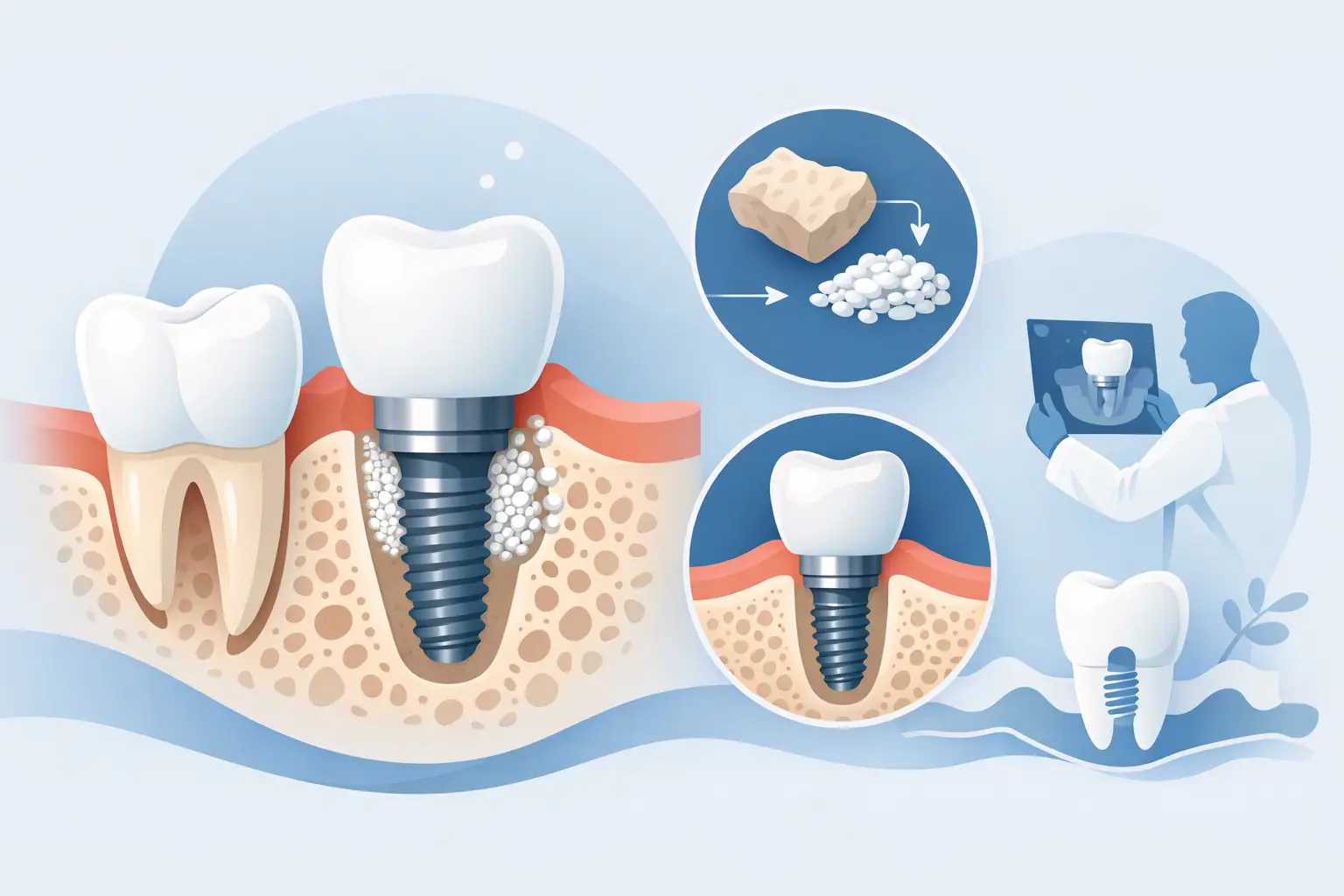
Implant bone grafting may be recommended when a scan shows that the bone will not adequately support the implant in its ideal position. Common situations include a tooth that has been missing for a long time, bone loss following periodontal disease, an extraction site affected by infection, or loss of bone after an accident. It may also be needed where the upper back jaw sits close to the maxillary sinus.
In the upper molar region, the sinus can expand downwards after teeth are lost, leaving limited vertical bone. A sinus lift raises the sinus lining gently and creates space for graft material beneath it. This can make implant treatment possible where the available bone height would otherwise be insufficient.
A graft is not a sign that treatment has gone wrong or that an implant is unlikely to succeed. It is often a thoughtful preventative step that gives the implant and final restoration the conditions they need to perform well over the long term.
The main types of grafting procedure
The treatment can be as straightforward as placing a small amount of graft material into a fresh extraction socket, or it can involve rebuilding a wider section of ridge. Your clinician will explain the scale of treatment clearly, including whether the implant can be placed on the same day.
Socket preservation
Following an extraction, bone graft material can be placed into the socket and protected with a collagen membrane or stitches. This helps limit the natural collapse of the ridge during healing. It does not guarantee that no further grafting will ever be needed, but it can preserve valuable bone and simplify future implant placement.
Ridge augmentation
Where the jaw ridge has already narrowed or lost height, graft material may be secured against the deficient area to build volume. A protective membrane is often used to guide healing and prevent soft tissue from growing into the space intended for bone formation. Depending on the site and amount of grafting required, implant placement may take place at the same appointment or after a healing period.
Grafting around an implant
Occasionally, an implant can be placed securely while a small local deficiency around it is grafted at the same time. This is common in carefully selected cases and can reduce the number of surgical visits. It is not appropriate where primary implant stability cannot be achieved or where infection and tissue conditions need time to resolve first.
What is the graft material made from?
Grafting materials provide a framework that supports the body’s own bone-building process. The material may be a processed mineral derived from human donor tissue, animal source material, a synthetic substitute, or, less commonly, a small quantity of your own bone. All suitable materials used in clinical practice are selected and handled according to strict safety and quality standards.
The most appropriate material is not always the same for every case. Some sites benefit from a slower-resorbing mineral that maintains space well, while others require a different combination of graft material, membrane and surgical technique. Your clinician will discuss the proposed material, why it is suitable and any alternatives before treatment.
Planning implant bone grafting with precision
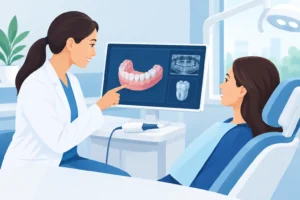
High-quality imaging and restorative planning are central to predictable implant care. A cone beam CT scan provides a detailed three-dimensional view of the jawbone, nearby teeth, nerves and sinus spaces. Digital planning then works backwards from the planned final crown or bridge, rather than placing an implant first and attempting to adapt the restoration later.
This prosthetically led approach is particularly valuable for visible teeth and complex rehabilitation. It helps determine the ideal implant position, whether grafting is needed, and whether the soft tissue also needs support. In some cases, soft tissue augmentation is recommended alongside bone grafting to improve gum thickness, contour and long-term aesthetics.
At Slievemore Dental, complex implant treatment can be planned through a multidisciplinary pathway, bringing restorative, implant and surgical expertise together where appropriate. This coordinated approach is designed to make decisions clearer and treatment more considered, particularly for patients replacing several teeth or managing failing dentistry.
What to expect during treatment and recovery
Bone grafting is normally carried out under local anaesthetic, so the area is fully numb. For nervous patients, discussing anxiety in advance is worthwhile. A calm, unhurried appointment, clear explanations and appropriate comfort options can make surgical care feel far more manageable.
After treatment, mild swelling, tenderness and bruising are common, especially during the first few days. Most people manage this with the medication advised by their clinician, softer foods and a little time away from strenuous exercise. It is essential not to smoke during healing, as smoking significantly affects blood supply and can increase the risk of infection and delayed healing.
Healing times vary. A minor socket preservation procedure may heal alongside the extraction site, while larger augmentation can require several months before an implant is placed. If the implant and graft are completed together, the implant still needs time to integrate before the final tooth is fitted. Rushing this stage can undermine the careful work already done.
You will receive individual aftercare instructions, including how to keep the site clean without disturbing it, what foods to avoid initially and when to return for review. Contact the practice promptly if you develop worsening pain, persistent bleeding, a fever, marked swelling or any concern about the surgical area.
Is a graft worth the extra time?
It can be frustrating to hear that a missing tooth cannot be replaced immediately. However, the quickest option is not always the most durable or aesthetic one. A graft may add time and cost to treatment, but it can also allow an implant to be positioned more accurately, support healthier gum contours and reduce the need to accept avoidable compromises.
There are alternatives in certain cases. A conventional bridge, adhesive bridge or removable denture may be appropriate depending on the number and location of missing teeth, neighbouring tooth condition, budget and personal preferences. Some implant systems and techniques can work around limited bone, but this must be assessed carefully rather than assumed from a two-dimensional X-ray.
The useful question is not simply whether a graft is necessary. It is whether it gives you the best balance of safety, comfort, appearance and long-term function for your individual mouth. A detailed consultation and digital assessment can turn that question into a clear, confident treatment plan.