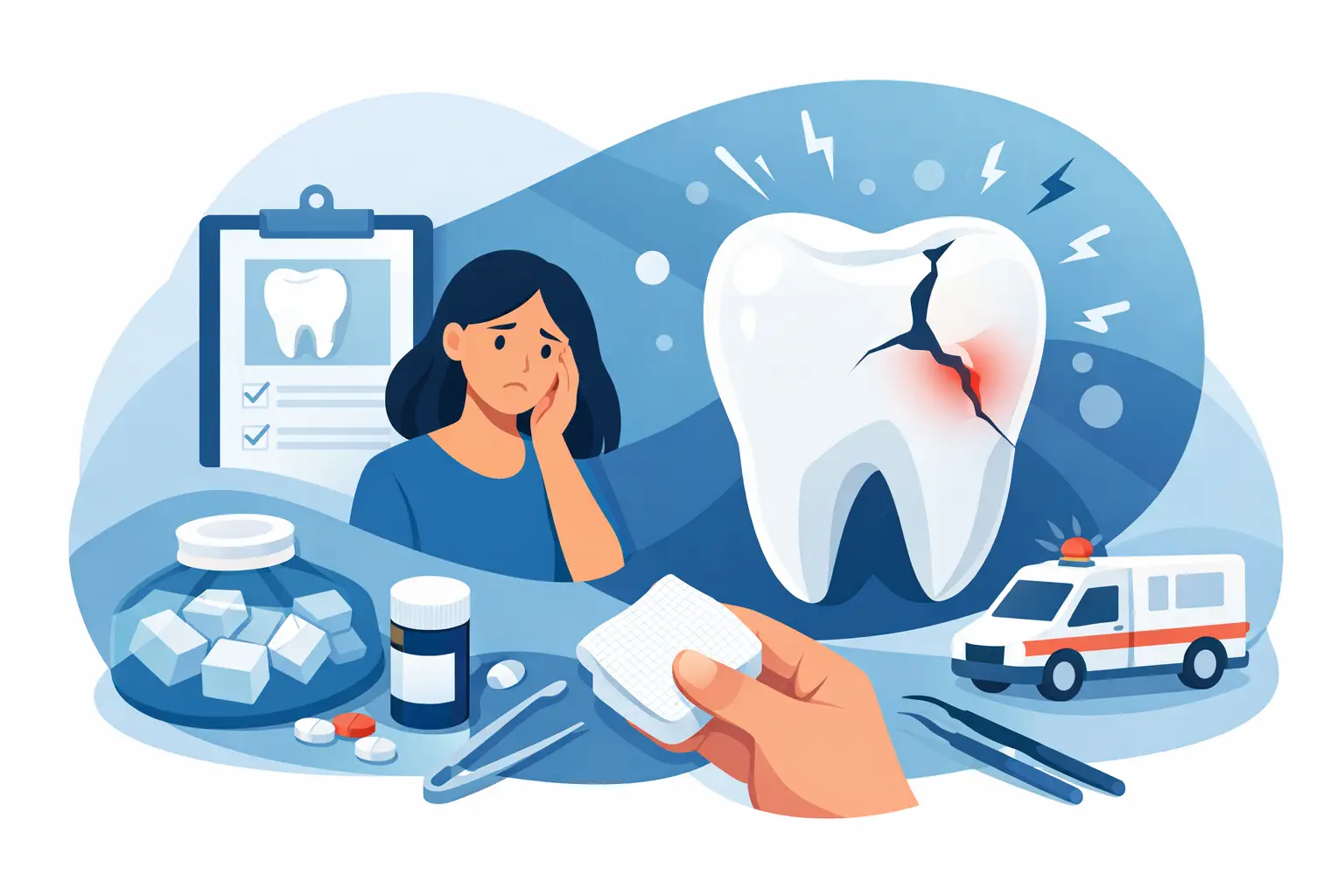
A tooth can break while eating something unexpectedly hard, during sport, after a fall, or around an old filling that has weakened over time. Knowing what to do with a broken tooth in the first few hours can make a meaningful difference to comfort, infection risk and the options available to restore it naturally. Even a small chip deserves assessment, particularly if the tooth feels sharp, sensitive or different when you bite.
What to do with a broken tooth straight away
First, rinse your mouth gently with warm water. This clears away debris without putting unnecessary pressure on the area. If the tooth has a sharp edge, try not to explore it repeatedly with your tongue or finger, as this can irritate the soft tissues or dislodge a loose fragment.
If you can find the broken piece, pick it up by the enamel surface rather than any inner area, rinse it briefly with water and keep it in a clean container. Milk or saliva may help prevent the fragment from drying out while you arrange an appointment. In some cases, particularly where a clean section of enamel has broken away, a dentist may be able to bond the original fragment back into place.
A cold compress held against the outside of the cheek can reduce swelling and help settle discomfort after an injury. If pain relief is needed, use a medicine that is appropriate for you and follow the instructions on the packet. Do not place aspirin or any painkiller directly onto the tooth or gum, as this can burn the surrounding tissue.
Until you are seen, avoid chewing on that side. Choose soft foods, avoid very hot, cold, sweet or acidic drinks, and do not bite into foods such as crusty bread, apples or nuts with the affected tooth. A temporary dental repair kit from a pharmacy may cover a rough edge for a short period, but it is not a substitute for professional care.
When a broken tooth needs urgent dental care
A cracked or chipped tooth is not always an emergency, but some signs should prompt a same-day dental appointment. Severe or persistent pain, swelling, bleeding that does not settle, a loose tooth, or visible pink or red tissue in the centre of the tooth can indicate deeper damage. The same applies if a piece has broken after a blow to the face, even when the tooth initially feels comfortable.
Call promptly if your bite no longer meets normally, you cannot close your teeth together without pain, or the tooth is sensitive to air and temperature for more than a few seconds. These symptoms can suggest that the crack extends closer to the nerve, or below the gum line where it cannot be seen easily.
A knocked-out adult tooth is more urgent still. Hold it by the crown, not the root, rinse it gently if dirty, and try to place it back into its socket if this can be done safely. If not, keep it in milk or saliva and seek emergency dental care immediately. Time matters because the best chance of saving a knocked-out tooth is usually within the first hour.
For facial swelling that affects breathing or swallowing, uncontrollable bleeding, or a serious facial injury, seek urgent medical help without delay.
Why teeth break – and why the cause matters
Teeth are remarkably strong, but they are not indestructible. A visible break may be the result of a single incident, yet it can also reveal an underlying weakness. Large old fillings, untreated decay, repeated clenching or grinding, and previous root canal treatment can all leave a tooth more vulnerable to fracture.
The location and direction of the break influence the treatment plan. A small chip confined to enamel may only require smoothing or composite bonding. A fracture involving more of the biting surface can require a ceramic onlay or crown to support the remaining tooth structure. When the nerve has been exposed or damaged, root canal treatment may be needed before the tooth is restored.
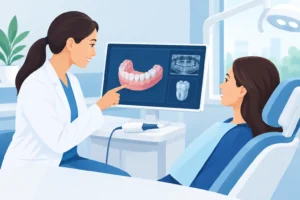
A vertical crack running into the root has a less predictable outlook. Sometimes a specialist can preserve part of the tooth, particularly if the crack is limited. In other cases, removal and replacement with an implant or bridge may offer the more reliable long-term result. A careful examination, often supported by digital X-rays and photographs, is essential before making that decision.
How dentists repair a broken tooth
The right repair should protect the tooth while preserving as much healthy structure as possible. Treatment is tailored not only to the size of the break, but also to the tooth’s position, its nerve health, your bite and the appearance of your smile.
Smoothing and composite bonding
For a minor chip, the dentist may carefully polish the edge so it no longer catches the tongue or lip. Where more shape needs to be rebuilt, tooth-coloured composite can be layered directly onto the enamel. This is often a conservative solution for front teeth and small fractures, with shade matching planned to blend naturally with the surrounding smile.
Composite is repairable and can look highly natural, although it may stain or chip over time, especially for patients who grind their teeth or regularly bite hard foods.
Ceramic onlays and crowns
When a back tooth has lost a substantial cusp or a large filling has fractured, a stronger indirect restoration may be recommended. A ceramic onlay covers the weakened areas while retaining more natural tooth than a full crown. A crown surrounds the tooth more completely and may be the better choice where very little sound structure remains.
Modern digital workflows can help plan the fit, bite and colour with precision. The aim is not simply to cover the break, but to create a restoration that feels comfortable, functions predictably and supports the tooth against further fracture.
Root canal treatment and restoration
If bacteria have entered the pulp, or trauma has caused irreversible nerve damage, root canal treatment removes the inflamed or infected tissue from inside the tooth. The tooth is then sealed and restored, commonly with a crown when it has been significantly weakened.
Root canal treatment is often associated with anxiety, but the procedure is performed with careful local anaesthetic and a focus on patient comfort. Treating the infection early can relieve pain and allow a natural tooth to remain in place.
Replacing a tooth that cannot be saved
Not every broken tooth is restorable. If the fracture reaches deeply below the gum, the root is split, or decay has left too little healthy structure, extraction may be advised. This should be approached thoughtfully, not as a rushed cosmetic decision.
Depending on the site and your wider dental health, replacement options may include a dental implant, fixed bridge or removable solution. For complex cases involving several failing teeth, a coordinated restorative and surgical assessment can provide a clear pathway towards stable function and a natural-looking result.
Avoid these common mistakes after breaking a tooth
Waiting for pain before booking an appointment is a frequent mistake. A broken tooth may not hurt if the nerve is unaffected, but the exposed surface can still collect bacteria or continue to crack under normal biting pressure. Early treatment is usually simpler and more conservative.
It is also tempting to chew carefully and hope the problem settles. Unfortunately, a crack can extend without obvious warning. Avoid using the tooth until it has been assessed, even if the break appears minor.
Do not try to glue a fragment back yourself. Household adhesives are not safe in the mouth and can make clinical repair more difficult. Equally, avoid filing the tooth with a nail file or covering it with substances that are not designed for dental use.
Broken teeth in children
Children can chip a tooth in the playground, during sport or after an ordinary tumble. Contact a dentist promptly, even if the child seems calm and the damage looks small. Baby teeth require care too: they guide speech, eating and the space for adult teeth, while trauma can occasionally affect the developing adult tooth beneath.
Bring any fragment with you if possible. Keep the child on softer foods and monitor for swelling, colour change, pain or a tooth that becomes loose. A gentle examination can establish whether monitoring, smoothing, a small repair or further treatment is appropriate.
Protecting a repaired tooth in future
Once the tooth has been restored, prevention becomes part of protecting the investment in your oral health. If you clench or grind, a custom night guard may reduce the forces placed on teeth and restorations. For contact sport, a well-fitting sports mouthguard offers valuable protection.
Regular examinations and hygiene visits can identify worn fillings, early cracks, decay and bite changes before they become an emergency. If a previous break happened while chewing ordinary food, ask whether an adjacent filling, grinding habit or uneven bite may have contributed.
A broken tooth can feel alarming, particularly when pain or appearance is involved. Prompt, calm assessment gives you the best chance of a comfortable repair that protects both your tooth and your confidence in your smile.