A wedding, a presentation, a long-postponed photograph – these are often the moments that make people ask about straightening their teeth. Yet clear aligners versus braces is not simply a choice between a discreet option and a visible one. The right treatment depends on how your teeth move, how your bite functions, the health of your gums and jawbone, and what will give you a stable result that feels as good as it looks.
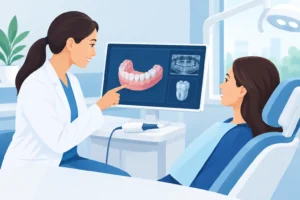
At Slievemore Dental, orthodontic decisions begin with a careful assessment rather than a one-size-fits-all recommendation. Modern digital planning can show the position of each tooth in detail, helping your clinician recommend treatment with precision and explain what is realistically achievable.
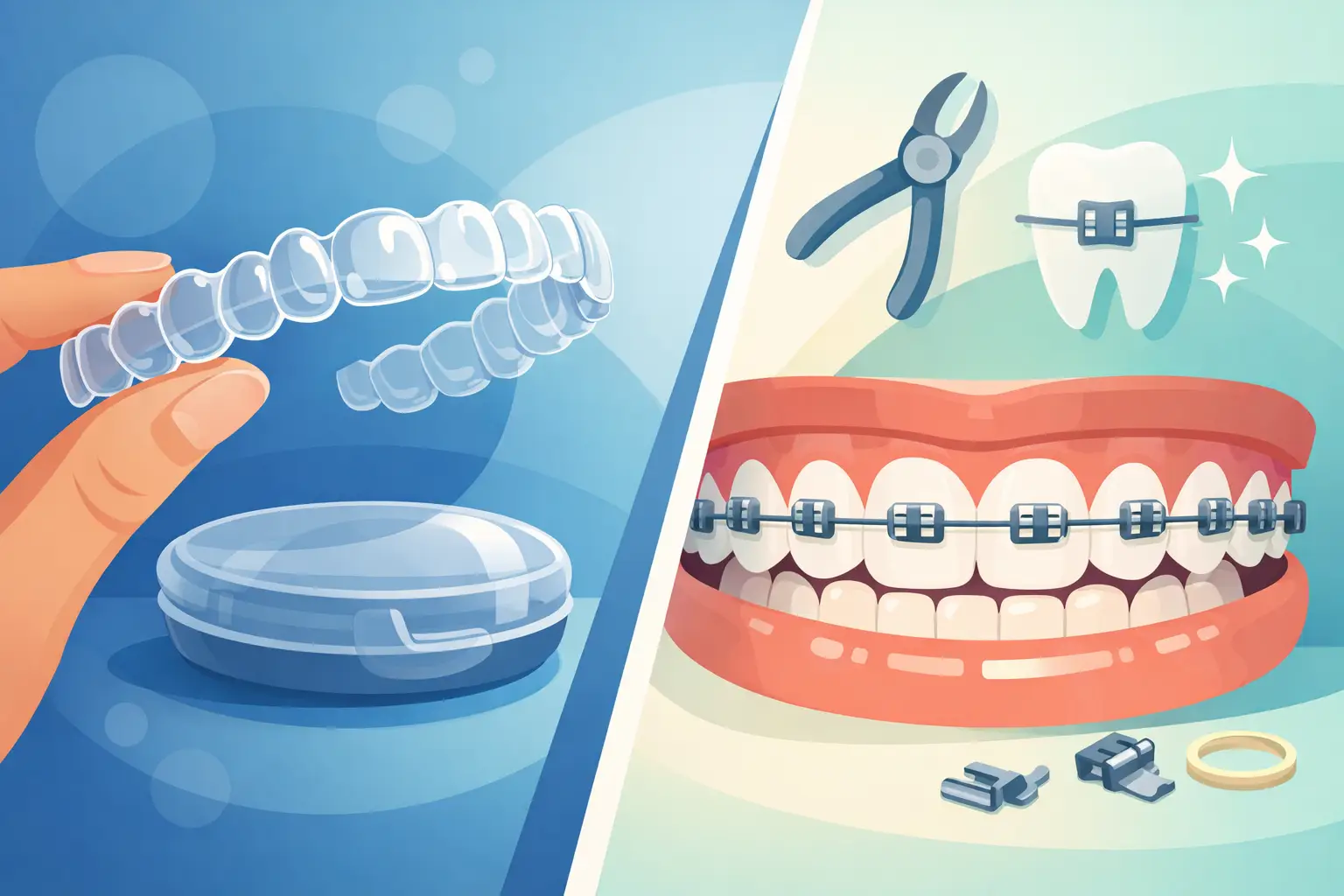
Clear aligners versus braces: the central difference
Clear aligners are a series of removable, custom-made transparent trays. Each set is designed to apply gentle, controlled pressure, moving teeth in planned stages. You wear them for most of the day and night, changing to the next set according to your clinician’s instructions.
Fixed braces use brackets bonded to the teeth and connected by an orthodontic wire. The wire is adjusted at planned appointments to guide teeth into their intended positions. Modern braces can be far more refined than many adults remember from school, with smaller brackets and, in some cases, more discreet tooth-coloured materials.
Both systems can produce excellent results. The meaningful distinction is not whether one is universally better, but which appliance offers the clinician the right level of control for your individual tooth movements and bite.
Appearance and day-to-day confidence
For adults and older teenagers who would prefer orthodontic treatment to be less noticeable, aligners have an obvious appeal. The trays are transparent and closely fitted, so they tend to be subtle in conversation and photographs. They can also be removed briefly for an important occasion, although this should be the exception rather than the routine.
Braces are more visible, even when ceramic brackets are used. For some patients, that trade-off is entirely acceptable. A visible appliance may be worthwhile when it provides the most predictable route to correcting more demanding movements or a significant bite discrepancy.
It is also worth being honest about what “invisible” means. Clear aligners can require small tooth-coloured attachments, which give the trays something to grip as teeth move. These are usually discreet, but they may be noticeable at close range. Aligners can also temporarily affect speech, particularly in the first few days of a new tray. Most people adapt quickly.
Comfort, eating and oral hygiene
Both braces and aligners place gentle force on the teeth, so some pressure or tenderness is normal, especially after an adjustment or when changing aligner trays. This is usually temporary. Neither option should cause persistent or severe pain, and any sharp discomfort should be discussed with your dental team promptly.
Aligners are removed for meals and for brushing and flossing. This makes it easier to maintain normal oral hygiene and enjoy foods without worrying about brackets or wires. The practical commitment is considerable, however: aligners need to be worn for around 20 to 22 hours a day. Every meal, coffee and snack means remembering to remove, store, rinse and replace them.
With braces, there is no risk of leaving the appliance on a restaurant table or forgetting to put it back in after lunch. However, food can collect around brackets and wires, and brushing takes more care. Interdental brushes and tailored hygiene guidance are particularly valuable. Hard, sticky or chewy foods may damage the appliance, so dietary adjustments are part of treatment.
For a highly organised patient, aligners can feel simple and freeing. For someone with a busy routine, frequent snacking, school commitments, travel or a tendency to misplace retainers, fixed braces may be the more dependable choice.
When braces may offer better control
Braces remain an exceptionally capable treatment option. Because they are fixed to the teeth, they work continuously and do not rely on wear-time compliance. They can be particularly effective where teeth need substantial rotation, vertical movement, or precise root positioning. They are often recommended for more complex crowding, certain bite problems and cases where tooth movement must be carefully coordinated across both arches.
That does not mean clear aligners are limited to very mild cases. Advances in digital orthodontic planning, attachment design and auxiliary techniques mean aligners can successfully treat a wide range of crowding, spacing and bite concerns. Some complex cases can be managed with aligners, while others are better served by braces or a combined approach.
The decisive issue is diagnosis. Teeth may look crooked because of crowding, but the underlying concern can also involve the bite, jaw relationship, gum health, worn teeth or missing teeth. Moving teeth without assessing the wider picture can compromise function or make future restorative treatment more difficult.
Treatment time and appointments
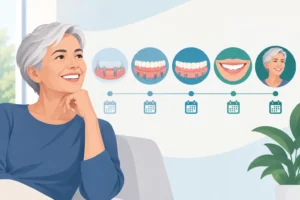
Patients often expect aligners to be faster. Sometimes they are, particularly for straightforward tooth alignment. But treatment time is determined mainly by the starting position of your teeth, the planned movements and how consistently the appliance is used.
A simple aligner case may take several months, while comprehensive treatment with either system can take 12 to 24 months or longer. Braces generally require regular adjustment appointments. Aligners may involve fewer in-person visits in suitable cases, but they still require monitoring to make sure teeth are tracking as planned and oral health remains stable.
If an aligner is not worn enough, treatment can slow down or refinements may be needed. If a bracket breaks or a wire becomes loose, braces may need an earlier repair appointment. Predictable progress comes from a carefully designed plan and good communication, not from the appliance alone.
Cost should reflect the complexity of care
The cost of orthodontic treatment varies according to the difficulty of the case, the type of appliance, expected treatment duration, monitoring needs and whether additional procedures are required. It is sensible to ask what is included: diagnostic records, digital scans, attachments, emergency repairs, refinement aligners and retainers can all form part of the overall treatment pathway.
A lower initial figure does not always represent better value if it excludes essential reviews or retention. Equally, the most expensive-looking option is not automatically the right clinical answer. A consultation should give you a clear explanation of the proposed treatment, likely alternatives, expected maintenance and fees before you decide.
Retainers protect the result
Whether you choose braces or aligners, teeth have a natural tendency to drift after treatment. Retainers are not an optional finishing touch. They are how the result is protected.
Your clinician may recommend a removable clear retainer, a discreet fixed retainer behind the front teeth, or both. Retainers must be worn and checked as advised. This is especially important after years of crowding, spacing or bite correction, when the supporting tissues need time to adapt to the new tooth positions.
Choosing the treatment that suits your smile
The most helpful question is not, “Which treatment is best?” It is, “Which treatment will safely achieve my goals while fitting the realities of my life?” Clear aligners may be ideal if discretion, removability and easier cleaning matter greatly to you and you can commit to wear-time. Braces may be the stronger choice if your case needs maximum control or you would rather not manage a removable appliance each day.
Before starting, make sure your gums and teeth are healthy. Active gum disease, untreated decay or repeated breakage of failing restorations should be addressed first. For patients considering veneers, crowns or implants, orthodontic planning can also create better spacing and positioning for a natural-looking restorative outcome.
A well-planned orthodontic result should not merely look straighter in a mirror. It should respect your bite, support comfortable function and be realistic to maintain. The best appliance is the one chosen with careful diagnosis, skilled planning and the confidence that your smile is being cared for as part of your overall dental health.