A small chip on a front tooth, a gap that draws your eye in photographs, or uneven edges that make a smile look less balanced can often be improved without removing healthy tooth structure. Understanding how composite bonding works helps you decide whether this conservative cosmetic treatment is the right route for your smile, your bite and your long-term expectations.
Composite bonding is not simply a matter of placing tooth-coloured material on a tooth. The best results depend on careful shade selection, thoughtful smile design, precise layering and a clear assessment of how your teeth meet when you bite. When it is planned well, bonding can create a subtle, natural-looking improvement while preserving as much natural enamel as possible.
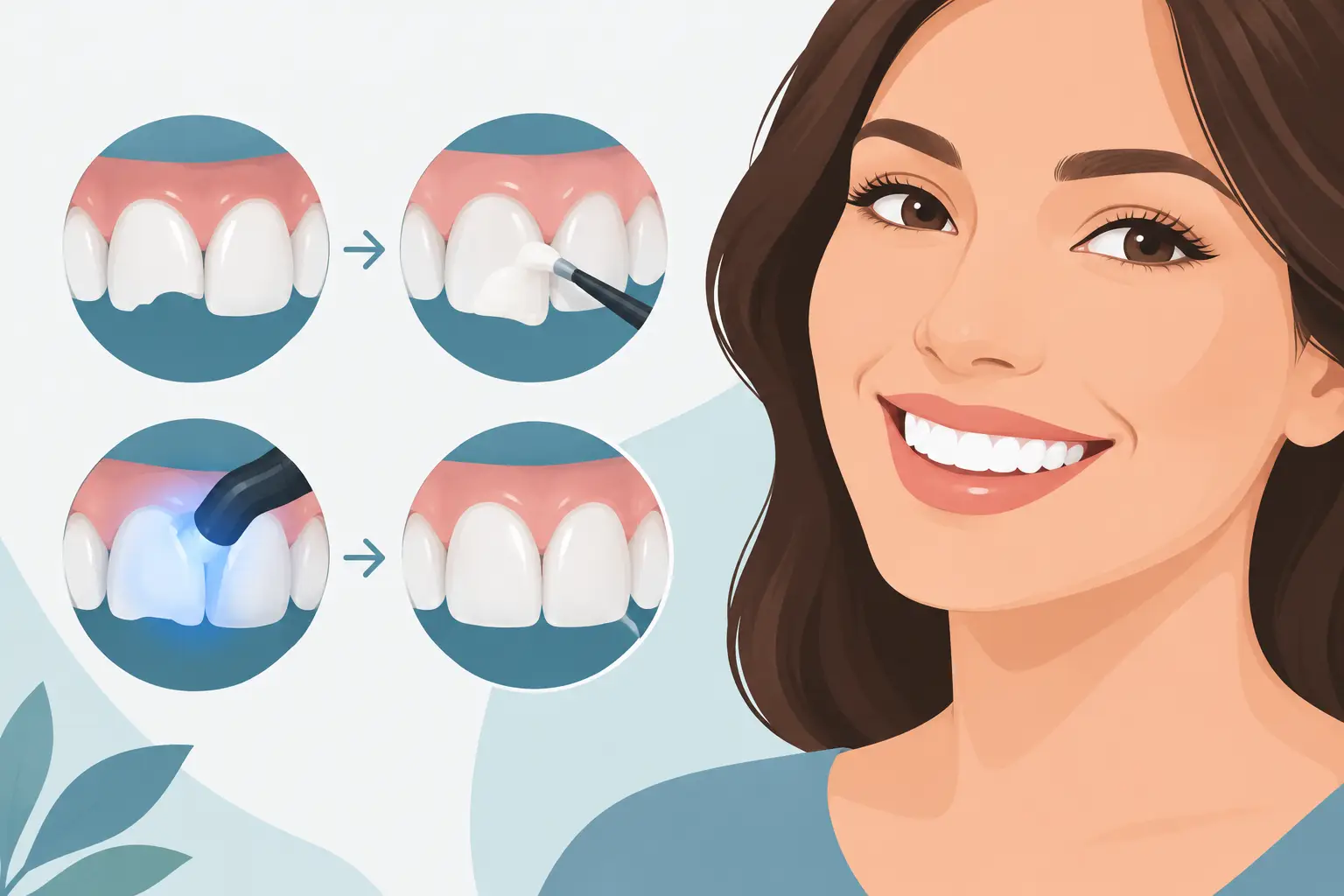
How composite bonding works step by step
Composite bonding uses a durable, tooth-coloured resin to alter the shape, size, surface or colour of a tooth. The material is similar to that used for high-quality white fillings, but cosmetic bonding is applied with a different level of artistic detail, particularly on the visible front teeth.
Your dentist begins with an examination of your teeth, gums and bite. Healthy gums and stable teeth provide the right foundation for cosmetic work. If there is untreated decay, gum inflammation, tooth grinding or an unstable bite, these issues may need attention first. Placing bonding over a problem does not solve the cause and may shorten the life of the result.
For many cases, little or no drilling is needed. The tooth surface is gently cleaned and prepared with a conditioning gel, which creates a microscopic texture in the enamel. A bonding agent is then applied so that the composite resin can adhere securely.
The dentist places the resin in small increments rather than one large piece. Each layer is shaped and hardened with a curing light. This gradual approach gives greater control over contour, translucency and strength. Natural teeth are not one flat block of colour: the edge of an incisor can be slightly translucent, while the centre may have more body and brightness. Carefully placed composite can reflect those variations, helping the restoration blend with the surrounding teeth.
Once the desired shape is created, the bonded area is refined and polished. This is where meticulous finishing matters. The surface should feel smooth to the tongue, reflect light naturally and integrate with the tooth rather than look like an added section of material. Your dentist will also check your bite, especially if the bonding changes the length or edge position of front teeth.
What composite bonding can improve
Composite bonding is commonly used to repair small chips, close modest gaps, smooth uneven edges and build up teeth that appear short or worn. It can also disguise localised discolouration, improve the appearance of slightly misshapen teeth or create better symmetry between neighbouring teeth.
It is often chosen by patients who want a visible improvement with a conservative approach. A single appointment may be enough for straightforward edge bonding or a small repair. More extensive smile enhancement may require additional planning, photographs, digital smile assessment or a trial design so that the final proportions suit your facial features and lip line.
Bonding can be highly effective, but it has limits. Large gaps, severely rotated teeth, significant crowding or a deep overbite may be better addressed with orthodontics, porcelain veneers, crowns or a combined treatment plan. Where there is substantial tooth damage, a more protective restoration may be the clinically safer choice.
Is composite bonding right for your teeth?
The answer depends on more than the appearance of one tooth. A dentist will consider the quality of your enamel, the position of your teeth, gum health, existing restorations and the forces placed on your bite.
Patients who clench or grind their teeth can still be suitable for composite bonding, but the risk of chipping or wear is higher. In these situations, a protective night guard may be recommended. If the front teeth bite directly edge to edge, or if lower teeth strike the planned bonding area heavily, simply adding composite without addressing the bite can lead to repeated breakages.
Tooth whitening is another useful consideration. Composite does not whiten in the same way as natural enamel. If you are considering whitening, it is generally best to do this before choosing the final composite shade. This gives the dentist a more stable colour target and avoids the mismatch that can occur when natural teeth become lighter around older bonding.
For nervous patients, composite bonding is often a reassuring option because it is usually gentle and minimally invasive. Local anaesthetic may not be necessary for simple cases, although it can be used where sensitivity, preparation or your comfort calls for it. You should never feel pressured to proceed without understanding what is planned and why.
Composite bonding versus veneers
Composite bonding and porcelain veneers can both enhance the front teeth, but they differ in material, longevity, preparation and maintenance.
Bonding is typically the more conservative option. It can often be added directly to the enamel, and repairs are usually straightforward if a small chip develops. It is also well suited to targeted changes, such as repairing one worn edge or closing a small space. However, composite is more prone to staining, surface wear and gradual loss of polish than porcelain.
Porcelain veneers are laboratory-made ceramic shells that are bonded to the front of the teeth. They can offer outstanding colour stability and a highly refined finish, particularly when multiple teeth require a more comprehensive change. They may involve some enamel preparation, although the amount varies between cases. Veneers are not automatically the better option – the right treatment is the one that respects your natural teeth while meeting your aesthetic and functional needs.
A careful consultation should make the trade-offs clear. If a patient wants a small, reversible-looking refinement, bonding may be ideal. If they need a larger change in colour, shape and alignment across several teeth, veneers or orthodontic treatment may produce a more predictable long-term result.
How long does composite bonding last?
Composite bonding can last for several years, but there is no fixed expiry date. Its lifespan depends on the location of the bonding, the size of the restoration, your diet, oral hygiene, bite forces and habits such as nail biting, chewing pens or opening packaging with your teeth.
The front edges of teeth naturally take more impact, so small repairs in this area may need occasional maintenance. Composite can also pick up surface staining from tea, coffee, red wine, tobacco and strongly coloured foods. Professional polishing can often refresh the appearance, while small chips can usually be repaired without replacing the whole bonded area.
Looking after bonding is uncomplicated. Brush twice daily with fluoride toothpaste, clean between your teeth each day and attend routine dental examinations and hygiene appointments. Avoid using your teeth as tools, and wear any night guard that has been prescribed. If an edge feels rough, catches floss or chips, arrange a review rather than trying to smooth it yourself.
Why planning matters for a natural result
The most convincing composite bonding rarely looks dramatic at first glance. It makes teeth appear healthy, balanced and in proportion to the rest of the smile. That result comes from restraint as much as technique.
A clinically led approach considers shade, texture, symmetry and function together. Very bright, overly uniform composite can look artificial next to natural enamel. Equally, making teeth too long or too wide can affect speech, bite comfort and facial balance. The aim is not to create identical teeth, but to create a smile that looks coherent and belongs to you.
At Slievemore Dental, cosmetic decisions can be planned within a wider view of your oral health, from gum condition and bite stability to longer-term restorative needs. That matters when a small aesthetic concern may be connected to tooth wear, old restorations or grinding.
If composite bonding is something you are considering, bring photographs or examples of the kind of change you like to your consultation, but remain open to professional guidance. A calm, detailed assessment will show whether a small refinement is all you need, or whether protecting your smile calls for a different approach.