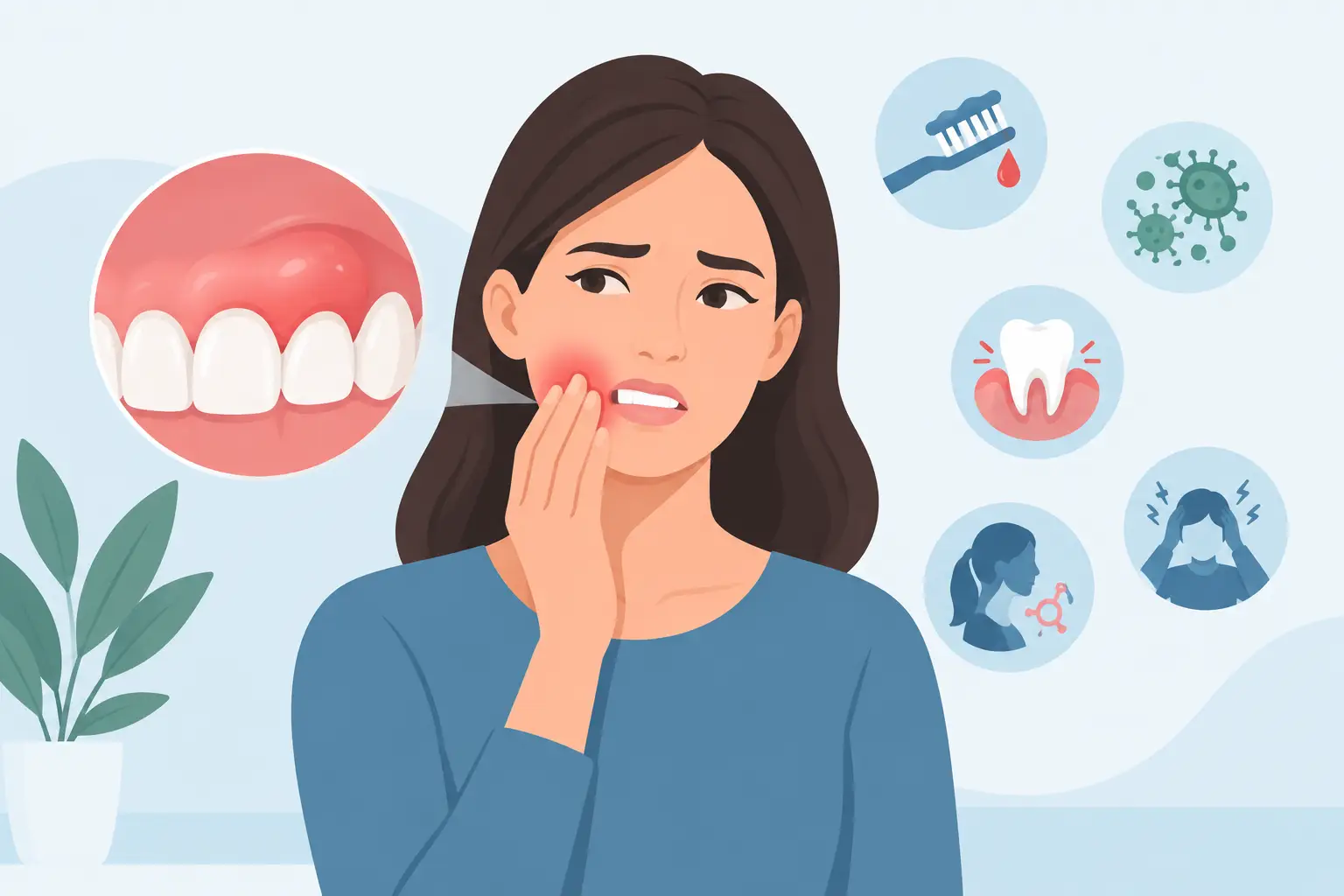
A swollen gum can make eating, brushing and even speaking feel uncomfortable. If you are asking, why do gums swell, the answer is often plaque-related inflammation, but it is not always as simple as needing to brush harder. Swelling can also point to an infection, a problem around a tooth or wisdom tooth, irritation from a restoration, or a health-related change that needs a careful assessment.
The reassuring news is that many cases improve with the right care. The key is not to ignore swelling that persists, returns frequently, bleeds easily or comes with pain. Early attention is usually gentler, simpler and more predictable than waiting for symptoms to escalate.
Why do gums swell around teeth?
The most common cause is gingivitis, the earliest stage of gum disease. A sticky bacterial film called plaque builds up along the gumline each day. When it is not removed thoroughly, the gums react: they may look redder, feel tender and become puffy or bleed when you brush.
This is an inflammatory response, not a sign that you should stop brushing. In fact, avoiding an area because it bleeds can allow plaque to accumulate further. Gentle but thorough brushing at the gumline, together with daily cleaning between the teeth, is usually part of recovery. A professional hygiene visit can remove hardened plaque, known as calculus, that cannot be brushed away at home.
Gingivitis can often be reversed. However, untreated inflammation may progress to periodontitis, where infection and inflammation affect the supporting tissues and bone around the teeth. At this stage, gums may recede as well as swell, teeth can feel mobile, and treatment becomes more involved. Regular examinations allow gum health to be monitored before lasting damage develops.
Localised swelling may have a different cause
When swelling affects one small area rather than the whole gumline, a specific tooth may be involved. Food can become trapped between teeth or beneath the gum, particularly around a broken filling, crown edge, crowded teeth or a space where the gum has changed shape. Flossing or using interdental brushes correctly can help, but forcing an interdental brush into a tight space can irritate the tissue.
A gum boil or small raised lump may indicate an abscess. This can arise from an infection inside the tooth or from the gums around it. It may be painless at first because pressure can drain through the gum, but it still requires dental treatment. Antibiotics alone do not usually remove the source of a dental abscess. The affected tooth or gum area needs to be assessed and treated directly.
Swollen gums around wisdom teeth
Partially erupted wisdom teeth are a frequent cause of soreness and swelling at the back of the mouth. A flap of gum can sit over part of the tooth and create a space where bacteria and food debris collect. This condition, called pericoronitis, can make biting painful and cause an unpleasant taste or bad breath.
A mild episode may settle with careful cleaning and professional advice. Repeated infections, decay in the wisdom tooth or damage to the neighbouring tooth may mean removal is the most reliable long-term option. A dental assessment, often supported by imaging, helps determine whether the tooth has enough room to erupt safely and whether surgery is appropriate.
Other reasons gums can become puffy or sore
Hormonal changes can make gums more reactive to plaque. Some people notice bleeding or swelling during pregnancy, puberty or at certain points in their menstrual cycle. This does not mean gum inflammation should be accepted as inevitable. Gentle daily plaque control and tailored hygiene care remain valuable throughout these changes.
Dry mouth can also contribute. Saliva helps wash away food particles and supports the mouth’s natural defences. Certain medicines, dehydration, mouth breathing, smoking and some medical conditions can reduce saliva flow. If your mouth feels persistently dry, mention this at your dental appointment so that possible causes and protective measures can be considered.
Poorly fitting dentures, a sharp tooth edge, an orthodontic appliance or an ill-fitting restoration can rub against the gums. The swelling is then often concentrated exactly where the tissue is being irritated. Do not attempt to adjust a denture, crown or brace at home. A small professional adjustment can prevent repeated trauma and improve comfort.
Less commonly, swollen gums can be associated with medication effects, nutritional deficiencies, viral infections or broader health conditions. This is one reason an examination matters when symptoms do not settle. A clinician can look beyond the immediate area and decide whether dental treatment, medical review or both are needed.
What you can do at home while arranging care
If the swelling is mild and you feel otherwise well, continue to clean the area with a soft toothbrush twice daily. Use fluoride toothpaste and spit out after brushing rather than rinsing straight away. Clean between the teeth once a day using floss or appropriately sized interdental brushes. A dental professional can show you the technique and size that best suits your mouth.
Warm salt-water rinses may soothe tender tissues temporarily. Dissolve half a teaspoon of salt in a glass of warm water, rinse gently and spit it out. This is a comfort measure, not a replacement for treating an infection or gum disease.
Try to avoid smoking, as it delays healing and can mask the visible signs of gum disease. Limit very sugary snacks and drinks, and avoid repeatedly prodding a swollen area with your fingers or tongue. If a tooth is painful, choose softer foods and chew on the other side where possible.
Over-the-counter pain relief may be suitable for some people when taken according to the packet instructions, but it is not right for everyone. Ask a pharmacist if you are pregnant, take regular medicines, have a medical condition or are unsure which option is safe for you. Do not place aspirin directly on the gum, as it can burn the soft tissues.
When swollen gums need urgent dental care
Contact a dentist promptly if the swelling is painful, produces pus, is associated with a bad taste, or lasts longer than a week despite good cleaning. You should also arrange an appointment if your gums bleed regularly, a tooth feels loose, you have persistent bad breath, or swelling keeps returning in the same place.
Same-day urgent assessment is advisable for facial swelling, severe toothache, swelling around a wisdom tooth that is worsening, or difficulty opening your mouth comfortably. These symptoms may indicate a spreading infection or a problem requiring prompt treatment.
Seek emergency medical help immediately if swelling affects your eye or neck, or if you have difficulty breathing, swallowing or speaking. A dental infection can occasionally spread beyond the mouth, and these signs should never be managed at home.
What happens at a dental assessment?
A calm dental visit begins with listening to what you have noticed: when the swelling started, whether it bleeds, any pain, changes in taste, and whether a particular tooth feels different. The dentist will examine the gums and teeth, assess plaque levels and gum pockets, and may take digital X-rays if an infection, wisdom tooth issue or bone loss is suspected.
Treatment depends on the cause. It may involve professional hygiene therapy and a personalised home-care plan, cleaning around a partially erupted wisdom tooth, repairing a defective restoration, drainage of an abscess, root canal treatment, or removal of a tooth that cannot be predictably saved. If gum disease is more advanced, periodontal treatment may be planned over several visits with ongoing review.
For nervous patients, it helps to say so from the start. Modern dentistry can be approached carefully, with clear explanations, local anaesthetic and treatment paced around your comfort. At Slievemore Dental, the focus is on identifying the cause accurately and providing gentle, evidence-based care that protects both comfort and long-term oral health.
Swollen gums are your mouth’s way of asking for attention. A few days of improved cleaning may be enough for minor irritation, but persistent or painful swelling deserves a professional answer rather than guesswork.