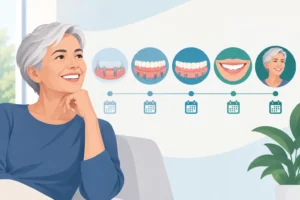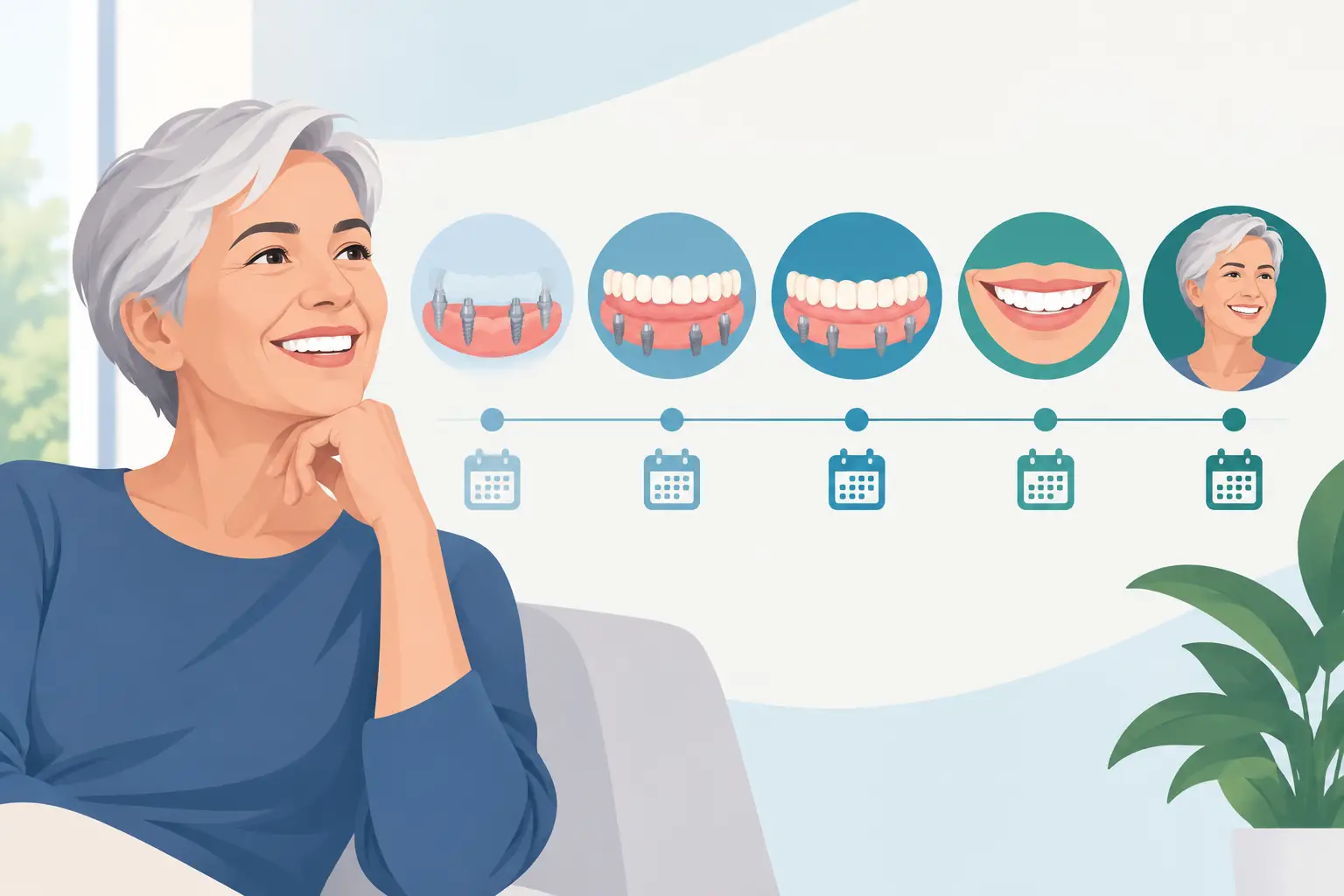
The first few days after full-arch implant surgery can feel like a significant adjustment: your mouth is healing, your routine is different, and you may be learning to eat and speak with a provisional bridge in place. This guide to All-on-X recovery sets out what is commonly expected, how to protect your treatment, and when to contact your clinical team. Your own instructions always take priority, because the extent of surgery, bone quality, any grafting, and your medical history can all affect the recovery plan.
The first 72 hours: protect the surgical sites
It is normal to experience swelling, tenderness, bruising and minor oozing after implant placement and any necessary extractions. Swelling commonly becomes more noticeable over the first two to three days before it begins to settle. Rest with your head slightly elevated, use a cold pack against the outside of the face in short intervals, and take prescribed or recommended pain relief exactly as directed by your clinician.
Some fatigue is also expected. Although All-on-X treatment is carefully planned to restore a full arch of teeth, it remains a surgical procedure. Give yourself permission to slow down. Avoid strenuous exercise, heavy lifting, alcohol and smoking during the period advised by your surgeon. Smoking in particular can compromise blood supply and substantially increase the risk of delayed healing and implant complications.
Do not disturb the surgical areas with your fingers or tongue. If you have been given a mouth rinse, use it as instructed. Brushing is still important, but your team will show you how to clean gently around the bridge and healing tissues without putting pressure on the incision sites.
Eating after surgery
For the first stage of recovery, choose cool or lukewarm, soft foods that need very little chewing. Think smooth soups that are not hot, yoghurt, scrambled eggs, soft fish, porridge, mashed vegetables and blended meals. Drink plenty of water, but avoid using straws unless your clinician says otherwise, as suction can disturb healing tissue.
Your provisional bridge is designed to give you a fixed smile while the implants integrate with the jawbone. It is not an invitation to test hard foods. Avoid crusty bread, nuts, crisps, chewy meat, raw vegetables, hard sweets and anything sticky. Biting directly into food can place excessive force on the temporary bridge and the implants beneath it. Cut food into small pieces and chew slowly, following the diet timeline provided by your clinical team.
All-on-X recovery in the first two weeks
By the end of the first week, many people are more comfortable and ready to return to quiet daily activities or desk-based work. This varies. If you had multiple extractions, complex bone treatment, or you are managing an existing health condition, you may need more time. A little patience at this point supports the long-term outcome.
Your follow-up appointment is an essential part of treatment rather than a formality. The team checks that the soft tissues are healing appropriately, reviews your bite, assesses the provisional restoration and answers questions before small concerns become larger ones. If sutures were placed, your clinician will explain whether they dissolve or need to be removed.
Speech can sound slightly unfamiliar at first, particularly with sounds made by placing the tongue against the teeth. Reading aloud for a few minutes each day can help you adapt. Most patients find that speech improves quickly as the mouth adjusts and any initial swelling settles.
You may also notice changes in sensation, pressure or saliva flow. These usually improve as your mouth becomes accustomed to the new contours of the bridge. A bridge should not feel loose, sharp or painful when you bite. Do not attempt to adjust it yourself. Contact the practice so it can be assessed safely.
Cleaning a fixed full-arch bridge
Excellent hygiene is central to a successful All-on-X result. The bridge is fixed, but it still needs daily cleaning where it meets the gumline. Food debris and plaque can collect underneath the restoration if cleaning is rushed or difficult, leading to inflammation around the implants.
Your clinician or hygienist will tailor a routine for you, often using a soft toothbrush, an implant-safe brush and a water flosser or specialised interdental cleaning aid once the tissues are ready. Technique matters more than force. Work gently along the gumline and beneath the bridge, and attend hygiene visits at the interval recommended for your case.
Weeks three to 12: healing happens beneath the surface
As your gums settle, it can be tempting to assume the recovery is complete. However, the most critical healing is taking place out of sight. Osseointegration is the process through which the jawbone forms a stable connection with the implant surface. This takes time, which is why the provisional stage and a controlled diet are so important.
During these weeks, follow the instructions on food texture even if you feel well. The right progression differs between patients. Some may be able to introduce more varied soft foods earlier than others, while people who have had grafting or more extensive surgery may need a more cautious approach. Feeling comfortable does not always mean the implants are ready for high bite forces.
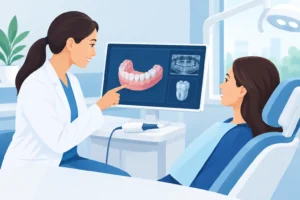
It is also common for the gums to change shape as swelling resolves. Your bridge may feel slightly different as the tissues mature. Planned reviews allow the clinical team to monitor this carefully and make adjustments where appropriate. Digital planning and a precisely designed provisional restoration help create a predictable foundation, but recovery still requires observation and individual clinical judgement.
When to call your dental team
A little discomfort and swelling are expected. Worsening symptoms are not something to wait out. Contact your clinician promptly if you have pain that becomes more severe after initially improving, swelling that continues to increase after several days, persistent bleeding, a foul taste or discharge, fever, or difficulty swallowing or breathing.
You should also contact the practice if the bridge feels loose, cracks, changes your bite suddenly, or causes a specific pressure point. Continuing to chew on a damaged or mobile restoration can affect the implants and soft tissues. Early assessment is usually simpler and more comfortable than trying to manage the problem at home.
If you are prescribed antibiotics, take them only as directed and tell your clinician about any rash, breathing difficulty or other suspected reaction. For severe swelling affecting breathing or swallowing, seek urgent medical help.
From provisional teeth to your final bridge
The temporary bridge is a valuable clinical stage. It lets you smile and function while the implants heal, while also allowing your clinician to assess tooth position, bite, speech, facial support and aesthetics in real life. This information helps guide the final restoration.
The timing of the definitive bridge depends on your healing, implant stability, gum health and treatment plan. It should never be rushed simply because the early recovery has gone smoothly. Your final bridge is designed for long-term function and natural-looking aesthetics, so the details matter: the way your teeth meet, the support of your lips, the shade and shape of the teeth, and access for cleaning.
At Slievemore Dental and SmileMore Implant Centre, full-arch rehabilitation is planned through a coordinated, specialist-led process, with follow-up care focused on both biological health and the precision of the restoration. That continuing relationship is as important as the day of surgery.
Supporting a confident long-term result
Once your final teeth are fitted, regular reviews and professional hygiene care remain part of protecting your investment. Implants cannot decay, but the surrounding gums and bone can become inflamed if plaque is allowed to build up. Daily home care, non-smoking where possible, a balanced diet and prompt attention to changes all contribute to the longevity of the result.
Recovery is not about getting through a set number of days. It is about allowing your body the time and support it needs to heal well, so that the comfort, confidence and function of your new smile have the strongest possible foundation.