A crown that feels natural should do more than look right in photographs. It should meet the opposing teeth comfortably, support healthy gums and let you eat and speak without thinking about it. Digital dentistry helps clinicians plan towards that standard before treatment begins, using detailed scans, photographs and computer-guided design rather than relying on estimates alone.
For patients, the most meaningful benefit is often not the technology itself. It is clearer communication, fewer unknowns and treatment planned around comfort, function and long-term oral health. At Slievemore Dental, digital tools support clinical judgement and careful hands. They do not replace either.
What does digital dentistry involve?
Digital dentistry describes the use of digital records, imaging, planning software and computer-assisted manufacturing throughout dental care. The precise workflow depends on the treatment. A routine examination may involve digital X-rays and intraoral photographs, while a complex implant or full-mouth rehabilitation case can require a 3D CBCT scan, facial analysis, digital impressions and a carefully designed provisional smile.
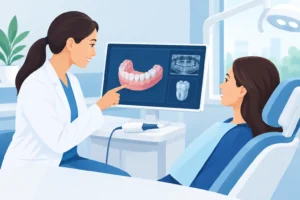
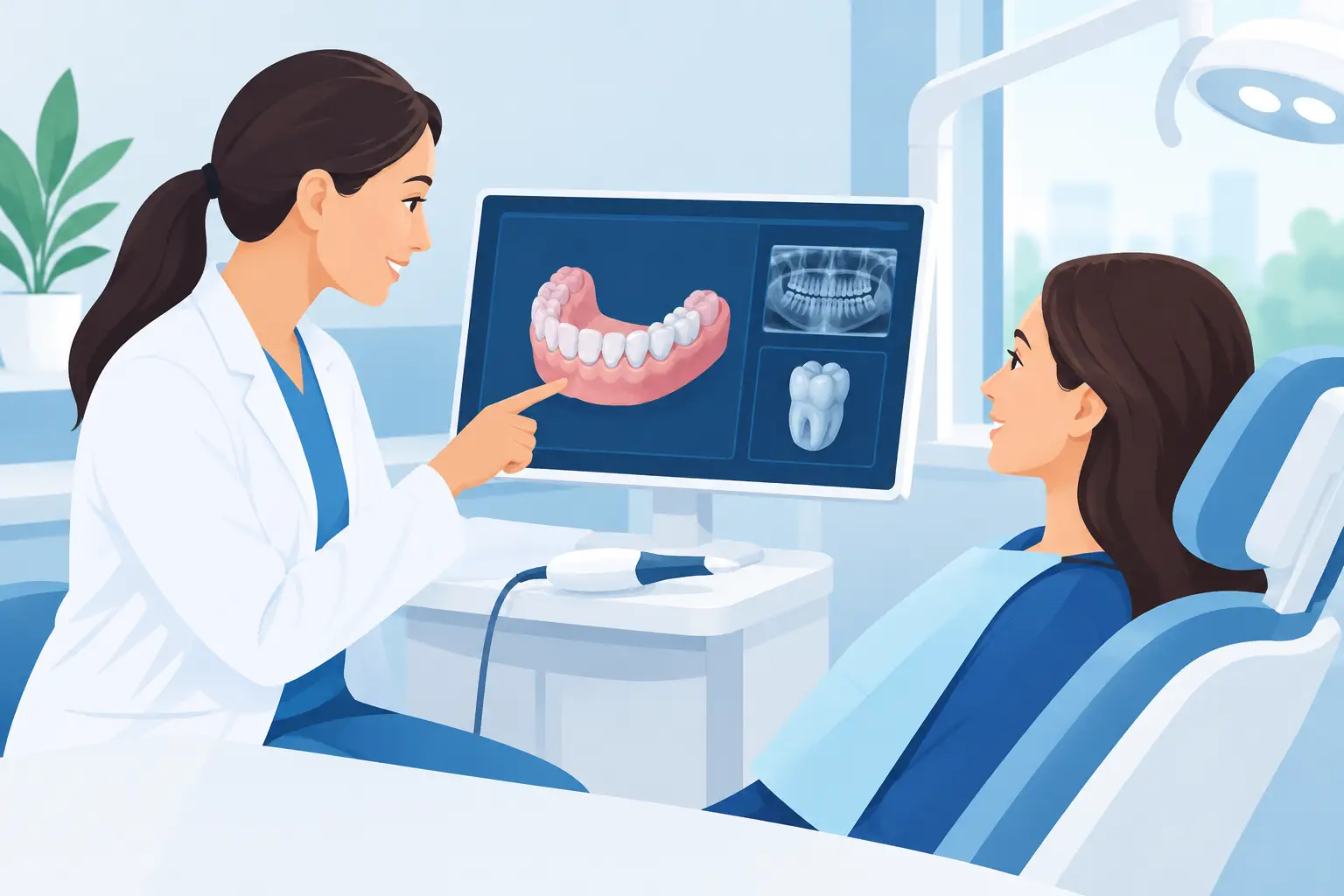
An intraoral scanner is one of the technologies patients may notice first. Instead of taking a conventional impression with a tray of material, the clinician uses a small camera to capture thousands of images of the teeth and gums. These are assembled into a highly detailed three-dimensional model. For many people, especially those with a sensitive gag reflex or dental anxiety, this can make the process more comfortable.
Digital records also make it easier to compare changes over time. Subtle tooth wear, gum recession, movement after orthodontic treatment or changes around an existing restoration can be reviewed accurately. This supports prevention as well as advanced treatment.
Digital dentistry begins with better information
Good treatment is only as reliable as the information behind it. A tooth can look straightforward at first glance while hiding a crack, infection, root problem or bite issue that changes the best course of care. Digital imaging gives the clinical team a more complete picture, while still being interpreted alongside an examination, symptoms and medical history.
For implant treatment, three-dimensional imaging can show the available bone, nearby nerves and sinus anatomy in far greater detail than a standard X-ray. This helps the clinician assess whether an implant is suitable, where it can be placed safely and whether procedures such as bone grafting or sinus augmentation may be required.
For crowns, veneers and bridges, a digital scan can capture the shape of teeth, neighbouring contacts and gum contours. This information supports precise communication with the dental laboratory. The aim is not simply a restoration that fits the prepared tooth, but one that integrates naturally with the smile and bite.
There are limits. A scan cannot by itself diagnose every problem, and a beautiful digital design cannot compensate for untreated gum disease, active decay or an unstable bite. Technology is most valuable when it is part of a thorough, evidence-based assessment.
A more predictable route to aesthetic treatment
Patients considering cosmetic dentistry often have sensible questions: Will veneers look too bright? Will a crown match the surrounding teeth? Can worn teeth be restored without making the smile look bulky?
Digital planning allows these discussions to be more specific. Photographs, scans and smile design software can be used to assess tooth proportions, lip movement, facial balance and the way light reflects from natural enamel. Where appropriate, a proposed shape can be tested with a temporary mock-up before final ceramic restorations are made.
This does not mean every result is decided by a computer. Natural aesthetics depend on clinical experience, careful shade selection and a proper understanding of what suits an individual face. Some patients want a noticeable change; others want restorations that are almost impossible to distinguish from their own teeth. The right plan reflects their preferences while protecting as much healthy tooth structure as possible.
Digital workflows can also improve communication between dentist, patient and laboratory technician. When all parties are working from accurate records and a shared design, there is less room for avoidable surprises. Adjustments may still be needed, because mouths move, tissues settle and bite forces are highly individual. Predictable does not mean identical or artificial.
Precision matters in complex restorative care
When several teeth are damaged, missing, heavily worn or failing, treatment decisions are interconnected. Restoring one tooth without considering the bite, jaw position, gum health and surrounding teeth can create further problems later. Full-mouth rehabilitation requires a wider view.
Digital dentistry supports this process by bringing different records together. Scans of the teeth, facial photographs, bite data and 3D imaging can help a multidisciplinary team plan the sequence of care. The team can assess whether teeth can be retained, where implants may be needed, how to create adequate restorative space and how to establish a comfortable bite.
For full-arch implant treatment, guided planning may be used to transfer a carefully designed implant position to the clinical setting. This can support precision, particularly where anatomy is complex or several implants are being placed. However, a surgical guide is not a substitute for surgical expertise. The clinician must still make decisions based on the patient’s anatomy and the conditions found on the day.
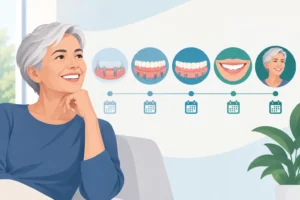
The benefit is often a more structured treatment journey. Patients can understand why treatment is being staged, what provisional teeth are intended to achieve and how the final restorations will be developed. For someone who has avoided dentistry for years, that clarity can make an ambitious plan feel manageable.
Can digital technology make appointments more comfortable?
It can, but comfort is about more than equipment. A gentle explanation, adequate anaesthesia, time to ask questions and a clinician who listens remain fundamental, particularly for nervous patients.
That said, digital workflows can reduce some of the uncomfortable parts of treatment. Intraoral scanning may remove the need for conventional impression materials. Digital planning can reduce repeated records or unnecessary appointments in some cases. Digital X-rays provide images quickly, allowing the clinician to explain what they can see during the consultation.
Efficiency should never mean rushing. Some complex cases need several planning appointments, a period of healing or a trial phase with provisional restorations. Taking the right amount of time can prevent compromises that are difficult to correct later.
Choosing a practice for digitally planned care
The presence of a scanner or a 3D X-ray unit is not, on its own, a measure of quality. The more useful question is how the technology informs the treatment plan. Patients should expect a clinician to explain the findings in plain language, discuss reasonable alternatives and be open about the likely timescale, maintenance and costs.
For example, a missing tooth might be replaced with an implant, a bridge or, in some situations, not replaced at all. Digital planning can make each option easier to assess, but suitability depends on bone and gum health, the bite, neighbouring teeth, general health and personal priorities. The best plan is rarely the most elaborate one. It is the one that addresses the problem safely and serves the patient well over time.
Digital records are also valuable after treatment. They establish a reference point for monitoring implants, restorations, orthodontic retainers and tooth wear at future hygiene visits and examinations. Long-lasting dentistry depends on maintenance, not just the quality of the initial procedure.
If you are considering restorative, cosmetic or implant treatment, bring your questions to the first consultation. A careful digital assessment should leave you with a clearer picture of your oral health, your options and the next step that feels right for you.