A waking jaw ache, headaches around the temples, or teeth that seem increasingly sensitive can be easy to dismiss as stress. Yet teeth grinding causes are often more layered than a difficult week at work. Bruxism, the clinical term for clenching or grinding the teeth, can happen during sleep, while concentrating, or without you noticing at all. Understanding the likely trigger helps protect your teeth, jaw joints and restorative dental work before the damage becomes more difficult to repair.
What is teeth grinding?
Bruxism describes repeated clenching, grinding or bracing of the teeth and jaw muscles. Sleep bruxism occurs during sleep and may be noticed by a partner because of the sound it creates. Awake bruxism is more commonly silent: the teeth are held tightly together during a commute, at a desk, in the gym or while focused on a screen.
Brief episodes do not always require treatment. The concern is frequent or forceful activity that overloads the teeth, muscles and jaw joints. Over time, it can flatten or chip enamel, loosen fillings and crowns, increase sensitivity, contribute to cracked teeth, and create pain in the jaw, face, neck or head.
Teeth grinding causes: why it is rarely just one thing
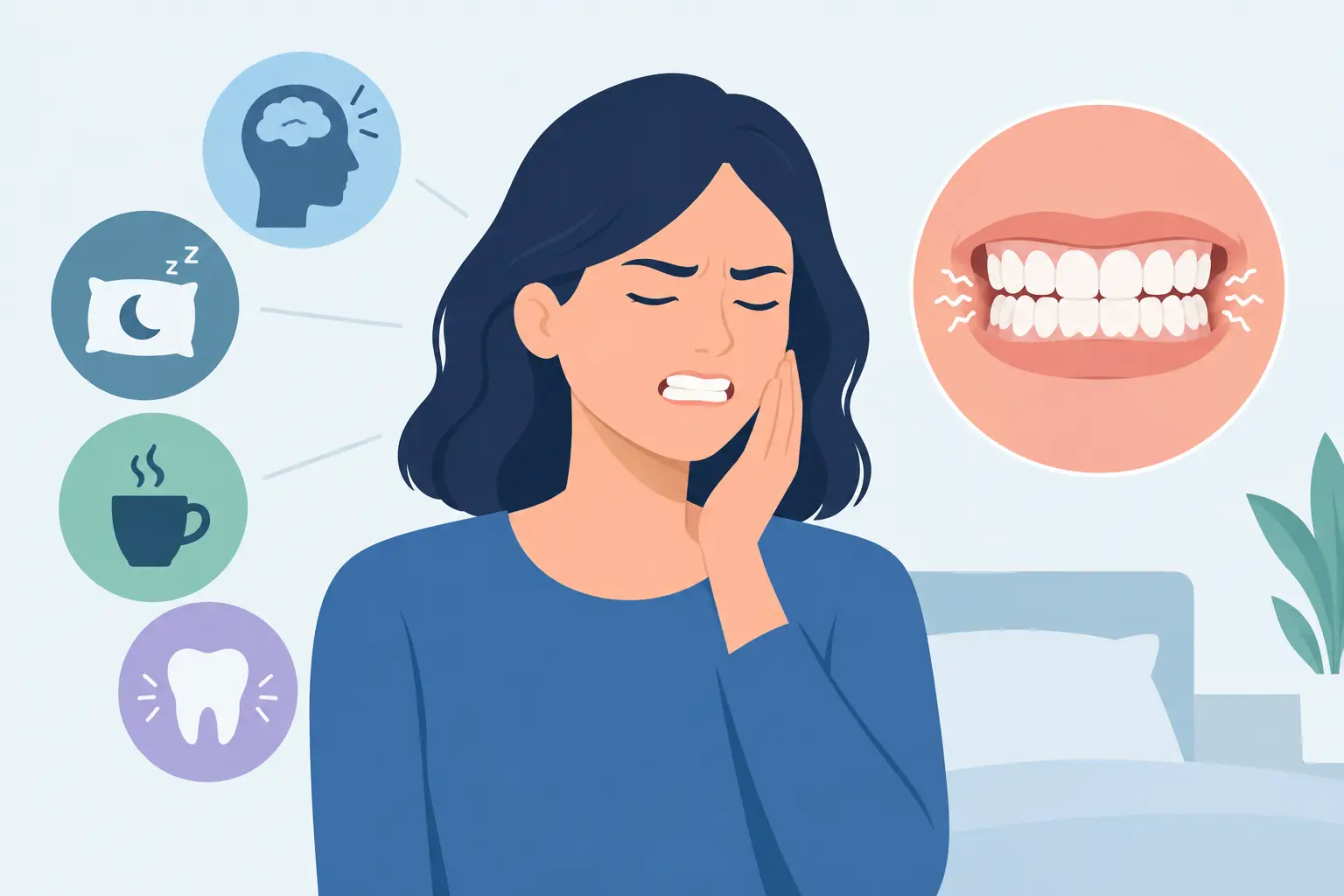
There is no single explanation for every patient. In many cases, bruxism reflects a combination of nervous-system activity, sleep quality, habits and dental factors. A careful assessment should look beyond the visible wear on the teeth and consider the whole picture.
Stress, anxiety and intense concentration
Stress is strongly associated with both clenching and grinding. When the body remains in a heightened state of alert, jaw muscles may tense as part of that response. This does not mean the symptoms are imagined or that stress is the only cause. It simply explains why many people notice more jaw discomfort during deadlines, exams, major life changes or periods of poor sleep.
Awake clenching can become a learned pattern. Teeth should generally be apart when you are resting, with the lips gently together and the tongue relaxed. Repeatedly checking this position during the day can make a meaningful difference, particularly when paired with strategies that address the source of stress.
Sleep disruption and sleep-related conditions
Sleep bruxism is linked with arousals from sleep, when the brain briefly becomes more active and jaw-muscle activity can increase. Poor sleep routines, irregular sleep hours, alcohol close to bedtime and stimulants may all aggravate this pattern for some people.
Obstructive sleep apnoea is also relevant. It does not mean everyone who grinds their teeth has sleep apnoea, nor that every person with sleep apnoea grinds. However, loud snoring, witnessed pauses in breathing, waking unrefreshed, morning headaches or significant daytime tiredness deserve medical assessment. Treating an underlying sleep-breathing issue may be more important than simply providing a guard.
Medicines, caffeine and other stimulants
Certain medicines can be associated with jaw clenching or grinding as a side effect. Some antidepressants and medicines that affect the central nervous system are examples. Do not stop prescribed medication because of jaw symptoms. Instead, speak with the clinician who prescribed it and your dentist so the possible relationship can be assessed safely.
High caffeine intake, nicotine, recreational drugs and alcohol can also worsen symptoms in some people, especially later in the day. The effect varies. A single morning coffee is not automatically a problem, but several caffeinated drinks, energy drinks or alcohol before bed may be worth reviewing if grinding has become more noticeable.
Bite changes and dental problems
A change in the way teeth meet can make the bite feel unfamiliar or uncomfortable. This may happen after a broken tooth, a lost filling, tooth movement, new dental work or significant tooth wear. It is understandable to assume that an uneven bite is the root cause of grinding, but the relationship is more complex. Modern evidence does not support routine irreversible bite adjustment as a universal treatment for bruxism.
That said, an altered bite still needs examination. A dentist can check for high contacts on a new restoration, signs of movement, cracks, worn teeth and areas that are taking excessive force. The goal is not to chase a perfect bite by removing healthy tooth structure. It is to identify a genuine dental problem and plan the most conservative, predictable solution.
Genetics, muscle activity and nervous-system factors
Some people appear more prone to sleep bruxism, and it can run in families. Children may grind their teeth too, often during phases of growth and tooth development. In children, the approach depends on symptoms, degree of wear, sleep quality and the condition of the teeth rather than the noise alone.
Jaw-muscle activity is regulated by the nervous system, which is why a night guard does not necessarily stop the underlying contractions. Its primary role is usually protection: it separates the upper and lower teeth and distributes load more safely. For patients with substantial wear, crowns, veneers, implants or a history of cracked teeth, that protection can be particularly valuable.
Signs that warrant a dental assessment
Grinding is often discovered during a routine examination rather than because the patient hears it. Flattened biting edges, small chips near the gumline, fractured restorations, tooth sensitivity and enlarged jaw muscles can all indicate excess loading. You may also notice tightness on waking, headaches around the temples, difficulty opening widely, or a jaw that clicks or feels tired when chewing.
Book an assessment promptly if a tooth becomes painful when biting, a filling or crown breaks, you have persistent jaw pain, or your teeth suddenly feel different together. These symptoms can have causes other than bruxism, including a cracked tooth, infection or jaw-joint disorder, so an accurate diagnosis matters.
How dentists assess bruxism
A thorough examination considers your symptoms, medical history, medicines, sleep and lifestyle, as well as the teeth themselves. Your dentist may assess wear patterns, check the jaw muscles and joints, examine old restorations, and look for signs of cracks or gum recession. Digital scans, photographs and X-rays may be used where clinically appropriate to document changes and plan treatment precisely.
For more complex cases, especially where there has been extensive tooth wear or repeated restoration failure, careful planning is essential. Rebuilding worn teeth without managing the forces that caused the damage can compromise the longevity of the result. A multidisciplinary approach may be needed to protect teeth, restore function and achieve a natural-looking smile.
Treatment focuses on protection and the underlying trigger
Treatment is tailored to the cause, severity and condition of your teeth. A custom-made night guard may help protect enamel and dental restorations from further wear. It is different from a shop-bought guard: it is made from accurate impressions or digital scans, fitted to your bite and reviewed for comfort and function. It is not a cure for every form of grinding, but it can be an effective part of a wider plan.
If awake clenching is a factor, awareness techniques, jaw relaxation exercises and reducing prolonged tooth contact may help. Addressing sleep, moderating evening alcohol or caffeine, and discussing anxiety support with an appropriate healthcare professional can also be worthwhile. Where sleep apnoea is suspected, referral for medical evaluation is the correct next step.
Damaged teeth may require treatment ranging from smoothing a small sharp chip to replacing a fractured filling, placing a crown, or planning more comprehensive rehabilitation. The right option depends on how much healthy tooth structure remains, how the teeth meet, your aesthetic goals and the forces the restoration will need to withstand.
A calm, early response can prevent bigger problems
Bruxism can be frustrating because the behaviour is often unconscious, particularly at night. It is not a failure of willpower, and it should not be treated with one-size-fits-all advice. At Slievemore Dental, assessment is centred on identifying what is driving the pressure on your teeth and choosing the least invasive route to protect your comfort, function and long-term dental health.
If you are waking with jaw pain, noticing wear, or repeatedly breaking restorations, arranging an examination now can give you clarity and help prevent a small sign of strain becoming a more complex dental problem.