When comparing implant supported versus removable dentures, the right choice is rarely just about replacing missing teeth. It is about eating comfortably, speaking without worry, feeling confident in social situations and choosing a treatment that suits your health, lifestyle and long-term expectations. For some patients, a well-made removable denture is an excellent, practical solution. For others, dental implants provide the stability and reassurance that conventional dentures cannot achieve.
At Slievemore Dental, this decision is approached carefully. A detailed assessment of your teeth, gums, jawbone, bite and goals helps determine which option can offer the safest, most natural-looking and predictable result.
Implant supported versus removable dentures: the key difference
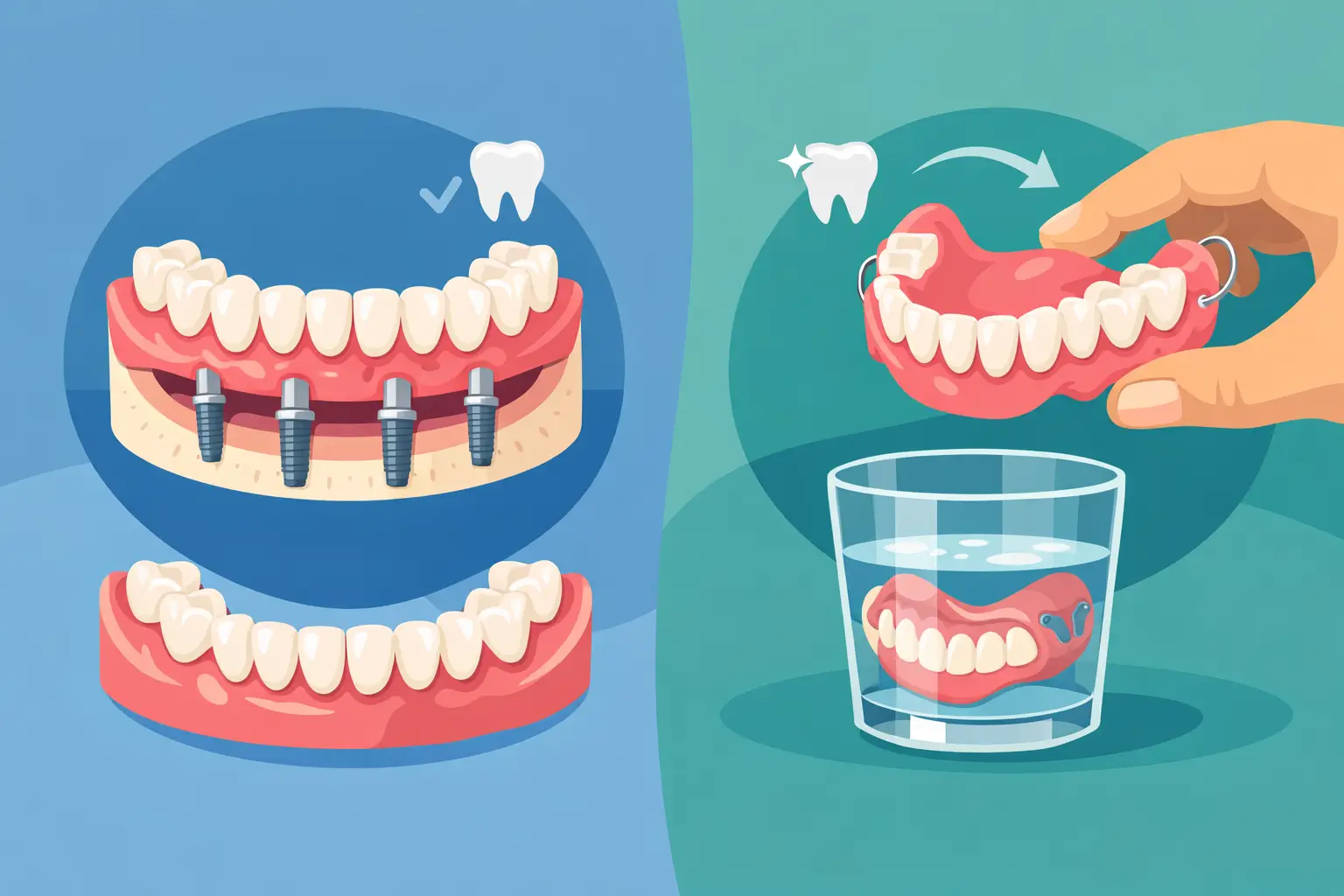
A conventional removable denture rests directly on the gums. It replaces missing teeth with a custom-made acrylic or metal-based appliance that can be taken out for cleaning and while sleeping. It may replace a few missing teeth, known as a partial denture, or an entire upper or lower arch.
An implant-supported denture is secured using dental implants placed in the jawbone. Depending on the treatment design, the denture may clip firmly on to implants but still be removable by the patient, or it may be fixed in place and only removed by the dentist for professional maintenance. The distinction matters because not every implant restoration is permanently fixed.
Dental implants act as artificial tooth roots. Once integrated with the bone, they provide a stable foundation for replacement teeth, helping to reduce movement and distribute biting forces more effectively than a denture sitting on the gums alone.
How removable dentures can work well
Modern removable dentures are not the same as the bulky, generic appliances many people remember from the past. With accurate impressions, careful bite planning and high-quality materials, they can look natural and restore an attractive smile.
They are often the most straightforward option when several teeth are missing, particularly where a patient is not ready for surgery or needs an immediate solution after extractions. Treatment is generally less invasive, and the initial cost is usually lower than implant treatment. A removable denture can also be adjusted, repaired or replaced as your mouth changes.
For patients with significant medical considerations, limited bone volume, or a preference to avoid surgery, this may be the most appropriate route. A denture can also be used as an interim restoration while gums heal or while implant treatment is being planned.
The limitations to understand
Because removable dentures sit on soft tissue, they can move when speaking, laughing or eating firmer foods. Lower dentures are particularly prone to instability because the tongue, cheeks and reduced surface area of the lower jaw can dislodge them.
Some people adapt very well. Others experience sore spots, a reduced biting ability or a persistent fear that the denture will lift at the wrong moment. Denture adhesive may improve retention for some patients, but it does not change the underlying limitation: the appliance is not anchored to the jaw.
Over time, the jawbone beneath missing teeth naturally remodels and reduces in volume. As the shape of the ridge changes, a denture that once fitted well can become loose and may need relining or replacement. This process can also affect facial support, particularly where many teeth have been absent for a long period.
What implant-supported dentures can change
Implant-supported treatment is designed to provide greater retention and stability. Even two implants in the lower jaw can make a substantial difference for a patient whose lower denture moves constantly. The denture attaches to special connectors on the implants, allowing it to sit more securely during daily activities.
With a larger number of implants, a fixed full-arch bridge may be possible. This can feel closer to having natural teeth because it is firmly attached and does not need to be removed at home. Full-arch implant treatment is often considered where all teeth in one jaw are missing, failing or no longer predictable to restore.
The benefits commonly include improved chewing efficiency, clearer speech, less rubbing on the gums and greater confidence. Because implants transfer force into the jawbone, they can also help preserve bone in the areas around them. This does not stop every natural change in the mouth, but it is a meaningful advantage compared with leaving the bone entirely without stimulation.
Fixed and removable implant options
There is no single implant solution for every patient. An implant-retained removable denture can be an excellent middle ground, providing strong day-to-day security while remaining easy to remove and clean. It can be particularly suitable for patients who want improved stability without committing to a fixed bridge.
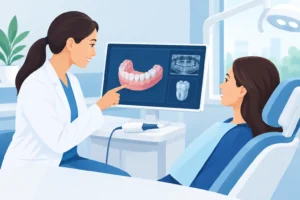
A fixed implant bridge offers the highest degree of stability, but it requires careful planning, sufficient implant support and a commitment to meticulous hygiene. It may also involve more complex surgical and restorative stages. For patients with extensive tooth loss, digital planning can help the clinical team assess bone, tooth position, smile design and bite before treatment begins.
The most sophisticated option is not automatically the best one. The best option is the one that can be maintained comfortably and reliably for years.
The factors that should guide your decision
Your current oral health is central to the decision. Active gum disease, untreated decay, infection or poorly controlled medical conditions may need attention before implant surgery can be considered. Smoking can also affect healing and long-term implant health, so this should be discussed openly and without judgement.
Bone volume matters, but a patient does not need to be ruled out simply because they have been told they have bone loss. Modern implant planning can identify whether implants can be placed in available bone or whether procedures such as bone grafting or soft tissue augmentation may be beneficial. These decisions need specialist assessment and should never be rushed.
Your bite is equally relevant. Heavy clenching or grinding can place substantial pressure on dentures, natural teeth and implant restorations. A carefully designed restoration, suitable materials and protective measures such as a night guard may be recommended to protect your investment.
Lifestyle also plays a role. Someone who values the convenience of a removable appliance and is comfortable taking it out at night may be very happy with an implant-retained denture. Someone who wants to eat confidently in professional or social settings, and strongly dislikes the sensation of a removable plate, may prefer to explore fixed options.
Treatment time, comfort and maintenance
Conventional dentures can often be provided more quickly, especially as an immediate replacement after teeth are removed. However, the fit may change during healing, so adjustments and later replacement dentures are sometimes needed.
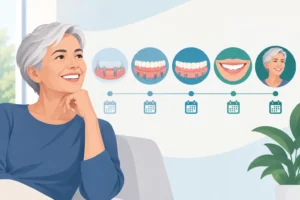
Implant treatment typically takes longer because the implants need time to heal and integrate with the jawbone. In suitable cases, temporary teeth may be provided during the healing phase. The exact timeline depends on the quality of bone, whether teeth need to be removed, the presence of infection, and the type of final restoration planned.
Both options require ongoing care. Removable dentures should be cleaned daily, taken out as advised and checked regularly for fit. Implant-supported restorations require equally diligent hygiene. Whether the teeth are removable or fixed, plaque can still collect around implants and gum tissues. Professional hygiene visits and routine reviews are essential to protect the health of the implants and surrounding bone.
A fixed bridge is not maintenance-free, and a removable denture is not a lesser form of care. Each option succeeds when it is accurately planned, well made and looked after consistently.
Cost and long-term value
Initial cost is understandably a major consideration. Conventional removable dentures usually involve a lower upfront investment. Implant-supported options require surgery, advanced imaging, laboratory work and a more complex restorative process, so the initial cost is higher.
The more useful question is often what level of function, confidence and maintenance you expect over the long term. A well-planned implant restoration can offer excellent longevity, but it still needs professional care and may require replacement components or restoration renewal in the future. A removable denture is more economical initially, but may need regular relines or replacement as the mouth changes.
A clear treatment plan should explain the stages involved, likely maintenance needs and the alternatives available, so you can make a decision without pressure.
A decision that should feel personal, not rushed
No one should be made to feel that removable dentures are a failure, or that implants are an unnecessary luxury. Both treatments can restore a smile and improve quality of life when selected for the right clinical reasons.
The most reassuring next step is a comprehensive consultation where your concerns are heard, your mouth is assessed thoroughly and every option is explained in plain language. The aim is to leave with a solution that feels safe, manageable and genuinely right for the life you want to lead.