A sedated dental appointment should feel carefully planned, not uncertain. Whether you are having a difficult wisdom tooth removed, implant treatment, multiple restorations or care after years of dental anxiety, good dental sedation preparation helps your clinical team protect your safety and helps you arrive feeling more in control.
Sedation can make treatment feel far more manageable, but it is not a one-size-fits-all service. The instructions for inhalation sedation, oral sedation and intravenous sedation can differ considerably. Your dentist or oral surgeon will give you instructions tailored to your procedure, health history and chosen form of sedation. Those instructions always take priority over general advice.
Why preparation matters for safe sedation
Sedation reduces anxiety and can make a longer or more complex procedure easier to tolerate. Depending on the technique used, you may feel deeply relaxed, drowsy or less aware of time, while still being able to respond to your dentist. Local anaesthetic is usually also required, because sedation supports comfort but does not replace effective numbing.
The preparation is not simply administrative. Eating or drinking at the wrong time, taking an unreported medicine, or arriving without a responsible adult to take you home can mean treatment must be postponed. This can be frustrating, particularly when you have arranged time away from work or are already nervous, but it is a decision made in the interests of safe care.
A detailed consultation allows the team to select an approach appropriate for you. At Slievemore Dental, this planning is particularly valuable where sedation forms part of oral surgery, complex restorative treatment or implant care, because the procedure, your medical history and your recovery needs are considered together.
Dental sedation preparation starts with an honest health history
Before treatment, tell your dentist about every prescribed medicine, over-the-counter remedy, vitamin, supplement and herbal product you use. This includes medicines you take only occasionally, such as sleep aids, antihistamines, strong pain relief or anxiety medication. Some can increase drowsiness or interact with sedative medicines, while others may affect bleeding, blood pressure or blood sugar management.
Your clinician also needs to know about relevant medical conditions, including heart or lung disease, diabetes, epilepsy, liver or kidney conditions, obstructive sleep apnoea, severe reflux, allergies and previous problems with anaesthetic or sedation. Mention if you are pregnant, think you may be pregnant, or are breastfeeding. None of these details automatically prevents treatment, but they may change the timing, technique or monitoring required.
Be candid about alcohol, smoking, vaping and recreational drug use. This information is confidential and clinical, not judgemental. It helps your team avoid avoidable risks and choose the safest care plan. Do not stop regular prescribed medication unless your dentist, GP or relevant specialist has specifically advised you to do so.
Ask which type of sedation you are having
The word “sedation” covers several different approaches. With inhalation sedation, often called relative analgesia, you breathe a carefully controlled gas mixture through a nosepiece and generally recover more quickly. Oral sedation is taken as a tablet before treatment and can leave you drowsy for longer. Intravenous sedation is administered through a small cannula and is commonly used for patients with significant anxiety or for surgical procedures.
Fasting, transport and recovery arrangements depend on the method used. Ask your clinician to explain what you will feel, how long the appointment is expected to take, and what support you will need afterwards. A clear explanation often reduces anxiety well before the day of treatment.
Food, drink and medicines: follow your personal instructions
Fasting guidance is one of the most important parts of dental sedation preparation, and it varies. For some forms of sedation, you may be asked not to eat for a set period before your appointment, while clear fluids may be permitted up to a particular time. For other forms, a light meal may be recommended. The aim is to reduce nausea and the risk of stomach contents entering the airway while you are drowsy.
Do not assume that instructions from a previous hospital or dental appointment apply this time. The safest rule is to follow the written instructions given for your specific sedation and procedure. If you have diabetes, fasting requires particularly careful planning. Contact the practice in advance so your eating schedule and medication can be safely managed rather than trying to work it out on the morning of treatment.
Avoid alcohol for the period advised by your clinician, and never take someone else’s calming medication. Do not use recreational drugs before sedation. If you are unwell with a fever, vomiting, a chest infection, a heavy cold or new breathing symptoms, call the practice before leaving home. Sedation may need to be delayed until you are well enough for it to proceed safely.
Arrange your journey home before the appointment
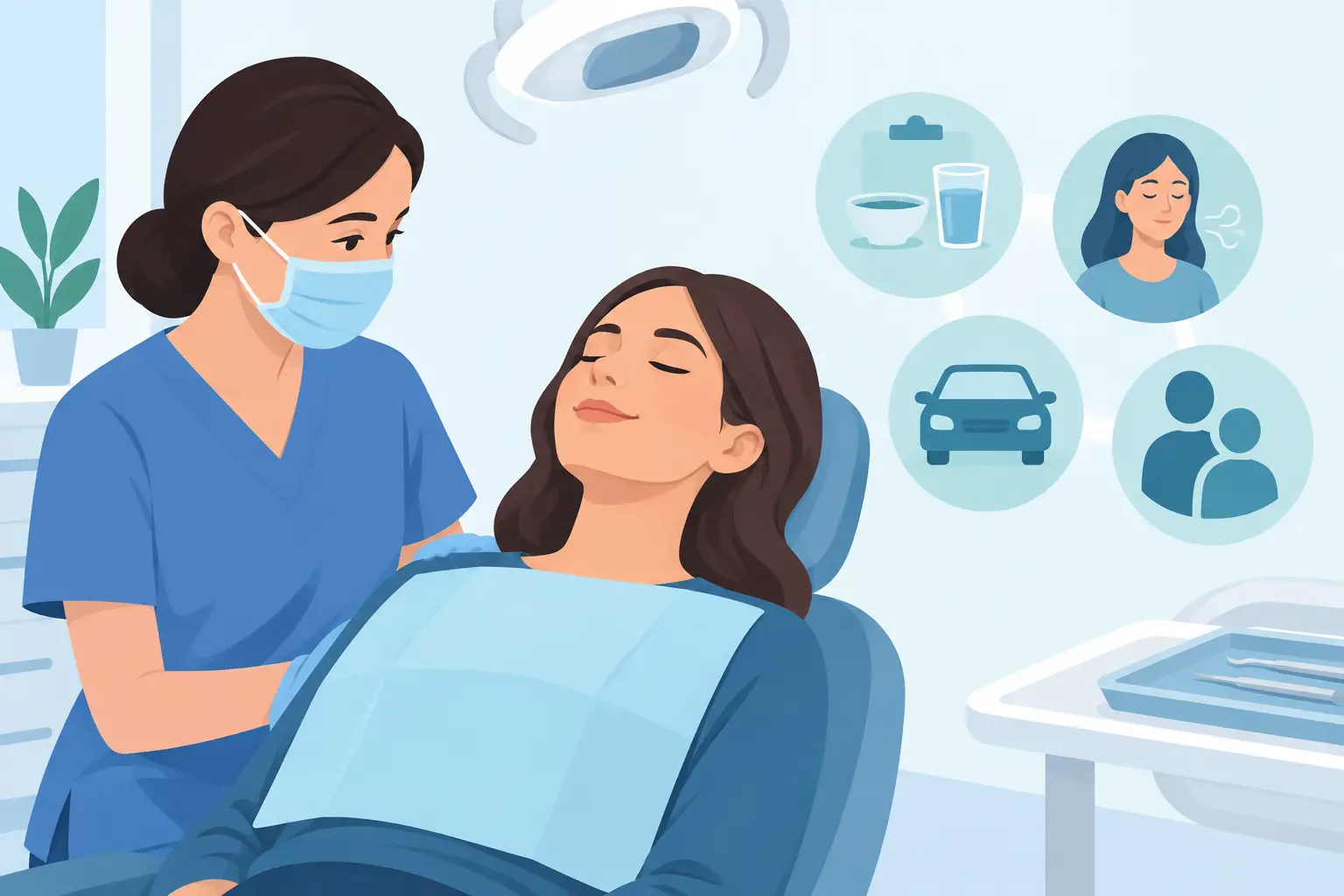
For oral or intravenous sedation, you will need a responsible adult to collect you, accompany you home and remain with you for the period your clinician advises. A taxi driver, rideshare driver or public transport journey does not provide the supervision required after sedative medication.
Do not plan to drive, cycle, operate machinery, return to work, make significant decisions, sign important documents or care for young children alone after sedation. Even when you feel alert, concentration, coordination and memory can be affected for the rest of the day. Keep your diary clear and let your escort know roughly how long they may need to wait.
Choose loose, comfortable clothing and wear short sleeves if you are having intravenous sedation, so your blood pressure can be checked and the cannula placed comfortably. Avoid heavy make-up and nail products if your clinical team has asked you to do so, as monitoring equipment may need clear access to skin or nails. Bring any requested medical information, as well as a current list of your medicines.
On the day: give yourself time to settle
Arrive early enough that you are not rushing through traffic or trying to find parking while anxious. A few unhurried minutes allow the team to check your consent, medical history, fasting status and escort arrangements. Your blood pressure, pulse and oxygen levels may be recorded before treatment and monitored throughout where appropriate.
Tell your dentist how you are feeling. Nervous patients often worry that they must be brave or quiet to avoid being difficult. You do not. A raised hand can be used as a stop signal, and your team can talk through each stage at a pace that feels manageable. Sedation is most effective when paired with clear communication, gentle local anaesthetic technique and a calm clinical environment.
If you have not followed your preparation instructions exactly, say so. It is far safer to be open than to hope it will not matter. Your clinician can assess the situation and decide whether treatment can continue, needs modifying or should be rearranged.
Prepare your home for a quieter recovery
Before you leave for the appointment, set up an easy recovery space. Have water available if permitted after treatment, choose soft foods if you are having surgery or extractions, and collect any prescribed medicines in advance where possible. Your dentist may provide written aftercare instructions, particularly after implant surgery, wisdom tooth removal or extensive restorative treatment.
It is common to remember less of the appointment after intravenous sedation. That can be reassuring for people with dental fear, but it makes written instructions and a supportive escort especially useful. Mild drowsiness is expected; severe or worsening symptoms, breathing difficulties, persistent vomiting or any concern about your recovery should be discussed with the dental team or urgent medical services as advised.
Good preparation is one of the quietest ways to make advanced dental care feel gentler. Ask every question you need, follow the plan designed for you, and allow yourself a calm day afterwards – your comfort and safety deserve that space.