Bleeding when you brush is easy to dismiss, especially when it stops quickly. Yet healthy gums should not routinely bleed, feel swollen or leave a persistent unpleasant taste. This guide to gum disease stages explains what those early changes can mean, how gum disease progresses, and why timely, gentle care can protect far more than your smile.
Gum disease is extremely common, but it is not something to feel embarrassed about. Plaque is a sticky bacterial film that forms every day, including in people who brush carefully. When it is not removed thoroughly around the gumline and between teeth, it can trigger inflammation. Over time, that inflammation may damage the structures that hold teeth securely in place.
The good news is that early gum disease is usually reversible. More advanced disease can be stabilised with the right treatment and ongoing maintenance, although lost bone and gum attachment do not simply grow back. The earlier we identify the problem, the more conservative and predictable your care is likely to be.
What clinicians mean by gum disease stages
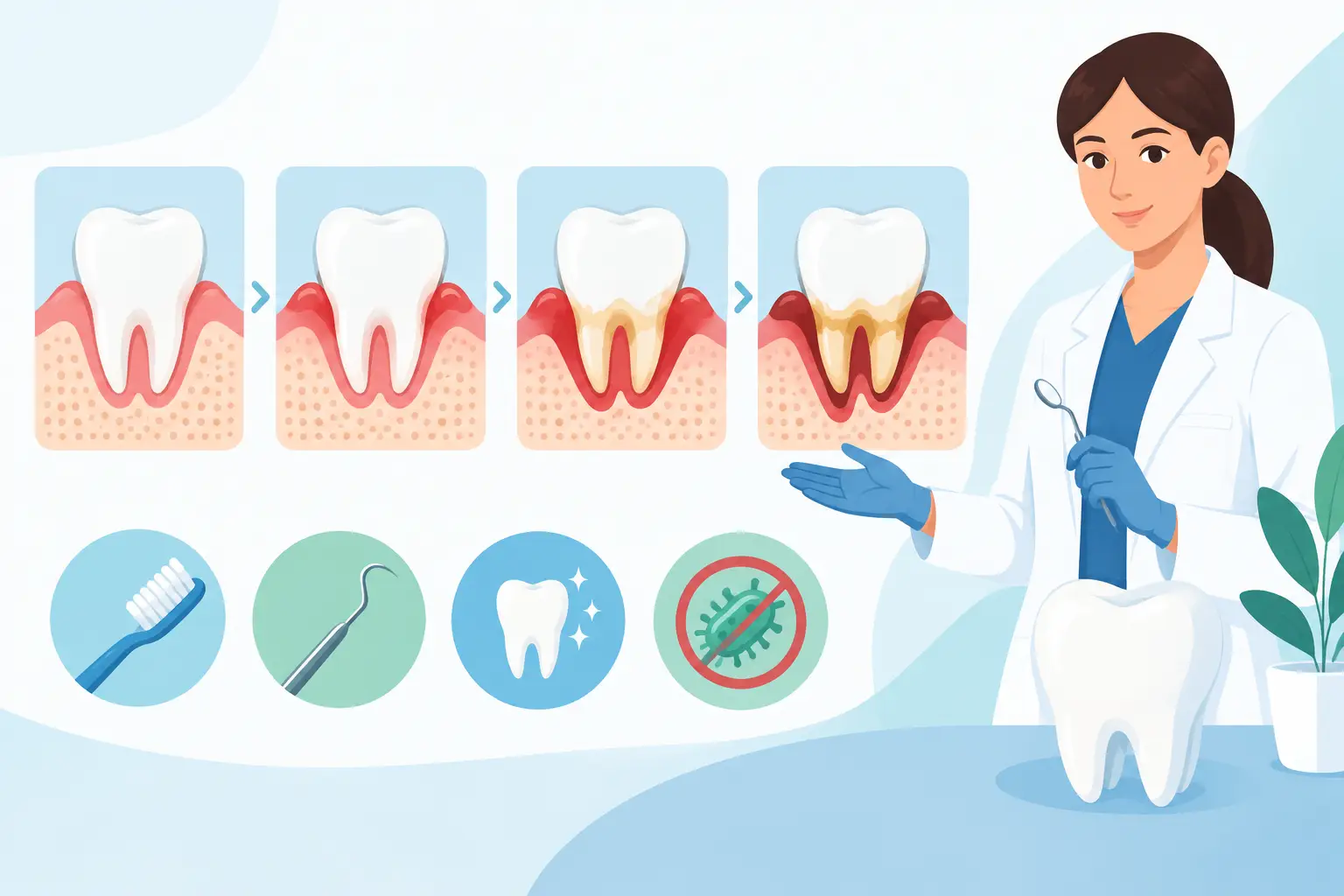
Gum disease develops along a spectrum. The first stage is gingivitis, where inflammation is limited to the gums. If it is left untreated in a susceptible person, it may progress to periodontitis. Periodontitis affects the deeper supporting tissues, including the periodontal ligament and jawbone.
A dentist or hygienist does not judge the stage from appearance alone. They will assess bleeding, plaque and tartar deposits, gum recession, pocket depths around each tooth, tooth mobility and bite changes. X-rays may be needed to check for bone loss beneath the gumline. This allows treatment to be planned around your individual mouth rather than a one-size-fits-all label.
Not everyone with gingivitis develops periodontitis, and progression is not always linear. Smoking, diabetes, certain medications, dry mouth, family history, stress, oral hygiene habits and irregular dental attendance can all affect risk. A person may also have localised disease around a few teeth rather than the whole mouth.
Stage 1: Gingivitis
Gingivitis is inflammation of the gums caused most often by plaque accumulation. Gums may look redder than usual, feel tender, appear puffy or bleed during brushing, flossing or eating firm foods. Bad breath can occur too, even when you brush regularly.
At this stage, there is no permanent loss of the bone or connective tissue supporting the teeth. Professional cleaning, better daily plaque removal and a review of the factors contributing to inflammation can usually return the gums to health. It is common for gums to bleed a little more when you first begin cleaning between the teeth consistently. Do not stop because of this – persistent bleeding is a reason to have it assessed.
Tartar, also called calculus, is hardened plaque that cannot be brushed away at home. A hygiene appointment removes these deposits carefully, particularly from areas that are difficult to reach. Your clinician can then show you the brush, interdental brush or other cleaning method best suited to the spaces between your teeth.
Stage 2: Early periodontitis
Early periodontitis begins when inflammation has caused measurable loss of the attachment between the gum and tooth, and early bone loss may be visible on X-rays. The gum can detach slightly from the tooth, creating deeper spaces called periodontal pockets where bacteria and deposits collect more easily.
Symptoms can still be subtle. Some people notice bleeding, a lingering bad taste or mild recession, while others have no discomfort at all. This is why routine examinations matter: periodontitis is often painless until it has advanced.
Treatment generally involves detailed periodontal cleaning above and below the gumline, alongside tailored home-care instruction. In some cases, local anaesthetic is used so deeper cleaning can be completed comfortably. Your response is reviewed after the gums have had time to heal. The aim is to reduce inflammation, control the bacterial burden and prevent further attachment loss.
Stage 3: Moderate periodontitis
With moderate periodontitis, bone loss and periodontal pockets are more established. Recession may make teeth look longer, and gaps can appear where the gums have receded or teeth have started to drift. Some patients notice sensitivity to cold, tenderness when chewing, or a tooth that feels different when they bite.
Care at this stage remains very worthwhile. It may involve several focused hygiene visits, careful monitoring of pocket depths and X-rays, and management of factors that increase risk. If gum pockets remain deep despite thorough non-surgical treatment and excellent plaque control, referral or specialist-led periodontal treatment may be considered. This can include procedures designed to improve access for cleaning or, in selected cases, regenerative approaches.
The trade-off is that treatment requires commitment at home as well as in the clinic. Deep cleaning can remove infection-causing deposits, but it cannot prevent recurrence if plaque is allowed to build up again. Regular periodontal maintenance is therefore part of protecting the result, not an optional extra once symptoms settle.
Stage 4: Advanced periodontitis
Advanced periodontitis involves substantial loss of the bone supporting one or more teeth. Teeth may become mobile, move position, flare apart or feel uncomfortable during chewing. Gum abscesses, recurrent swelling and changes to the bite can also occur. A loose tooth does not always mean it must be removed, but it does require prompt assessment.
Treatment is planned carefully around which teeth have a realistic long-term prognosis, your overall health, your bite and your priorities. The first priority is to control active infection and inflammation. Some teeth may be stabilised and maintained with periodontal treatment, while others may be too compromised to keep predictably.
Where teeth cannot be saved, replacement options can be discussed only after gum health is under control. Depending on the case, this may include a bridge, denture or dental implants. Implant treatment requires healthy, stable gums and adequate bone, so it is not a shortcut around untreated periodontal disease. In complex cases, coordinated planning between restorative and surgical clinicians helps protect comfort, function and natural-looking results.
Signs you should arrange an assessment
Do not wait for pain before seeking advice. Gum disease can remain quiet while damage continues beneath the surface. Arrange an appointment if you have any of the following:
- Bleeding gums that continue for more than a week or two despite careful cleaning
- Swelling, pus, a gum boil or a persistent unpleasant taste
- New gaps, receding gums, loose teeth or a change in the way your teeth meet
- Bad breath that does not improve with regular brushing and cleaning between teeth
Urgent advice is particularly sensible if you have facial swelling, severe pain, fever or difficulty swallowing. These symptoms may indicate an active dental infection that needs prompt care.
How to protect your gums between appointments
The most effective daily routine is usually straightforward: brush twice daily for two minutes using a fluoride toothpaste, clean between the teeth once daily, and attend hygiene and dental reviews at the interval recommended for your risk level. Spit after brushing rather than rinsing straight away, so the fluoride can remain on the teeth.
The best interdental aid depends on the size and shape of the spaces between your teeth. Interdental brushes are often highly effective where they fit comfortably; floss may be more appropriate for tighter contacts. Your dental team can help you choose and use the right size. Forcing an oversized brush can injure the gum, while a brush that is too small may not clean effectively.
Stopping smoking is one of the most significant changes you can make for gum health. Smoking can mask bleeding while increasing the risk and severity of periodontitis, and it can reduce healing after treatment. If you have diabetes, keeping blood glucose well controlled also supports a healthier response to gum treatment.
At Slievemore Dental, gum assessments are approached without judgement. Whether you have avoided appointments through anxiety, have noticed recent bleeding, or have been told you need complex periodontal care, the first step is simply to understand what is happening and make a calm, precise plan. Your gums support every smile, every meal and every restoration – giving them attention now can make a meaningful difference for years ahead.