The thought of a dental appointment can cause a very real physical response: a racing heart, poor sleep, a tight chest, or the urge to cancel at the last minute. If you are looking for a dentist for nervous patients, the right care is not simply about getting through treatment quickly. It is about being listened to, understanding what will happen, and retaining control at every stage.
Dental anxiety is common, including among people who appear entirely confident in other areas of life. It may stem from a difficult childhood visit, a painful procedure, embarrassment about the condition of your teeth, a sensitive gag reflex, or simply not knowing what to expect. Whatever the reason, it deserves a calm and respectful response.
Why dental anxiety should never be dismissed
Avoiding the dentist can feel like the safest short-term choice, particularly when there is no pain. Unfortunately, small issues such as early decay, gum inflammation or a cracked filling can develop quietly. By the time pain, swelling or a broken tooth forces an appointment, treatment may be more involved than it would have been earlier.
This is not a reason to feel guilty. Many nervous patients have gone years without a check-up because previous experiences made dental care feel impossible. A supportive practice will focus on where you are now, not on why you have delayed treatment. The aim is to stabilise your oral health gently and build confidence one manageable appointment at a time.
For some people, that first visit may be a conversation and examination only. There is no clinical benefit in rushing a patient into treatment before they feel ready, unless an urgent problem needs immediate attention.
What a dentist for nervous patients should do differently
Gentle dentistry is not a vague promise. It is a way of planning and delivering care that places communication, predictability and comfort alongside clinical precision.
Start by listening, not judging
A good first appointment should give you room to explain your concerns in your own words. You might be worried about injections, drilling, feeling out of control, costs, being told off about your teeth, or all of these at once. Sharing this information allows the clinical team to adapt the appointment rather than expecting you to cope with a standard routine.
It can help to say exactly what has been difficult in the past. For example, you may prefer not to see instruments, need frequent pauses, or find it easier when each step is explained before it happens. There is no need to minimise your anxiety. Clear information helps your dentist make better decisions about your care.
Explain treatment before it begins
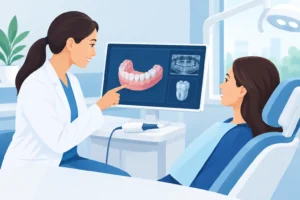
Uncertainty can make even straightforward care feel overwhelming. Your dentist should explain the diagnosis in plain language, show you relevant X-rays or digital images where useful, and discuss the realistic options available.
For a tooth that needs treatment, this might include monitoring, a filling, root canal treatment, a crown or extraction, depending on the diagnosis. Each option has different implications for comfort, longevity, time and cost. Knowing why a recommendation is being made can replace the fear of the unknown with a clear plan.
Ask for information in stages if that feels easier. Some patients want a full explanation before they begin. Others prefer only the next step to be described. Both approaches are valid.
Agree a clear stop signal
One of the simplest ways to restore a sense of control is to agree a stop signal before treatment starts, often raising a hand. This tells the dentist you need a pause, whether because you need to swallow, reposition yourself, ask a question or take a breath.
A pause should be treated as part of normal care, not as an inconvenience. You remain in control of the pace, while the dentist remains responsible for ensuring treatment is safe and effective.
Use effective pain control with patience
Fear of pain is a major reason people avoid dentistry. Modern local anaesthetic techniques are highly effective, but a calm approach matters as much as the medication itself. Numbing gel may be used before an injection, injections can be given slowly, and the dentist should check that you are fully numb before starting.
You may still notice pressure, vibration or water during a procedure, but you should not have to tolerate sharp pain. If you feel discomfort, use the stop signal straight away. Pain control can be adjusted, and proceeding before you are comfortable is rarely the right approach.
Plan in smaller, achievable stages
If you have several areas that need attention, a long appointment may not be the best place to start. Shorter visits can make treatment more manageable and create positive experiences that gradually reduce anxiety.
There are trade-offs. Completing treatment in fewer, longer visits may suit someone travelling a distance or dealing with a time-sensitive problem. Spacing appointments out can be more comfortable psychologically, but it may extend the overall treatment period. Your dentist should help you choose a pace that protects both your wellbeing and your oral health.
How technology can make care feel more predictable
Modern dentistry is not only about advanced cosmetic or restorative results. Digital tools can also improve comfort and clarity for anxious patients.
Digital X-rays use lower radiation doses than traditional film and can be viewed immediately, allowing the dentist to explain what they can see without leaving you guessing. Intraoral cameras can make a hidden problem visible on screen, while digital scans can sometimes replace conventional impression materials for crowns, orthodontic planning and other treatments.
For more complex care, such as implants, extensive crown work or full-mouth rehabilitation, digital planning helps clinicians assess bone, bite and tooth position in detail before treatment begins. This can make the process more predictable, though technology does not replace careful diagnosis or clinical skill. It is one part of a well-considered treatment plan.
When additional support may be appropriate
Some patients can manage well with a calm environment, clear explanations and regular breaks. Others experience anxiety so intense that additional support should be discussed. Where clinically appropriate, options may include sedation to help you feel deeply relaxed during treatment.
Sedation is not the same as being unconscious. The exact approach depends on your medical history, the procedure and your individual needs. Your dental team should explain the benefits, limitations, aftercare requirements and whether you will need someone to accompany you home.
For severe dental phobia, panic attacks, trauma-related anxiety or a strong gag reflex, it may also be helpful to speak to your GP or a qualified mental health professional alongside arranging dental care. There is no single solution for everyone, and a thoughtful care plan may involve more than one form of support.
Preparing for your appointment without adding pressure
A little preparation can make the day feel easier. Book at a time when you are less likely to be rushed, and let the practice know in advance that you are anxious. You can ask whether a longer consultation is available, bring headphones if music helps, or attend with a trusted person where appropriate.
Avoid arriving overly early if waiting rooms heighten your anxiety, but allow enough time that you do not feel hurried. Eat normally before an appointment unless you have been given specific instructions not to do so. If you are considering sedation, follow the practice’s preparation guidance carefully.
It is also useful to write down your questions. You may want to ask what will happen today, how long the visit will take, whether treatment is necessary immediately, what your pain-relief options are, and what the fees are likely to be. A high-quality practice will welcome these questions.
A gentle route back to regular dental care
The goal is not to make you enjoy every aspect of dentistry. It is to make appointments feel safe, understandable and achievable, so that fear no longer prevents you from protecting your health.
At Slievemore Dental, this means combining a judgement-free patient experience with carefully planned general, restorative and specialist care. Whether you need a routine examination, help with a dental emergency, treatment for a damaged tooth or a more complex rehabilitation plan, the first step can be as simple as a conversation.
You do not need to arrive feeling brave. You only need a dental team that takes your concerns seriously and gives you the time, information and gentleness to move forward at your own pace.