A missing tooth can affect far more than the appearance of a smile. It may make chewing uncomfortable, alter the way neighbouring teeth meet, or leave you reluctant to speak or laugh freely. Dental implants are designed to replace the root as well as the visible part of a tooth, creating a stable foundation for a crown, bridge or full-arch restoration that looks and feels close to natural.
For many people, implant treatment is a life-changing option. It is also a carefully planned clinical process, not a one-size-fits-all procedure. The right approach depends on your oral health, bone levels, bite, medical history, aesthetic goals and the number of teeth being replaced.
What are dental implants?
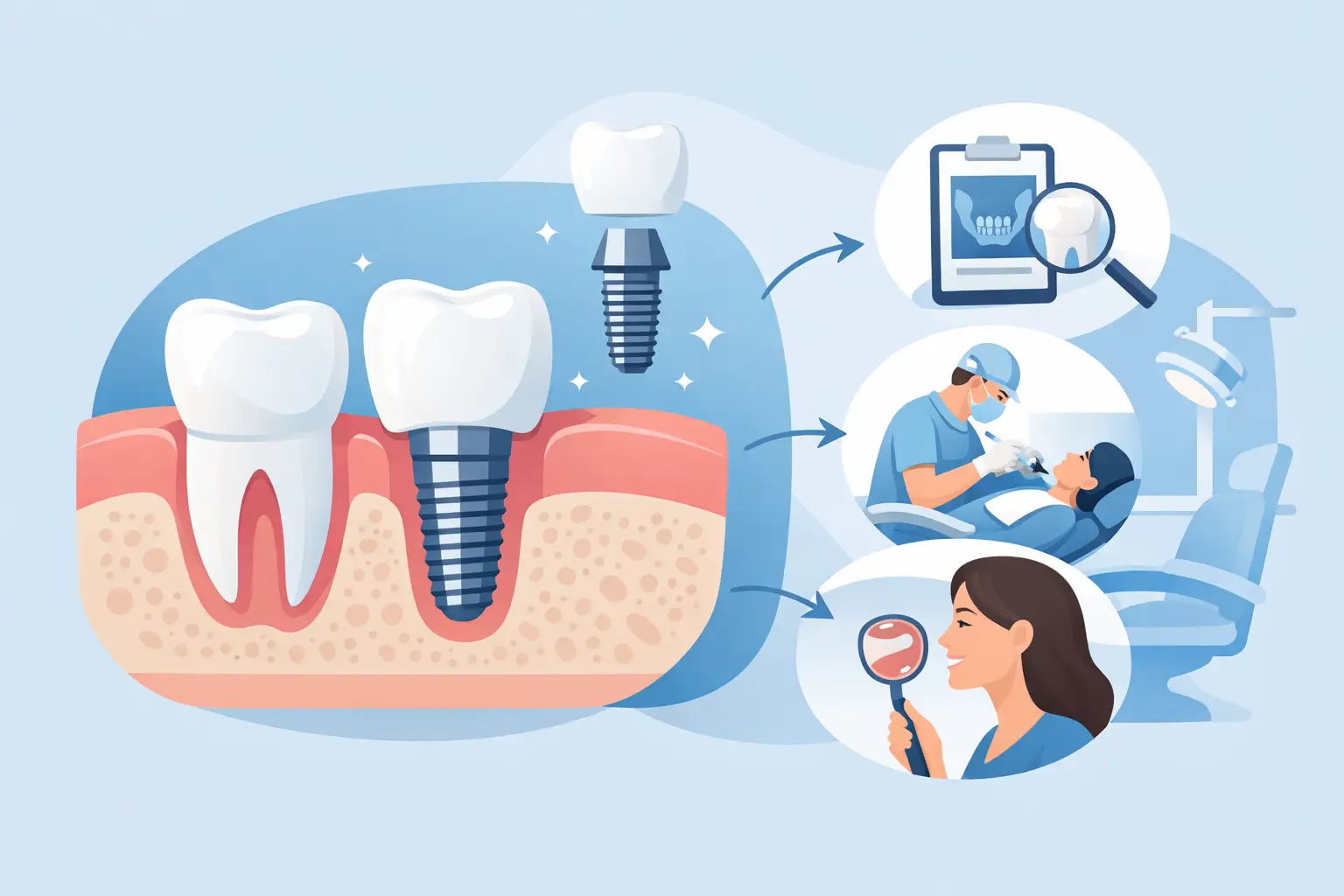
A dental implant is a small titanium post placed into the jawbone to act as an artificial tooth root. Once it has healed and integrated with the bone, a custom restoration is attached. This may be a single crown for one missing tooth, a bridge supporting several teeth, or a fixed full-arch restoration for patients with failing or absent teeth.
The visible tooth is made to match the shape, shade and character of your natural smile. Good implant dentistry considers more than the crown alone. The gum line, facial support, bite forces and the position of surrounding teeth all influence whether a result will be comfortable, natural-looking and built to last.
Unlike a conventional bridge, an implant can often replace a missing tooth without preparing the healthy teeth on either side. Unlike a removable denture, it is fixed in place and does not rely on clasps or adhesive. That does not automatically make implants the best choice for every patient, but it explains why they are frequently considered where long-term stability and function matter.
The planning stage matters as much as the surgery
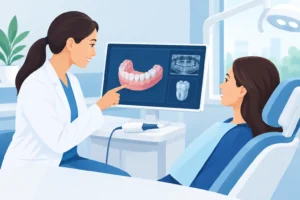
Successful treatment begins with a detailed assessment. Your clinician will examine the teeth, gums and bite, discuss your concerns and review your medical history. Digital scans, photographs and X-rays are used to understand the quality and volume of bone, the position of vital structures and the final tooth position required.
This restorative-led approach is particularly important in the front of the mouth, where a few millimetres can affect the smile line and gum contour. It is equally valuable at the back of the mouth, where implants must withstand substantial chewing forces. Digital planning allows the surgical and restorative stages to be coordinated from the outset rather than treated as separate procedures.
If gum disease, active decay or infection is present, these issues should be managed before implant placement. An implant needs a healthy, stable environment. Patients who have avoided dental care for years should not feel embarrassed by this. The purpose of the assessment is to create a clear, manageable plan, at a pace that supports your health and confidence.
Is there enough bone for an implant?
Bone naturally reduces in volume after a tooth is lost, particularly when the space has been present for some time. This does not necessarily rule out implants. In some cases, bone grafting, sinus augmentation or soft tissue augmentation can improve the foundation for treatment and support a more aesthetic result.
These additional procedures can extend the treatment timeline, but they may make implant placement safer and more predictable. In other situations, the available bone, overall health or priorities may mean that a bridge or denture is the more suitable option. Honest advice should include both the benefits and the limitations of each route.
What happens during implant treatment?
Implant placement is usually carried out under local anaesthetic. Patients often describe the experience as more straightforward than they expected, particularly when they have been anxious about surgery. Sedation may be appropriate for some nervous patients or more complex procedures, following a full clinical assessment.
During the procedure, the implant is placed precisely into the jawbone through a small opening in the gum. The area is then protected while healing begins. You may leave with a temporary tooth where appropriate, especially in a visible area, although this is not suitable in every case. A temporary restoration must be designed to protect the healing implant from excessive pressure.
Over the following weeks or months, the bone bonds with the titanium surface in a process called osseointegration. Healing times vary. The jawbone quality, whether grafting was needed, the location of the implant and the stability achieved at surgery all play a part. A lower-jaw implant may sometimes be ready sooner than an upper-jaw implant, but your clinician will recommend timing based on evidence from your individual case rather than a fixed timetable.
Once the implant is stable, a precisely fitted crown, bridge or full-arch prosthesis is made. Modern digital workflows can help capture accurate records and refine the appearance and bite of the final restoration. The aim is a tooth replacement that allows you to eat, speak and smile with confidence, while sitting comfortably alongside the rest of your dentition.
Can teeth be fitted on the same day?
Immediate implant placement or immediate loading can be an excellent option for carefully selected patients. In simple terms, this may involve placing an implant soon after a tooth is removed and fitting a temporary tooth on the same day. For full-arch cases, a fixed temporary bridge may sometimes be provided shortly after surgery.
However, same-day teeth are not simply a faster version of every treatment plan. They depend on sufficient bone, good implant stability, controlled bite forces, healthy gums and a suitable restorative design. Where these conditions are not present, a staged approach may protect the outcome more effectively. A short delay can be worthwhile if it reduces risk and supports a better long-term result.
Replacing one tooth, several teeth or a full arch
For a single missing tooth, an implant-supported crown can restore the gap while preserving adjacent teeth. For several missing teeth in a row, two or more implants may support a bridge, avoiding the need for an implant beneath every individual tooth.
When many teeth are missing or failing, a full-mouth rehabilitation may be considered. Full-arch implant solutions, including All-on-X treatment, use a planned number of implants to support a fixed bridge. This can be particularly helpful for people who struggle with loose dentures, recurrent infections or teeth that can no longer be restored predictably.
Complex cases benefit from coordinated care between clinicians with expertise in implantology, prosthodontics and oral surgery. At Slievemore Dental, this multidisciplinary perspective supports treatment that considers surgery, function, aesthetics and long-term maintenance together.
Recovery, comfort and looking after your investment
Mild swelling, tenderness and bruising are common after implant placement and normally settle over several days. Your clinician will provide tailored instructions on pain relief, cleaning, diet and activity. Soft foods may be advised initially, and smoking should be avoided because it can impair healing and increase the risk of complications.
After the final restoration is fitted, implants require the same commitment to daily care as natural teeth. Brush carefully around the gum line, clean between teeth using the tools recommended for your restoration, and attend regular hygiene and review appointments. Implant crowns cannot decay, but the gum and bone around an implant can become inflamed if plaque is allowed to build up. This condition, known as peri-implant disease, is best prevented through consistent home care and professional monitoring.
Implants have high long-term success rates when they are well planned, placed and maintained, but no dental treatment is entirely maintenance-free. Clenching or grinding, changes in health, smoking and inconsistent cleaning can affect the restoration and supporting tissues. A protective night guard may be recommended where bite forces are high.
Choosing dental implants is often about restoring ordinary moments: enjoying a meal without hesitation, speaking clearly in a meeting, or smiling in photographs without thinking about a gap. The most reassuring first step is a thoughtful consultation, where your questions, concerns and goals are taken seriously and the treatment is planned around the person behind the smile.