A wisdom tooth can remain quiet for years, then suddenly make eating, sleeping or even opening your mouth uncomfortable. For patients considering wisdom tooth removal Dublin, the most reassuring first step is a careful assessment. Not every wisdom tooth needs to be removed, and when extraction is appropriate, thoughtful planning makes a meaningful difference to comfort, safety and recovery.
At Slievemore Dental, wisdom tooth treatment is approached as oral surgery rather than a one-size-fits-all extraction. Your clinician will consider the position of the tooth, the health of the surrounding gum and bone, the condition of neighbouring teeth, and your wider dental needs before recommending the most suitable course of action.
When Wisdom Tooth Removal in Dublin Is Needed
Wisdom teeth are the final adult molars to develop, usually appearing in the late teens or twenties. Some erupt fully and function well. Others become partially erupted, trapped beneath gum or bone, or angled towards the tooth in front. A tooth that is not causing trouble today may simply be monitored if it is healthy and can be cleaned properly.
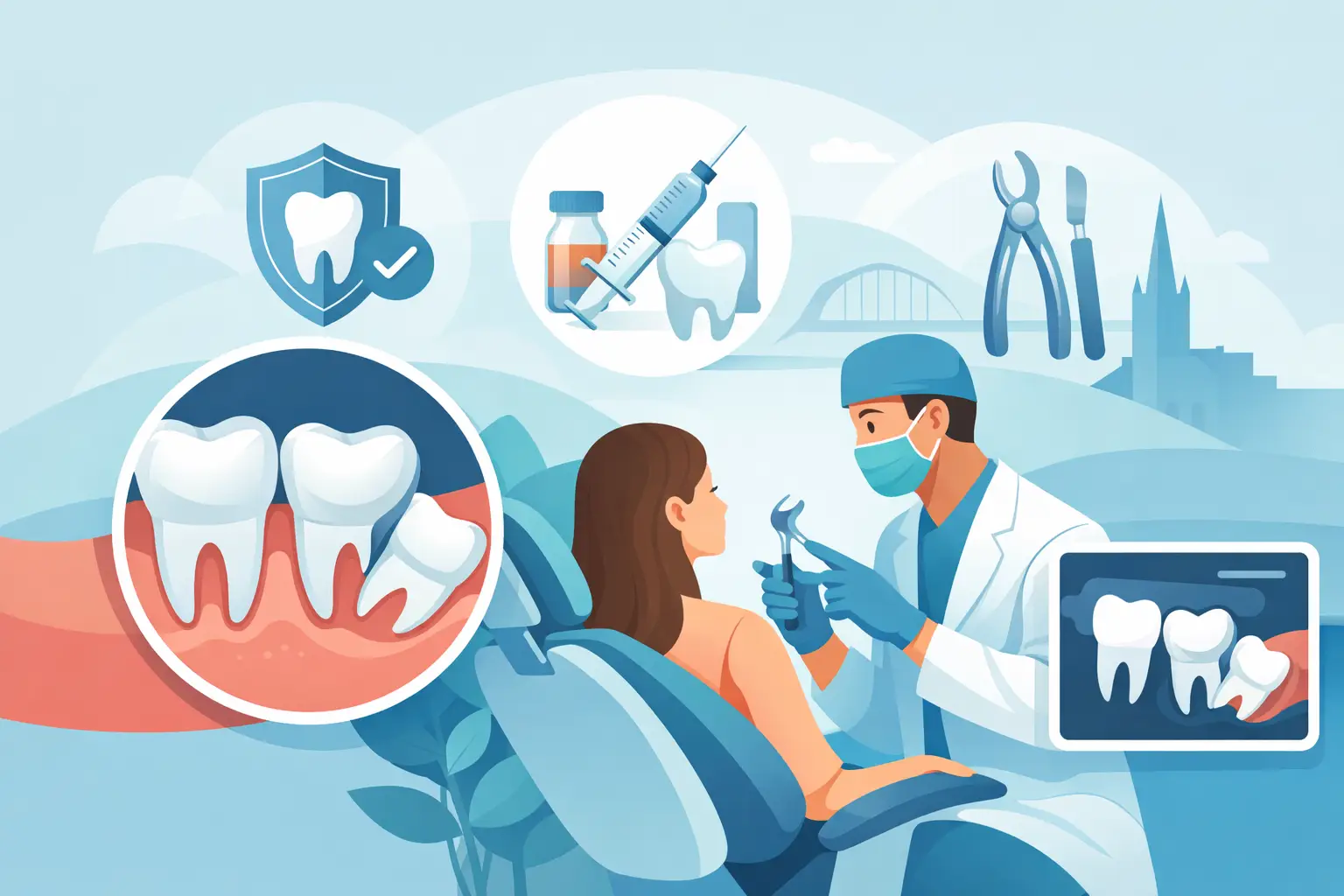
Removal may be recommended when a wisdom tooth is causing repeated pain, swelling or infection around the gum. This condition is often called pericoronitis and can make swallowing uncomfortable or cause a persistent unpleasant taste. Extraction may also be advised where decay has developed in a difficult-to-clean wisdom tooth, where gum disease is affecting the area, or where the tooth is damaging the adjacent molar.
Sometimes the issue is not obvious without imaging. A wisdom tooth may have a cyst-like change around it, contribute to decay on the tooth in front, or sit in a position that makes future problems likely. Conversely, a deeply buried tooth with no disease and no risk to neighbouring structures may be safer left in place and reviewed over time. The right decision depends on your individual clinical picture, not simply on whether you have four wisdom teeth.
A Precise Assessment Before Treatment
Your appointment begins with a discussion of your symptoms, medical history and any previous experiences that may affect how you feel about dental treatment. This is particularly valuable for nervous patients. Fear of the unknown is common with oral surgery, and you should have a clear opportunity to ask what will happen, how long it is likely to take and how discomfort will be managed.
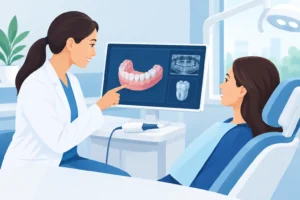
A clinical examination is paired with digital X-rays to assess the roots and surrounding bone. For complex lower wisdom teeth, particularly where roots appear close to the nerve that supplies sensation to the lip and chin, three-dimensional imaging may be recommended. This gives the surgical team a more detailed view of the anatomy and supports safer, more predictable planning.
The assessment also determines whether the procedure is likely to be straightforward or surgical. A fully erupted upper wisdom tooth may be removed much like another molar. A lower tooth that is angled, partially buried or covered by bone can require a more involved approach. In these cases, the gum may need to be carefully lifted and the tooth divided into smaller sections for controlled removal. This is not a sign that something has gone wrong. It is often the gentlest way to remove a difficult tooth while protecting the surrounding tissues.
Local anaesthetic and comfort during extraction
Wisdom tooth removal is usually carried out under local anaesthetic, which thoroughly numbs the treatment area. You may feel pressure or movement during the procedure, but you should not feel sharp pain. If you are uncomfortable at any stage, tell your clinician immediately so the anaesthetic can be adjusted.
For patients with significant anxiety or for more complex treatment, additional anxiety-management options may be discussed where appropriate. The best approach depends on your medical history, the procedure involved and your personal level of comfort. Clear communication, a calm environment and an experienced surgical team are often just as important as the technical steps of the extraction.
What Happens During Wisdom Tooth Removal?
Once the area is numb, the clinician gently loosens and removes the tooth. If surgical access is needed, a small opening is made in the gum. Any bone covering the tooth is removed conservatively, and the tooth may be sectioned before it is lifted out. Dissolving stitches are sometimes placed to support healing.
The procedure itself can be shorter than patients expect, but the appointment length varies. A simple extraction may take only a short time, while an impacted tooth may require more careful surgical work. Your clinician will give you a realistic indication after reviewing your imaging rather than making assumptions in advance.
In a small number of cases, a lower wisdom tooth may sit exceptionally close to the nerve in the jaw. A technique called coronectomy may then be considered. This involves removing the crown of the tooth while leaving the roots in place, reducing the risk of nerve injury. It is not suitable for every patient, but it illustrates why detailed diagnosis and specialist judgement matter in wisdom tooth care.
Recovery: What to Expect After Surgery
Most people can go home shortly after treatment, although it is sensible to plan a quiet day and arrange support if you have had a more involved procedure. Mild bleeding or oozing during the first few hours is normal. Biting gently on the gauze provided helps a stable blood clot form, which is essential for healing.
Swelling, tenderness and limited jaw opening are common, especially after lower wisdom tooth surgery. These symptoms often become more noticeable over the first two to three days before gradually improving. Cold compresses used intermittently on the outside of the face can help in the first day, while pain relief should be taken exactly as advised by your clinician or pharmacist.
For the first 24 hours, avoid rinsing vigorously, spitting forcefully, smoking, alcohol and strenuous exercise. These can disturb the blood clot and increase the chance of dry socket, a painful delayed-healing condition. Choose soft, nourishing foods until chewing feels comfortable, and keep food away from the extraction area where possible.
From the day after surgery, gentle warm salt-water rinses can help keep the mouth fresh, provided your clinician has advised this for you. Continue brushing the rest of your teeth as normal, taking care around the surgical site. Good oral hygiene supports healing, but aggressive cleaning around a fresh extraction socket can cause irritation.
When to contact your dental team
Some discomfort is expected, but worsening pain after a few days, increasing swelling, fever, persistent bleeding or a foul taste should be checked. Numbness or altered sensation after lower wisdom tooth surgery also requires advice, particularly if it persists after the local anaesthetic should have worn off.
Contact your dental team promptly if you are concerned. Early review can identify whether you need reassurance, additional cleaning of the area, changes to pain management or treatment for infection. You do not need to wait until discomfort becomes severe to ask for help.
Planning Around Work, Family and Daily Life
Recovery times vary. Following a simple extraction, some patients feel ready to return to normal activities the next day. After surgical removal of an impacted lower wisdom tooth, allowing several quieter days is often more realistic. If your job is physically demanding or requires extensive speaking, it may be wise to schedule treatment before time off rather than immediately before an important commitment.
It is also worth planning meals, transport and childcare in advance. Having soft foods at home and avoiding the need to drive straight after a stressful appointment can make the first day feel far more manageable. These practical details are small, but they support a calmer recovery.
A painful wisdom tooth should not be ignored simply because symptoms come and go. With the right assessment, you can understand whether monitoring, routine extraction or a more carefully planned surgical approach is best for your oral health. A considered decision now can protect your comfort, your neighbouring teeth and your confidence in dental care for years to come.