A tooth can look longer for years before it causes pain. That subtle change may be the first sign that the gum has moved away from the tooth, exposing a surface that was never designed to face the forces of brushing, chewing and temperature changes. Gum recession treatment is not simply about improving the appearance of the smile. It is about identifying why the gum has receded, protecting the exposed root and preserving the supporting tissues around each tooth.
Receding gums are common, but they should not be dismissed as an inevitable part of getting older. In some cases, recession is stable and can be managed conservatively. In others, it is a sign of active gum disease, bite overload or repeated trauma from brushing. A careful clinical assessment allows treatment to be proportionate, precise and focused on long-term comfort.
What gum recession can mean for your oral health
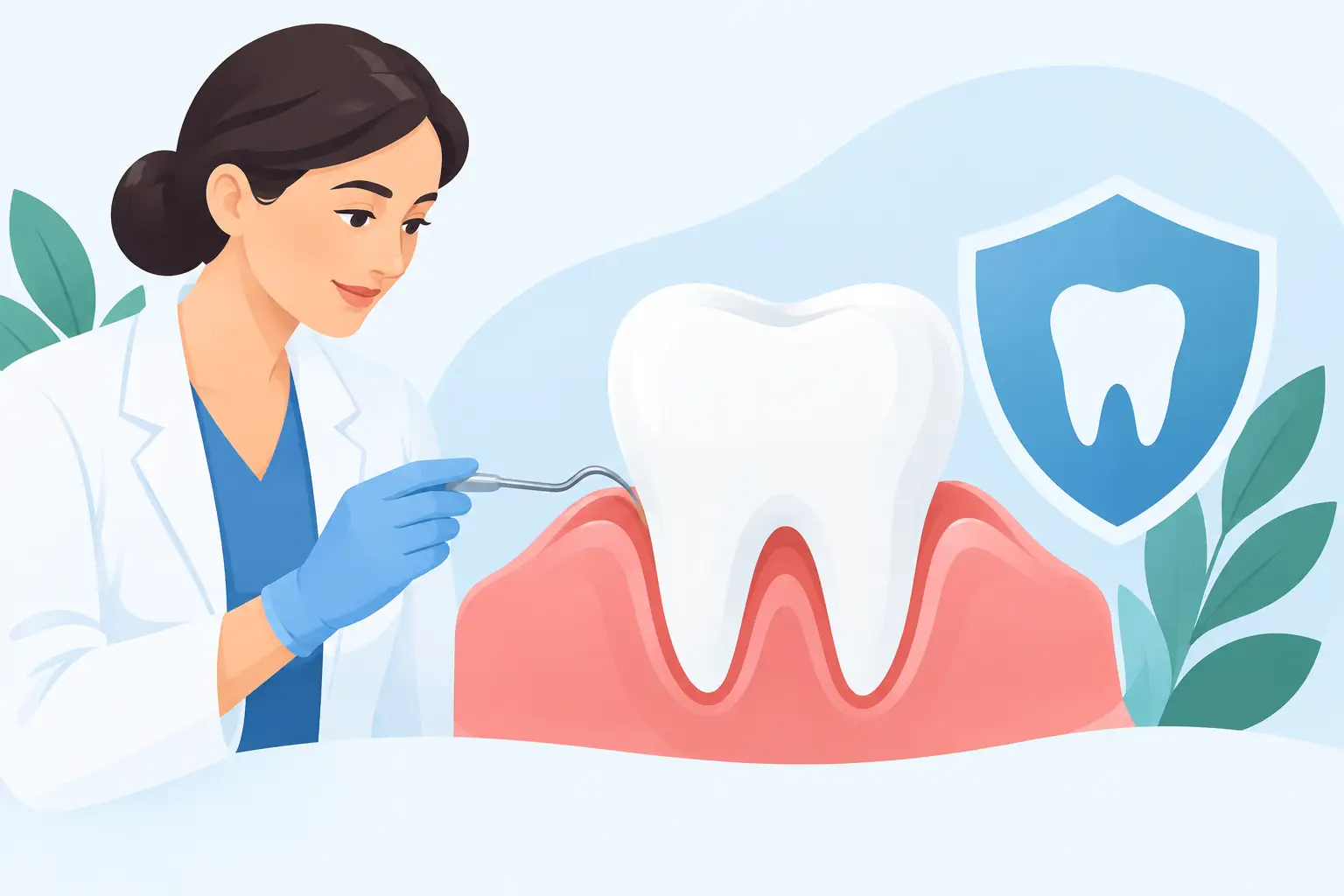
Healthy gum tissue forms a close protective collar around the teeth. When this tissue moves downwards on lower teeth or upwards on upper teeth, more of the root surface becomes visible. Root surfaces are covered by cementum rather than the hard enamel found on the visible crown of the tooth. They can wear more easily and are more vulnerable to sensitivity and decay.
Some people first notice a cold sharp sensation when drinking water, while others see a notch near the gumline, bleeding when brushing or changes in the symmetry of their smile. Recession may affect one tooth, often a prominent canine or lower incisor, or several areas across the mouth.
The cause matters. Treating the appearance without controlling the cause can lead to further recession, even after excellent restorative or surgical work. Your dentist will usually assess the gumline, probing depths, bleeding, plaque deposits, tooth position, bite forces and the thickness of the surrounding soft tissue. Digital photographs and scans can also help monitor subtle change over time.
Common causes of receding gums
Gum disease is one of the most significant causes. Plaque bacteria can trigger inflammation that damages the structures holding the tooth in place, including bone and gum tissue. It is not always painful, which is why regular hygiene appointments and examinations are valuable even when everything seems well.
However, not every recession defect is caused by gum disease. Overzealous brushing, particularly with a firm brush and abrasive technique, can repeatedly traumatise a thin gum margin. A tooth that sits outside the natural bony housing may have little gum support from the outset. Orthodontic movement, grinding or clenching, smoking, oral piercings, poorly fitting restorations and a high frenum attachment can also contribute in selected cases.
This is where individual planning is essential. A patient with generalised gum inflammation needs a different pathway from someone with isolated recession on one otherwise healthy tooth. For nervous patients, assessment can be calm and unhurried. The first appointment is about understanding what is happening, not making assumptions or passing judgement.
Gum recession treatment begins with stability
The first aim is to stop the recession from progressing. If plaque, calculus or gum inflammation is present, professional hygiene treatment and tailored home-care advice are usually the foundation. This may involve periodontal therapy delivered over a number of visits when gum disease is more established.
Technique is just as relevant as frequency. Brushing twice daily remains essential, but scrubbing hard does not clean more effectively. A soft toothbrush, gentle pressure and a systematic approach along the gumline are often safer for exposed roots. Interdental brushes may be recommended where the spaces between teeth allow, as these clean areas a toothbrush cannot reach.
If sensitivity is the main concern, desensitising toothpastes, fluoride varnish or professionally applied protective materials may reduce discomfort. Where the root has developed a visible wear defect, a tooth-coloured composite restoration can protect the area and improve appearance. The margin of any restoration must be planned with care, as an over-contoured filling can make cleaning difficult or irritate the gum.
Night-time grinding can add excessive forces to teeth and restorations. In appropriate cases, a precisely fitted bite guard may help protect the teeth while the underlying bite is reviewed. It is useful support, not a substitute for treating gum inflammation or other drivers of recession.
When is soft tissue grafting considered?
Soft tissue grafting, sometimes described as gum grafting or soft tissue augmentation, is considered when recession is progressing, causing persistent sensitivity, compromising aesthetics or leaving a tooth at greater risk because the gum is very thin. It can also be used before or alongside restorative and implant treatment where healthier tissue support is needed.
The procedure involves carefully increasing the thickness or height of gum tissue around the affected tooth. Depending on the site and clinical objective, tissue may be moved from a nearby area, or a small graft may be taken from the palate. Modern techniques are designed around gentle handling of the tissues and precise positioning. The goal is not always complete root coverage. In some situations, the most realistic and valuable outcome is a thicker, more stable gum margin that is easier to maintain and less likely to recede further.
Predictability depends on several factors: the amount of bone between the teeth, the position of the tooth, the depth and width of the recession, tissue thickness, oral hygiene and whether smoking or uncontrolled gum disease is present. Upper front teeth with intact supporting structures may respond very differently from lower incisors with naturally thin bone. An experienced clinician should explain the likely benefit in your specific case rather than promise an identical result for every tooth.
After grafting, the area needs time to heal. Patients are usually advised to avoid brushing directly over the treated site for a short period, follow a modified cleaning routine and choose softer foods initially. Review appointments allow the healing tissues to be checked and home care adjusted. Good healing is a partnership between meticulous clinical technique and careful aftercare.
Can gums grow back without surgery?
Once gum tissue has genuinely receded, it does not usually return to its original position by itself. Improving brushing technique and treating inflammation can reduce redness, swelling and bleeding, which may make the gums look healthier, but it will not reliably rebuild lost tissue.
That does not mean every recessed area requires surgery. Stable, shallow recession with no sensitivity, decay risk or aesthetic concern may simply need monitoring, protective fluoride care and a gentler cleaning approach. Intervention becomes more compelling where there is ongoing loss, significant discomfort, an exposed root that is difficult to protect, or an appearance concern that affects confidence.
A clinical examination can also distinguish true recession from other changes. For example, gum shrinkage after inflammation has settled may reveal the true contours of the teeth. This can feel alarming, but treating disease remains the priority before elective aesthetic work is considered.
Looking after your gums after treatment
Long-term maintenance protects the result of any gum recession treatment. This means regular professional reviews, effective daily plaque control and an honest conversation if clenching, smoking or dental anxiety has made care difficult in the past. Small changes seen early are generally easier to manage than advanced tissue loss.
At Slievemore Dental, recession concerns can be assessed within a wider plan for gum health, bite function, restorative needs and smile aesthetics. Where treatment is more complex, coordinated care between hygiene, restorative and specialist clinicians helps ensure that the health of the supporting tissues remains central to every decision.
If a tooth looks longer, feels sensitive near the gumline or bleeds when you brush, a timely assessment can replace uncertainty with a clear, gentle plan. Protecting your gums now gives your teeth a better foundation for the years ahead.