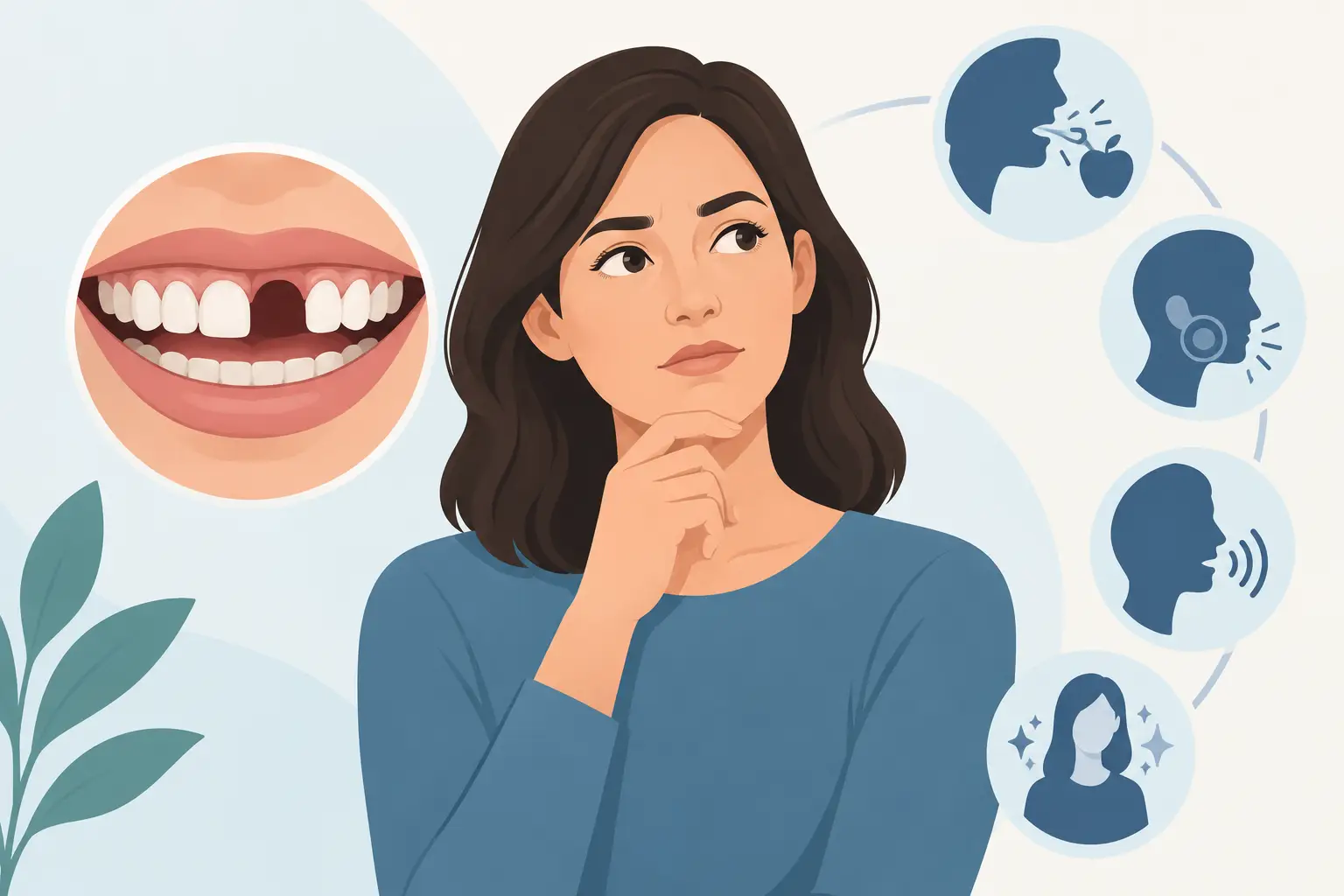
A missing tooth can feel like a cosmetic concern at first, particularly if it is towards the back of the mouth. Yet tooth loss consequences often extend well beyond the visible gap. The way you chew, speak, clean your teeth and hold your bite can all change over time, while the bone that once supported the tooth may gradually reduce in volume.
This does not mean every lost tooth creates the same problems or that treatment must be rushed without thought. The right approach depends on which tooth is missing, the health of the surrounding teeth and gums, your bite, medical history and personal priorities. A careful assessment allows those decisions to be made with clarity rather than pressure.
Tooth loss consequences for everyday function
Teeth work as a connected system. When one is lost, the remaining teeth may have to take on forces they were not designed to manage alone. A missing molar, for example, can make it harder to chew efficiently on one side. People often adapt without realising it, favouring softer foods or chewing on the opposite side.
Over time, this can place extra strain on particular teeth, restorations and jaw joints. It may also make a balanced diet less comfortable to maintain if foods such as apples, crusty bread, nuts or meat become difficult to chew. For patients missing several teeth, the effect on food choices and digestion can be more noticeable.
Front-tooth gaps can affect speech as well as appearance. Certain sounds rely on precise contact between the tongue, teeth and lips. A person may develop small changes in pronunciation or feel self-conscious when speaking in meetings, social situations or photographs.
Changes in the jawbone and gumline
A natural tooth root stimulates the jawbone every time you bite and chew. Once a tooth is removed, that stimulation is no longer present in the area. The body may gradually resorb some of the bone, a normal biological process that can begin in the months following extraction.
The degree and speed of bone change vary considerably. Gum disease, previous infection, smoking, general health, the location of the tooth and the number of missing teeth can all influence the picture. In some cases, bone loss is modest. In others, particularly where teeth have been missing for many years, it can make later tooth replacement more technically involved.
Changes to the bone can also alter the gumline and facial support. This is usually most apparent where multiple teeth are absent. Lips and cheeks may have less support, and removable dentures can become less stable as the shape of the ridge changes.
Why timing can matter
It is sensible to discuss replacement options soon after a tooth is lost, even if you decide to wait before proceeding. Early planning can preserve choices. Where an extraction is necessary, techniques such as socket preservation or bone grafting may be considered to support the area for future treatment.
These procedures are not appropriate or required for everyone. A clinician will assess the infection level, bone condition, gum health and proposed restoration before making a recommendation. The aim is not to over-treat, but to protect function and make the final result as predictable as possible.
Teeth can drift into an empty space
Teeth are not fixed rigidly in position. They are held in bone by specialised fibres and respond gradually to the forces around them. When a gap remains, neighbouring teeth can tip or drift towards it. The tooth opposite may also move further into the space because it no longer meets a biting surface.
This movement can create areas that are harder to clean, increasing the risk of plaque build-up, decay and gum inflammation. It may also change how the upper and lower teeth meet. Some bite changes are subtle; others can complicate future restorative work because there is less room to place a replacement tooth.
For this reason, a missing tooth is assessed as part of the whole bite, not as an isolated space. Digital scans, X-rays and clinical examination help identify whether nearby teeth are healthy, whether they have moved and how much support is available beneath the gums.
Confidence matters too
The emotional impact of tooth loss deserves the same respectful attention as the clinical effects. Some people avoid smiling, cover their mouth when laughing or withdraw from meals and conversations. Others have lived with a gap for years but feel anxious about being judged for it.
There should be no judgement. Tooth loss can follow decay, gum disease, trauma, a failed root canal treatment, medical circumstances or simply an old restoration that could no longer be maintained. Understanding the cause is helpful because it helps prevent further problems, but it should never become a source of embarrassment.
For nervous patients, an initial consultation can be limited to discussion, examination and planning. Treatment can then be staged at a pace that feels manageable, with clear explanations of what each step involves and how comfort will be supported.
Replacing a missing tooth: the options and trade-offs
There is no single best replacement for every person. The most suitable solution balances longevity, appearance, cleaning, cost, treatment time and the condition of your mouth.
Dental implants
A dental implant replaces the root of a missing tooth with a small titanium fixture placed in the jawbone. Once it has integrated with the bone, it can support a crown, bridge or full-arch restoration. Because an implant stands independently, it usually avoids preparing the neighbouring teeth and can help maintain bone stimulation in the treated area.
Implant treatment requires adequate bone, healthy gums and careful planning. Some patients need grafting or soft tissue augmentation first, and healing times vary. Good daily cleaning and regular professional maintenance remain essential, as implants can develop inflammation if plaque is allowed to accumulate.
Fixed dental bridges
A bridge fills a gap by attaching a replacement tooth to neighbouring teeth. Conventional bridges can be an excellent solution where adjacent teeth already need crowns or have substantial restorations. Adhesive bridges may be more conservative in selected front-tooth cases, as they require minimal preparation.
The trade-off is that a conventional bridge involves supporting teeth, while both bridge types require meticulous cleaning around the restoration. Their suitability depends on the strength and position of the neighbouring teeth, the bite and the location of the gap.
Removable dentures
A partial denture can replace one or more missing teeth and may be a practical option when several teeth are absent or when fixed treatment is not preferred. Modern dentures can be carefully designed for comfort and natural appearance, but they rest on the gums and may need adjustment as the mouth changes.
For people missing all teeth in an arch, implant-retained options can improve security and chewing confidence compared with a conventional full denture. The appropriate design, from a removable implant-supported denture to a fixed full-arch restoration, depends on bone anatomy, hygiene needs and lifestyle.
Choosing no replacement
Occasionally, leaving a space is a reasonable choice. This is more likely where the tooth is at the back of the mouth, the bite remains stable and there is no functional difficulty. It should still be a considered decision, supported by review appointments, rather than an assumption that a gap will cause no future change.
When to seek prompt dental advice
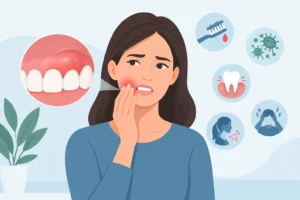
A tooth that has been knocked out, fractured deeply or lost because of swelling or infection needs timely care. If a permanent tooth has been completely knocked out, handling it by the crown rather than the root and seeking emergency dental advice immediately may improve the chance of saving it. Severe pain, facial swelling, fever, difficulty swallowing or trouble breathing require urgent assessment.
Even where there is no pain, it is worth arranging an examination after tooth loss. A clinician can identify why it happened, check the health of the remaining teeth and gums, and discuss whether early preservation of bone or a temporary replacement would be beneficial.
At Slievemore Dental, a coordinated approach can bring together general, restorative, periodontal and implant planning when a case is more complex. The focus is on a result that feels secure, functions naturally and is designed around your long-term oral health.
A missing tooth need not define your smile or your confidence. The most useful next step is a calm, thorough assessment – one that gives you clear options and enough information to choose the path that feels right for you.