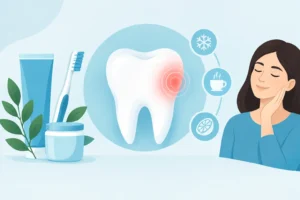
A toothache has a way of taking over everything: concentration at work, a meal with family, and even a full night’s sleep. If you are searching for how to stop toothache pain, the immediate aim is to reduce discomfort safely while arranging the dental assessment that treats its cause. Tooth pain rarely resolves permanently without professional care, even if it settles for a while.
How to stop toothache pain until you see a dentist
Pain relief can make the hours before an appointment more manageable, but it should be viewed as a short-term measure, not a cure. A tooth may ache because of decay, a cracked restoration, gum infection, an exposed nerve, a dental abscess, an erupting wisdom tooth, or pressure from clenching and grinding. Each needs a different treatment plan.
Start by gently cleaning around the painful tooth with a soft toothbrush. Food caught between teeth can cause surprisingly sharp pain, particularly where there is a broken filling, a cavity or inflamed gums. Carefully floss once around the area if it does not cause severe pain. Do not force floss beneath the gum or use sharp objects to investigate the tooth.
Rinsing your mouth with warm salt water can also soothe irritated gum tissue. Dissolve half a teaspoon of salt in a glass of warm water, swish gently, then spit it out. The water should be warm rather than hot, as heat can worsen throbbing from an inflamed tooth.
Over-the-counter pain relief may help when taken exactly as directed on the packet. Paracetamol or ibuprofen can be suitable options for many adults, and a pharmacist can advise if you are unsure which is appropriate. Ibuprofen may not be suitable for people with certain stomach, kidney, heart or asthma conditions, those taking particular medicines, or during pregnancy. Do not exceed the stated dose, and do not combine medicines without checking the instructions or seeking professional advice.
A cold compress held against the outside of the cheek for short periods can reduce swelling and dull the sensation of pain. Wrap it in a cloth rather than placing ice directly on the skin. If cold makes the tooth more painful, stop and avoid extreme temperatures.
What not to do for a toothache
When pain is intense, it is understandable to try anything that promises relief. Some common remedies can irritate the mouth or delay the care you need.
Do not place aspirin, alcohol, clove oil, or any painkiller directly onto the tooth or gums. Aspirin can burn delicate soft tissue, while strong oils and household products may cause chemical irritation. Avoid holding hot water against your cheek, especially if there is facial swelling, and do not attempt to drain a swelling or remove a loose filling yourself.
Try not to chew on the affected side. Choose soft, lukewarm foods and avoid very sugary, acidic, hot or cold items if they trigger the pain. If a tooth is sensitive to air, breathing through your nose and keeping the area protected from cold air may offer temporary comfort.
Antibiotics are not a general treatment for toothache. They may be prescribed for certain spreading infections, but they do not remove decay, repair a fracture, drain an abscess, or treat an infected nerve. Taking leftover antibiotics, or someone else’s medication, is unsafe and can make effective treatment harder later.
When a toothache needs urgent dental care
A persistent toothache deserves a prompt appointment, even if painkillers are helping. Pain can be the first sign that decay has reached the inner tooth, a restoration has failed, or infection is developing beneath the gum. Early treatment is usually more comfortable, more conservative and more predictable than waiting for a dental emergency.
Seek an urgent dental appointment if pain is severe, lasts longer than a day or two, wakes you from sleep, or returns repeatedly. You should also be assessed promptly if you have a broken tooth, a lost filling or crown, pain when biting, a bad taste in your mouth, gum swelling, or a pimple-like swelling near a tooth.
Swelling and feeling unwell are warning signs
Contact a dentist urgently if your face, jaw or neck is swollen, or if you have a fever, feel unwell, or find it difficult to open your mouth. These signs can indicate an infection that needs timely clinical treatment.
Call 112 or 999, or attend an emergency department, if swelling affects your breathing or swallowing, spreads rapidly, involves the eye area, or you cannot manage saliva. Dental infections can occasionally become serious beyond the mouth, so these symptoms should never be managed at home.
If the pain isn’t settling, our emergency dentist in Stillorgan offers same-day appointments 7 days a week. Call +353 1 283 1000.
Why toothache can come and go
One of the most misleading features of dental pain is that it may disappear temporarily. This does not always mean the problem has healed. For example, if decay reaches the dental pulp, the nerve can become inflamed and extremely sensitive. As the nerve deteriorates, pain may fade for a period, while infection continues to develop around the root.
A cracked tooth can also produce intermittent pain, often when you release your bite rather than when you first bite down. Wisdom tooth discomfort may flare when gum tissue around a partially erupted tooth becomes inflamed. Gum disease, grinding and sinus congestion can all create pain that feels as if it is coming from a tooth.
This is why a proper examination matters. Your dentist may use digital X-rays, bite tests, temperature testing and a detailed examination of the teeth and gums to identify the source. The right diagnosis prevents unnecessary treatment and allows care to be planned around both comfort and long-term tooth preservation.
What treatment may be needed
Treatment depends entirely on the cause. A small area of decay may only require a filling, while a fractured cusp could need a protective crown. If the nerve inside the tooth is infected, root canal treatment can often relieve pain and retain the natural tooth. An abscess may require drainage alongside treatment of the affected tooth.
For wisdom tooth pain, the immediate priority is controlling infection and inflammation, then assessing whether the tooth has enough space to erupt and remain clean. Where it is repeatedly problematic, removal may be the safest long-term option. If a tooth cannot be predictably restored, extraction and a carefully planned replacement, such as an implant-supported restoration or bridge, may be discussed.
For nervous patients, the prospect of treatment can feel as difficult as the pain itself. A gentle, judgement-free appointment should begin with listening: what hurts, what worries you, what has happened previously, and what level of treatment feels manageable. Modern local anaesthesia, digital diagnostics and staged planning can make even urgent care feel calmer and more controlled.
Protecting the tooth after the pain settles
Once the immediate issue has been treated, follow-up care helps prevent another painful episode. This may include repairing worn or leaking restorations, treating gum inflammation, using a night guard for grinding, or improving access for cleaning around crowded teeth and wisdom teeth. Regular examinations and hygiene visits are particularly valuable because early decay and cracks are often visible before they become painful.
At Slievemore Dental, emergency assessments focus on relieving discomfort while identifying the underlying problem with precision. Whether the solution is simple preventive care or more advanced restorative treatment, the goal is the same: restore comfort, function and confidence without judgement.
A toothache is your mouth asking for attention. Use safe measures to get through the immediate discomfort, but let a dental clinician find the reason it started – that is the step that gives you the best chance of lasting relief.