A dental implant is not simply a replacement tooth. It is a carefully planned treatment that must work with your bone, gums, bite, facial features and everyday life. If you are researching how to choose dental implants, the most useful question is not which implant is “best” in isolation. It is which treatment plan, clinical team and restoration will give you the safest, most natural and most dependable result.
For some patients, replacing one missing tooth is straightforward. For others, years of tooth wear, gum disease, missing teeth or failing bridges mean the decision forms part of a wider restorative plan. A thoughtful consultation should make that distinction clear, without pressure or judgement.
Start with the diagnosis, not the implant brand
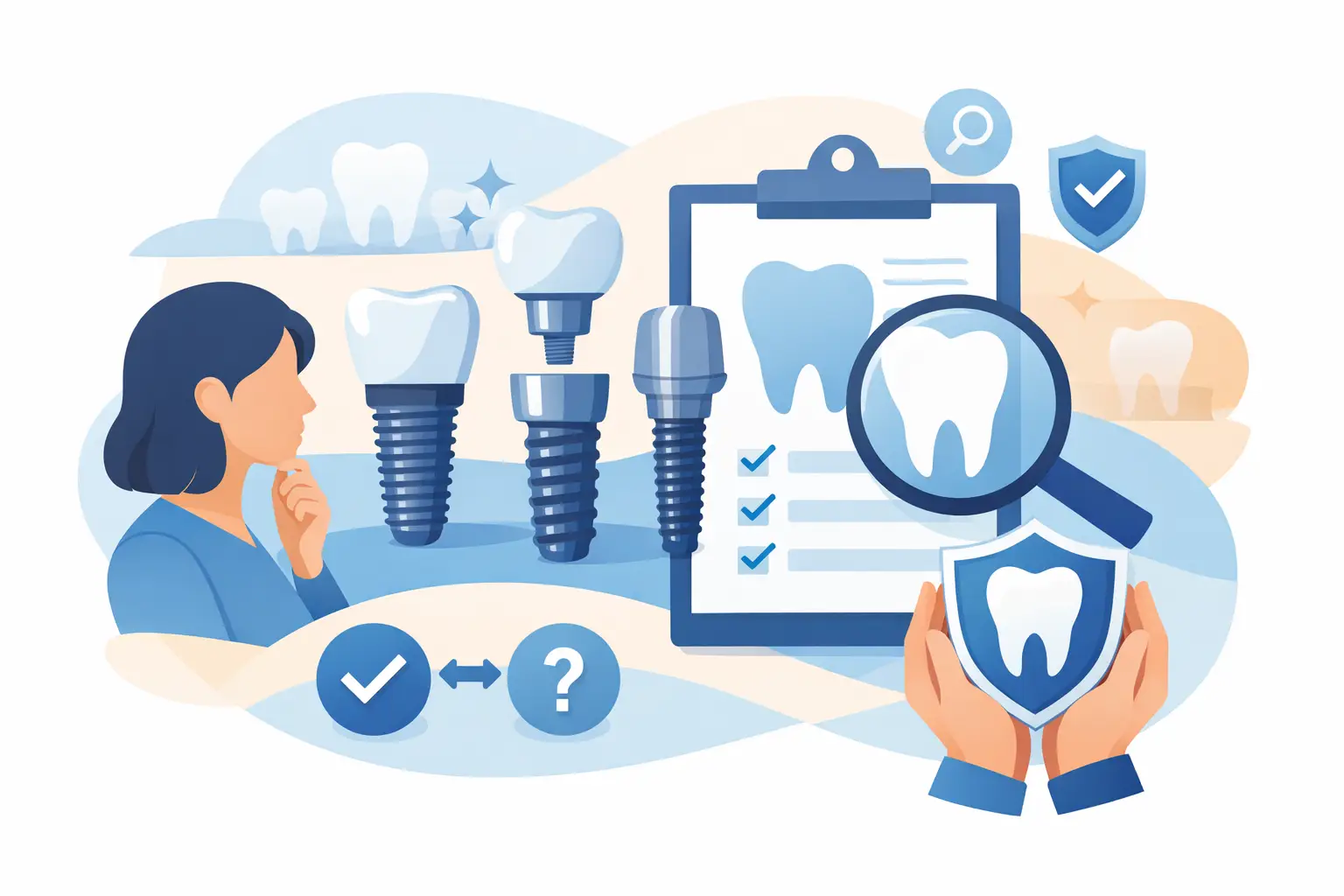
Dental implants are small titanium fixtures placed into the jawbone to support a crown, bridge or full-arch restoration. While implant systems differ in design and supporting evidence, no reputable implant brand can compensate for inadequate diagnosis, imprecise placement or a poorly designed final tooth.
A high-quality assessment looks beyond the gap in your smile. Your clinician should assess the health and volume of your jawbone, the thickness and condition of the gum tissue, the space available for the new tooth and the way your upper and lower teeth meet. Existing restorations, clenching or grinding, smoking, medical history and gum health all affect the predictability of treatment.
Digital imaging, often including a 3D CBCT scan when clinically appropriate, allows the team to assess bone anatomy accurately and plan around vital structures. This is particularly valuable in the back of the lower jaw, near nerves, and in the upper jaw, near the sinus. It also helps identify whether bone grafting, soft tissue augmentation or a staged approach may be advisable.
A clinician who recommends treatment before examining these factors may be simplifying a decision that deserves more care. The right plan is individual, and sometimes the safest answer is to stabilise gum disease, improve oral hygiene or remove infection before implant surgery begins.
How to choose dental implants: choose the team around them
Implant treatment combines surgery, restorative dentistry and aesthetics. The surgical phase places the implant securely, but the final crown or bridge is what you see, bite on and clean every day. For this reason, the ideal result is planned from the final tooth backwards.
Ask who will be responsible for each stage of your care. In complex cases, coordinated input from an implant clinician, oral surgeon and prosthodontic or restorative dentist can be a considerable advantage. This multidisciplinary approach helps ensure that implant position supports a restoration with appropriate contours, bite function and natural-looking proportions.
Experience matters, but so does the way that experience is applied. A suitable clinician should be able to explain the benefits and limitations of your options in clear language. They should discuss risks openly, show how the treatment has been planned and give you time to consider the recommendation.
For patients with dental anxiety, technical expertise should come with gentleness. Ask how discomfort is managed, what anaesthetic and sedation options may be available, and how the team supports nervous patients throughout appointments. Feeling informed and in control is not an extra. It is part of good clinical care.
Consider the restoration as carefully as the implant
Many people focus on the implant fixture beneath the gum. Yet the crown, bridge or full-arch teeth attached to it have a major influence on comfort, appearance and long-term maintenance.
For a single front tooth, the gum line, shade, translucency and shape of the crown require particularly careful attention. The goal is for the tooth to sit naturally within your smile rather than look noticeably brighter, flatter or longer than neighbouring teeth. In some cases, grafting the bone or gum tissue creates a more stable foundation for this aesthetic result.
At the back of the mouth, strength and bite design may take priority. A crown needs to tolerate chewing forces without overloading the implant or adjacent teeth. Patients who grind their teeth may benefit from a protective night guard after treatment.
Where several teeth are missing, there may be a choice between individual implant crowns, an implant-supported bridge or a full-arch solution such as All-on-X. These options are not interchangeable. Individual crowns can make cleaning more similar to natural teeth but may require more implants and suitable bone in several positions. Bridges can replace multiple teeth with fewer implants. Full-arch treatment can be transformative for patients with failing teeth or loose dentures, but it involves significant planning, surgery and a lifelong maintenance commitment.
A provisional restoration may be used during healing or, in selected cases, fixed shortly after implant placement. Immediate teeth can be appealing, particularly for visible areas, but they are not automatically appropriate. Bone quality, implant stability, bite forces and the ability to protect the restoration all need to be favourable.
Ask about materials, evidence and maintenance
Most conventional implants are made from medical-grade titanium, a material with a long clinical history and excellent biocompatibility. Ceramic implant options are available in certain circumstances, though they are not the best choice for every clinical situation. Your clinician should explain why a particular material or implant system suits your needs rather than relying on marketing claims.
It is reasonable to ask whether the system has strong long-term evidence and whether components will remain available if maintenance is needed years later. Choosing an established system can make future care more straightforward, especially if a crown screw, connector or restoration needs replacement.
No implant is maintenance-free. The implant itself cannot decay, but the surrounding gum and bone can develop inflammation. This is known as peri-implant disease and can threaten the stability of the implant if it is not identified early. Daily cleaning, professional hygiene visits and regular reviews are essential.
Your treatment should therefore include practical instruction on cleaning around the new restoration. The method varies depending on whether you have a single crown, bridge or full arch. Interdental brushes, floss aids and water flossers may all have a role, but the right routine is the one you can perform consistently and effectively.
Compare costs by looking at the complete treatment
Implant fees can be difficult to compare because one quotation may include only the surgical placement, while another includes scanning, extraction, grafting, temporary teeth, the final crown and review appointments. A lower initial figure is not always a lower overall cost.
Request a written plan that separates the main stages of treatment and explains what is included. If grafting or additional procedures are only possible rather than certain, ask how that would affect the cost and timeline. You should also understand the likely cost of long-term hygiene, repairs and replacement of the crown or bridge when it eventually wears.
This is not about finding the most expensive treatment. It is about avoiding false comparisons and choosing care that has been planned properly. A well-made restoration and a manageable maintenance plan often provide better value than a shortcut that creates avoidable problems later.
Know when an implant may not be the first answer
Dental implants have high success rates, but they are not automatically the right answer for every gap. A conventional bridge, adhesive bridge or removable denture may be more appropriate depending on the condition of adjacent teeth, available bone, budget, medical factors and personal priorities.
Heavy smoking, uncontrolled diabetes, active gum disease and poor plaque control can increase risk. These factors do not always rule out implant treatment, but they may mean that preparation, support or a different solution is wiser. Similarly, a tooth that can be predictably restored may be worth preserving rather than extracting for an implant.
A careful dentist will not present alternatives as second-best by default. They will explain the trade-offs honestly: treatment time, invasiveness, appearance, function, cleaning requirements, longevity and cost.
Signs of a considered implant consultation
By the end of a good consultation, you should understand the condition of your mouth, the purpose of any scans, the recommended sequence of care and the alternatives available. You should know who is carrying out the treatment, what healing may involve and what you can realistically expect from the final result.
At Slievemore Dental, implant planning can be coordinated across restorative, surgical and aesthetic disciplines, so patients with straightforward and complex needs can receive care based on the same principle: precise treatment should still feel calm, personal and understandable.
The best choice is rarely made in one hurried appointment. Give yourself permission to ask questions, review the written plan and choose a team that makes you feel both clinically safe and genuinely heard. A successful implant should restore more than a missing tooth. It should make eating, speaking and smiling feel comfortably like your own again.