A loose lower denture can make a simple meal feel like a calculation: Will it move when I speak? Can I order something I need to chew? Will I feel self-conscious? For people replacing a full arch of missing or failing teeth, All-on-X versus removable dentures is not simply a cosmetic choice. It affects daily comfort, nutrition, speech, confidence, treatment time and the long-term health of the jaw.
Both solutions can restore a smile beautifully when planned well. The right option depends on your bone, gums, general health, expectations, budget and how you feel about surgery and day-to-day maintenance. A detailed assessment should come before any decision.
What is the difference between the two options?
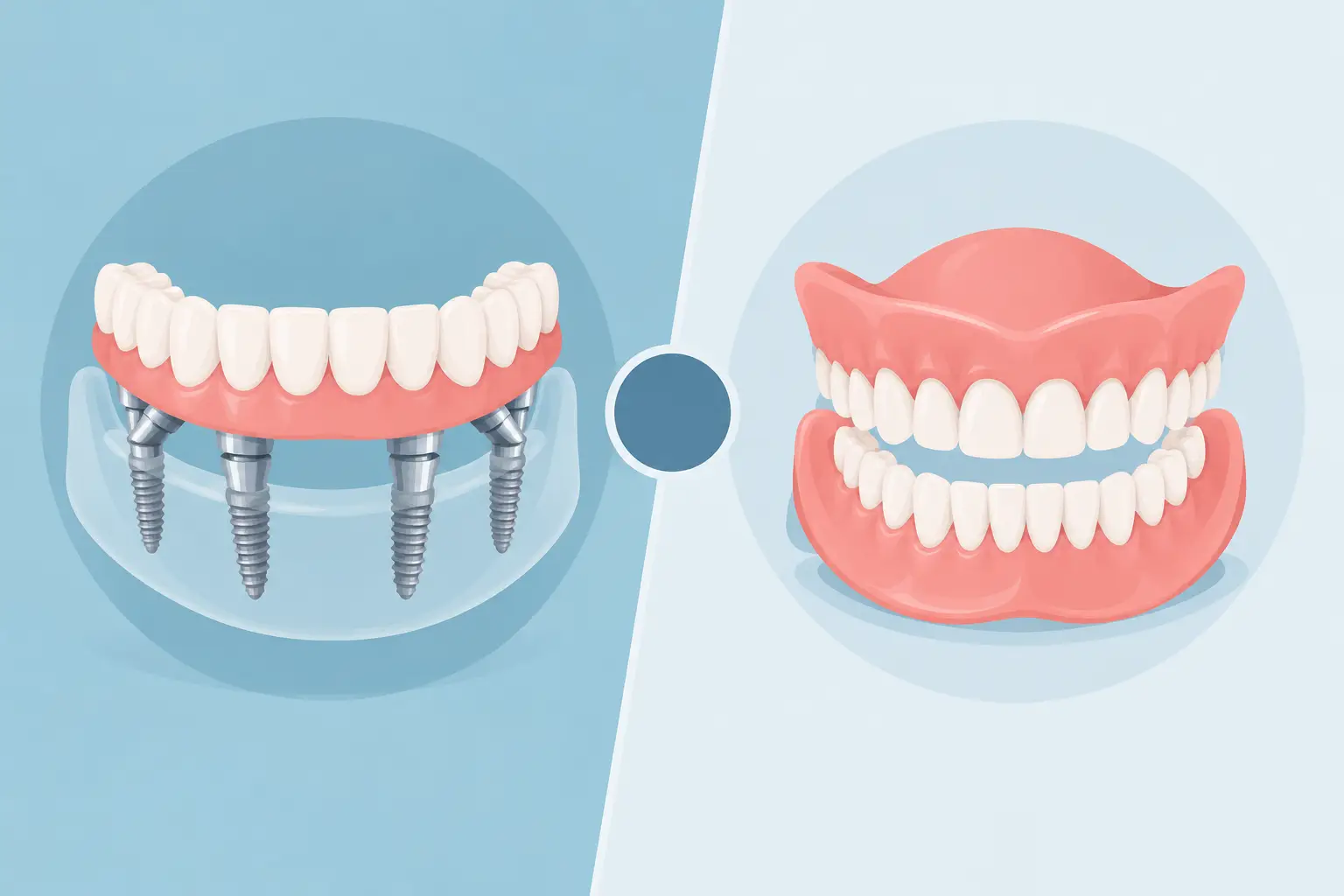
A removable complete denture is a custom-made prosthesis that sits on the gums. It replaces all teeth in the upper or lower jaw and is taken out for cleaning, usually overnight. Modern dentures can be highly natural in appearance, carefully designed to support the lips and cheeks and improve facial harmony.
All-on-X is a fixed full-arch restoration supported by dental implants. The “X” refers to the number of implants used, often four, six or more, depending on the anatomy of the jaw and the clinical plan. The implants act as replacement tooth roots, and a full bridge is secured to them. Patients do not remove the bridge themselves.
The distinction matters because conventional dentures rest on soft tissue, while All-on-X transfers biting forces through implants into the jawbone. That difference shapes how each option feels and performs.
All-on-X versus removable dentures: comfort and function
For many people, the greatest benefit of All-on-X is stability. A fixed bridge does not rely on suction, denture adhesive or the contours of the gums to stay in place. It is designed to remain secure while talking, laughing and eating, which can make everyday social situations feel much less worrying.
This stability can also improve chewing efficiency. Although every patient needs time to adapt to a new restoration, implant-supported teeth generally offer greater confidence with a wider range of foods than a conventional denture. That may be particularly meaningful for someone who has gradually avoided foods such as apples, crusty bread, salad or meat because chewing has become difficult.
Removable dentures can still work very well, particularly in the upper jaw where natural suction is often stronger. They are non-surgical and can provide a significant improvement in appearance and function for patients who have been without teeth. However, even a well-fitting denture can move slightly under pressure. The lower jaw is often more challenging because the tongue, cheeks and a shrinking ridge provide less surface area for retention.
Comfort is not just about movement. Dentures cover the gums and, in an upper denture, part of the palate. Some patients adapt quickly; others notice changes in taste, speech or their awareness of the prosthesis. An All-on-X bridge is shaped differently and usually leaves more of the palate uncovered, but it also requires a period of adaptation and diligent cleaning beneath the bridge.
Bone preservation is a key long-term consideration
After teeth are lost, the jawbone no longer receives stimulation from the roots. Over time, the bone can remodel and reduce in volume. This is a normal biological process, but it may affect denture fit, facial support and the options available for future treatment.
Dental implants help stimulate the bone around them, which can reduce further bone loss in those areas. They do not stop every change associated with ageing, and they are not a guarantee against complications, but they can offer an important biological advantage over a gum-supported denture.
A denture may need periodic adjustment, relining or replacement as the gum and bone contours change. This is not a sign of poor-quality dentistry. It is expected maintenance, and planning for it helps prevent rubbing, sore spots and loss of stability.
Treatment journey and suitability
A removable denture can often be provided relatively quickly after the necessary extractions and healing period. In some cases, an immediate denture is fitted on the day teeth are removed, so the patient is not left without teeth. It is then adjusted as healing progresses before a more definitive denture is made.
All-on-X requires more extensive diagnostic planning. A clinician will assess the condition of remaining teeth, gum health, bone volume and quality, bite, facial proportions and medical history. Digital scans, photographs and three-dimensional imaging help the team plan implant positions, aesthetics and the final bite with greater precision.
If failing teeth need to be removed, implants may sometimes be placed on the same day, followed by a fixed provisional bridge. Whether this is appropriate depends on achieving good implant stability and on the individual clinical situation. Some patients need bone or soft tissue augmentation, treatment for gum disease, or a staged approach before the final bridge is fitted.
Not everyone is an ideal candidate for implant treatment immediately. Uncontrolled diabetes, heavy smoking, certain medications, active periodontal disease and untreated teeth clenching can affect risk and need to be managed carefully. A compassionate consultation should never frame these issues as judgement. Its purpose is to make treatment safer and more predictable.
Care requirements: fixed does not mean maintenance-free
An All-on-X bridge feels closer to natural teeth in daily life, but it needs meticulous hygiene. Food debris and plaque can collect around the implant sites and beneath the bridge. Patients are taught how to use specialised brushes, flossing aids or a water flosser, and they need regular professional reviews. Implant health depends on the quality of home care and ongoing monitoring.
Removable dentures also need daily care. They should be brushed with an appropriate denture cleaner, rinsed after meals and removed as advised to allow the gums to rest. The mouth, tongue and any remaining natural teeth still require cleaning. Dentures should not be adjusted at home if they rub or crack; professional adjustment protects the gums and the fit of the appliance.
For either option, regular dental visits remain essential. Clinicians check the tissues, bite, restoration and oral hygiene, while also screening for changes in the mouth that may otherwise go unnoticed.
Cost, value and the decisions behind them
A conventional denture usually has a lower initial cost than a full-arch implant restoration. For some patients, it is the most sensible and effective option, particularly where surgery is not appropriate or where a shorter treatment pathway is preferred.
All-on-X is a more substantial investment because it involves surgical treatment, implants, advanced diagnostics, a provisional restoration and a final full-arch bridge. It may also involve extractions, sedation, grafting or management of complex bite issues. Comparing figures alone can be misleading unless you understand what each plan includes, what maintenance may be required and what outcome is realistically achievable.
The best question is not simply, “Which is better?” It is, “Which solution meets my clinical needs and gives me a result I can maintain comfortably?” A person who wants a non-surgical, removable option may be delighted with a carefully crafted denture. Someone who has struggled for years with a loose denture and wants a stable fixed solution may find the additional commitment of implant treatment worthwhile.
How to make a confident choice
Ask for a consultation that considers your whole mouth, rather than focusing only on the missing teeth. You should understand the condition of your gums and jawbone, whether any remaining teeth can be predictably retained, the likely treatment stages, healing times, temporary teeth, aftercare and future maintenance.
At Slievemore Dental and SmileMore Implant Centre, complex restorative planning can bring together expertise in prosthodontics, implant dentistry and oral surgery, helping patients consider their options with clarity rather than pressure. For nervous patients, discussing comfort measures and each stage of care in advance can make a major difference.
A well-made denture can restore dignity, appearance and useful function. A carefully planned All-on-X restoration can offer a fixed, stable alternative with important long-term advantages. The most helpful next step is a thorough, judgement-free assessment that gives you a treatment plan built around your health, your priorities and the life you want to enjoy.