A severe toothache can make even a cold drink feel like a shock. By the time root canal treatment is recommended, many patients are already tired, worried and in more discomfort than they realise. So, does root canal hurt? With effective local anaesthetic and careful treatment, the procedure itself should feel no more painful than having a filling. For most people, it is the treatment that brings relief from a painful or infected tooth.
The fear around root canal treatment is understandable. It has a reputation built on outdated techniques and stories passed between anxious friends or family members. Modern endodontic care is designed around precise diagnosis, profound anaesthesia and gentle techniques that allow the dentist to remove infection while protecting as much healthy tooth structure as possible.
Does root canal hurt during treatment?
Before treatment begins, the dentist numbs the tooth, surrounding gum and nearby tissues with local anaesthetic. You may notice the brief pinch or pressure of the injection, but this usually lasts only seconds. The area is then tested before treatment starts. If you can feel anything sharp, tell your dentist immediately. You should not be expected to push through pain.
During the procedure, it is normal to feel pressure, vibration and the sensation of the dentist working. These feelings can be unfamiliar, but they are not the same as pain. A small protective sheet called a rubber dam is commonly used to isolate the tooth, keeping it dry and helping make treatment more controlled and comfortable.
The answer can be more nuanced when a tooth is very inflamed or abscessed. In these cases, achieving complete numbness can occasionally take more time or require a different anaesthetic technique. A calm, experienced clinician will adjust the approach, check your comfort regularly and only proceed once the tooth is adequately numb. If dental anxiety is part of the concern, saying so at the start of the appointment helps the team tailor the pace and communication to you.
Why a tooth may hurt before a root canal
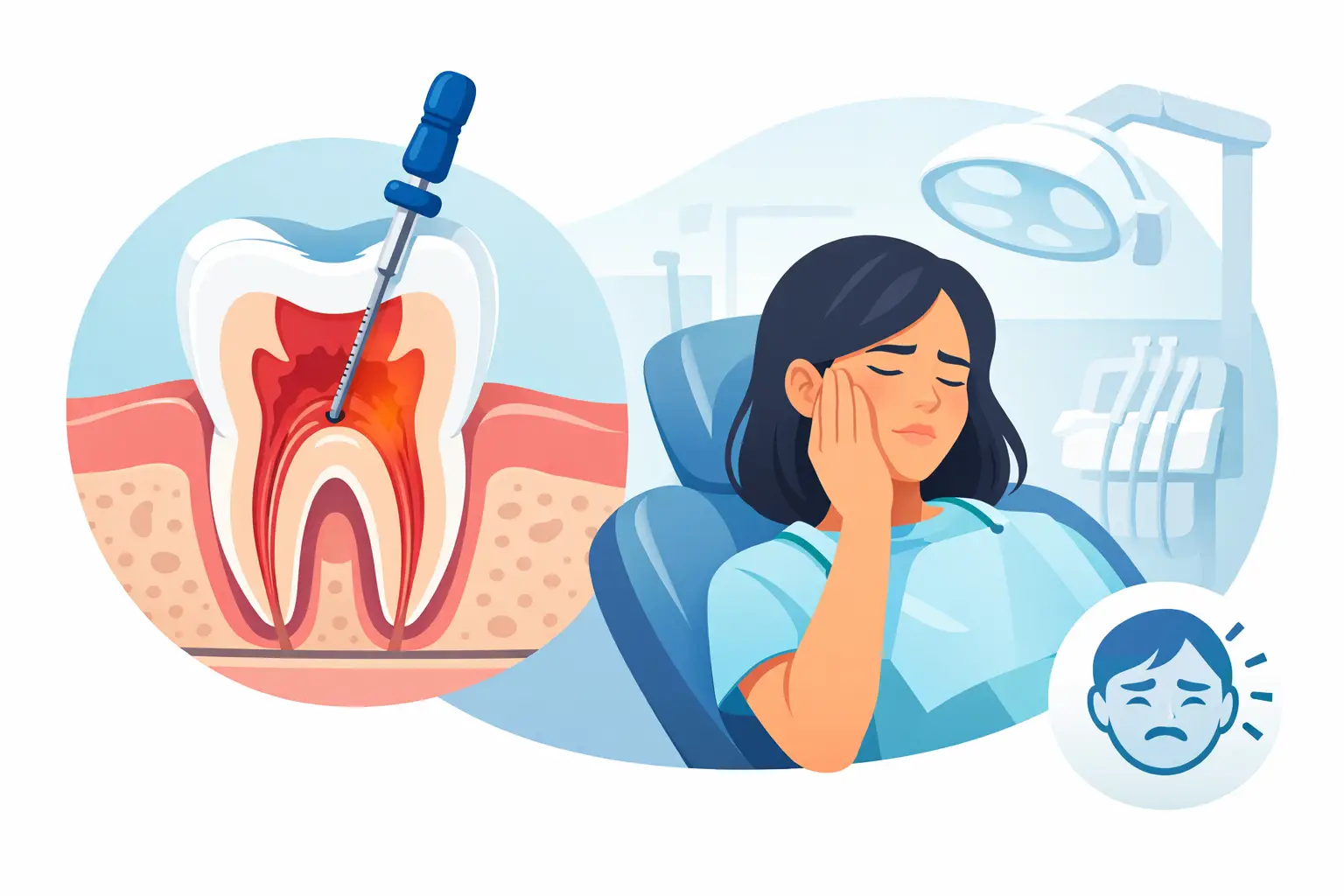
Inside each tooth is soft tissue known as pulp, containing nerves and blood vessels. Deep decay, a crack, trauma, repeated dental work or a large failing filling can allow bacteria to reach this tissue. The pulp may become inflamed or infected, creating the throbbing, lingering or biting pain people often associate with a troublesome tooth.
Root canal treatment removes the infected or irreversibly inflamed pulp from within the tooth. The fine channels inside the roots are carefully cleaned, disinfected and sealed to prevent further bacterial entry. The aim is not simply to stop pain for a day or two. It is to retain the natural tooth where possible, restore comfortable function and prevent infection from spreading into the jaw.
Pain does not always follow a neat pattern. Some infected teeth are intensely painful, while others cause little or no discomfort because the nerve has already lost vitality. Swelling, tenderness when biting, a pimple-like bump on the gum, a darkening tooth or a persistent bad taste can all warrant a prompt dental assessment.
What happens at a root canal appointment?
Treatment begins with a detailed examination, usually supported by dental X-rays. This allows the dentist to assess the tooth, roots and surrounding bone, as well as identify whether root canal treatment is the appropriate option. In complex cases, additional imaging or specialist-led planning may be advised.
Once you are comfortable and numb, the dentist creates a small opening through the biting surface or back of the tooth. Fine instruments are used to clean the root canals, while antimicrobial solutions help disinfect areas that instruments cannot fully reach. Digital imaging and modern measuring technology can support accurate treatment of these exceptionally narrow spaces.
Some teeth can be cleaned and sealed in one visit. Others benefit from treatment over two appointments, particularly where there is significant infection or complex root anatomy. A temporary restoration may be placed between visits. Once the canal system is sealed, the tooth needs a strong final restoration. This might be a bonded filling, but back teeth and heavily weakened teeth often require a crown to reduce the chance of fracture.
Will you feel pain afterwards?
Mild tenderness for a few days after root canal treatment is common, especially when the tooth was painful or infected beforehand. The tissues around the root can remain irritated after treatment, so the tooth may feel bruised or sensitive when chewing. This should steadily improve, rather than worsen.
Your dentist will advise whether over-the-counter pain relief is suitable for you based on your medical history and the medicines you take. Follow the instructions on the packet and any specific clinical advice you have been given. Avoid chewing hard foods on a tooth with a temporary filling or crown until its final restoration is in place.
A few sensible measures can make recovery easier:
- Choose softer foods for the first day or two if the tooth feels tender.
- Brush and clean between your teeth as normal, but be gentle around a sore gum area.
- Take medication only as directed by your dentist, pharmacist or the product instructions.
- Contact the practice if you have increasing swelling, severe pain, a fever, or symptoms that are not settling.
Antibiotics are not routinely needed for every root canal. The key treatment is cleaning and sealing the inside of the tooth. Antibiotics may be considered where there are signs that infection is spreading or where your dentist judges them clinically necessary.
What if you are nervous about root canal treatment?
Anxiety can make any dental sensation feel more intense. It can also cause people to delay care until a small problem becomes an emergency. There is no benefit in feeling embarrassed about this. A considerate dental team will listen without judgement, explain what is happening before it happens and agree a signal you can use if you need a pause.
Practical choices can help. You may prefer a morning appointment, so there is less time to anticipate treatment. Headphones, a trusted person accompanying you to the practice, or simply asking the clinician not to describe every instrument can make the experience feel more manageable. For patients with significant anxiety or more complex treatment needs, discuss comfort options during the consultation rather than waiting until the day of treatment.
At Slievemore Dental, treatment planning is centred on clear communication, modern clinical techniques and a calm environment. Whether the problem is a newly painful tooth or a long-standing concern, the first step is understanding the cause and creating a plan that feels manageable.
Does root canal treatment always save the tooth?
Root canal treatment has a strong record of success, but no dental procedure can offer an absolute guarantee. The outlook depends on factors such as the extent of infection, root anatomy, cracks in the tooth, gum health and whether the tooth can be properly restored afterwards. A tooth with a deep vertical crack, for example, may not be predictable to retain.
Where a tooth cannot be saved, extraction and replacement options may be discussed. Depending on your circumstances, these can include a dental bridge, denture or implant-supported tooth. However, preserving a restorable natural tooth is often the preferred option because it maintains your own tooth root and bite more simply.
When should you seek urgent help?
Contact a dentist promptly if you have facial swelling, difficulty swallowing or breathing, a spreading swelling, fever, or pain that is severe and not controlled with appropriate pain relief. These symptoms can indicate an infection requiring urgent assessment. Do not place aspirin directly onto the gum or tooth, as it can damage soft tissue.
A root canal is not a test of endurance. It is a carefully planned treatment intended to remove the source of dental pain and give a damaged tooth the best chance of lasting well. If you are worried about what you might feel, a consultation gives you the space to ask direct questions, understand the options and move forward at a pace that feels safe.