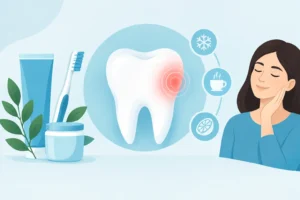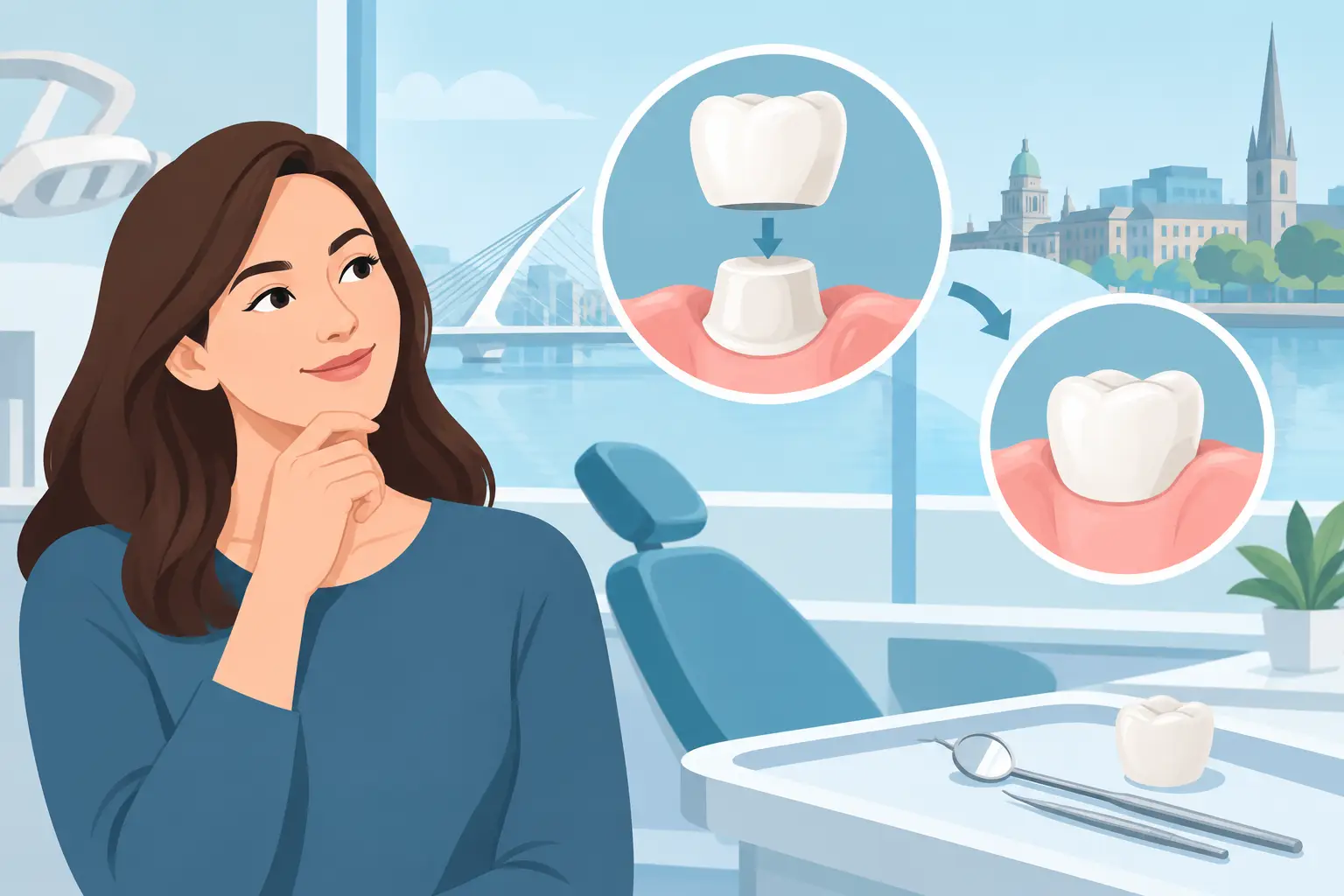
A search for “dental crown replacement Dublin” often begins with a small but unsettling change: a crown feels loose, food catches around it, or a familiar tooth starts to ache when you bite. A crown is designed to protect a weakened tooth and restore its appearance, but it is not intended to last indefinitely. Acting early can often mean a simpler, more comfortable treatment and a better chance of preserving the tooth beneath.
When should a dental crown be replaced?
Crowns are commonly used after root canal treatment, to rebuild heavily filled or broken teeth, or as part of a bridge or implant restoration. Modern crowns are strong, carefully colour-matched and designed around your bite, yet they remain exposed to everyday chewing forces, temperature changes and bacteria at the gumline.
There is no fixed expiry date. A well-made, well-maintained crown may last for many years, while another may need attention sooner because of decay, trauma, gum disease, teeth grinding or changes in the bite. The condition of the supporting tooth and gums matters just as much as the visible crown.
A replacement may be recommended when a crown is cracked, chipped or worn; when the edge no longer seals closely against the tooth; or when decay has developed underneath it. Persistent tenderness, sensitivity, a bad taste, bleeding around the crown or movement in the restoration should all be assessed promptly. Not every concern means the crown must be replaced. Sometimes a minor chip can be polished, or discomfort may come from the bite rather than the crown itself. Careful examination is what separates a conservative repair from treatment that genuinely needs renewal.
Why a failing crown deserves prompt attention
The most significant problems can develop where you cannot see them. If the seal between the crown and tooth breaks down, bacteria may enter at the margin and cause decay beneath the restoration. By the time pain develops, the tooth may require more extensive rebuilding, root canal treatment or, in some cases, extraction.
A loose crown also creates a practical risk. It can dislodge while eating, irritate the gum or fracture further if it is repeatedly loaded. If a crown comes off, keep it safe and avoid using strong household adhesives to refit it. These materials can damage the tooth, alter the fit and make professional treatment more difficult. An appointment allows the tooth, crown and surrounding tissues to be properly assessed before any recementing or replacement is considered.
For nervous patients, it is worth knowing that a crown review does not automatically lead to invasive treatment. The first step is diagnosis. A calm, judgement-free conversation, clinical examination and appropriate imaging help establish what is happening and what can realistically be saved.
What happens during dental crown replacement in Dublin?
Dental crown replacement in Dublin should begin with planning rather than simply removing and remaking the visible crown. Your clinician will assess the tooth structure, root health, gum condition, bite and neighbouring teeth. Digital scans and imaging can provide detailed information while helping to plan a crown that fits accurately and looks natural within your smile.
If the existing crown needs to be removed, this is done carefully to protect as much remaining tooth structure as possible. Any decay, leakage or fractured filling material is then cleaned away. Occasionally, the tooth needs a new core build-up to provide a stable foundation. Where the nerve has become inflamed or infected, root canal treatment may be needed before a new crown is placed.
Once the tooth is prepared, a digital impression can be taken to guide the design of the final restoration. The aim is not merely a convincing shade. A successful crown should sit comfortably at the gumline, support a healthy bite, allow you to clean around it and blend with the shape, translucency and character of adjacent teeth. A temporary crown may be fitted while the final restoration is being made, particularly for visible teeth or when the tooth needs protection between visits.
At the fitting appointment, the new crown is checked for marginal fit, contact points, colour and bite before it is secured. Small adjustments can be made to ensure chewing feels even and natural. With digitally planned care, these details are considered from the outset rather than left to chance.
Choosing the right crown material
The most suitable material depends on the position of the tooth, the amount of biting force it receives, your aesthetic priorities and the condition of the surrounding teeth. High-strength ceramic can provide excellent durability and a lifelike appearance, making it a popular choice for many front and back teeth. Zirconia-based crowns offer particular strength for areas exposed to heavy chewing forces, while layered ceramic options can achieve refined aesthetic detail where it is most visible.
No single material is best for every patient. A back molar in someone who grinds their teeth needs a different discussion from a front tooth in the smile line. If you clench or grind, a protective night guard may be advised to reduce the risk of damaging a new restoration.
Can an old crown simply be recemented?
Sometimes, yes. If the crown has come away intact, the underlying tooth is sound and the fit remains accurate, recementing may be possible. This is often the most conservative option. However, a crown that repeatedly loosens, has visible damage, no longer fits closely, or conceals decay is unlikely to be reliably restored by cement alone.
It also depends on what caused the failure. A crown may loosen because the tooth underneath has fractured, because decay has altered its shape, or because the bite is placing excessive pressure on one area. Addressing the cause is essential. Otherwise, the same problem may recur soon after treatment.
Replacing crowns on root-treated teeth, implants and bridges
Crown replacement can be more complex when the tooth has had root canal treatment. These teeth may have less remaining natural structure and can be more prone to fracture, so the design of the rebuild and crown must be carefully considered. If there is a crack extending deep below the gumline, retaining the tooth may not be predictable. In that situation, an extraction and implant-supported replacement may be discussed as part of a longer-term plan.
An implant crown follows a different pathway because there is no natural tooth beneath it. The implant, surrounding bone, gum tissues and connection components are checked before deciding whether only the crown needs replacement. Similarly, if a crown is part of a bridge, the health of each supporting tooth must be assessed. A problem affecting one abutment can influence the future of the entire restoration.
This is where coordinated restorative and implant expertise is valuable. At Slievemore Dental, complex cases can be planned around the whole mouth rather than treating a single crown in isolation, particularly where bite changes, multiple failing restorations or missing teeth are involved.
Looking after your new crown
A replacement crown needs the same daily care as a natural tooth. Brush carefully along the gumline twice a day with fluoride toothpaste and clean between the teeth daily using floss or interdental brushes recommended for your mouth. The gum around the crown should not be ignored simply because the visible restoration cannot decay. The tooth at its edge still can, and healthy gums are essential to the longevity of the result.
Regular examinations and hygiene visits allow early detection of leakage, gum inflammation, wear and bite changes. Avoid using crowned teeth to open packaging or bite hard objects, and seek advice if you notice a new crack, rough edge, sensitivity or change in how your teeth meet.
A crown replacement is not just about restoring a tooth that looks damaged. It is an opportunity to protect the remaining tooth structure, restore comfortable function and create a result that feels convincingly like part of your own smile. The right time to have a crown checked is when something first feels different, not when it becomes impossible to ignore.