A mouth ulcer that has not healed after three weeks deserves more than reassurance. The same is true of an unexplained red or white patch, persistent hoarseness, or a lump in the mouth or neck. This guide to oral cancer screening explains what happens during an examination, why early assessment matters, and when to arrange a prompt dental appointment.
Oral cancer can affect the lips, tongue, cheeks, floor and roof of the mouth, gums, tonsil area and throat. It is not always painful in its early stages, which is why a professional check is valuable even when you feel well. Regular dental visits give your clinician an opportunity to monitor subtle changes in areas that are difficult to inspect at home.
What oral cancer screening involves
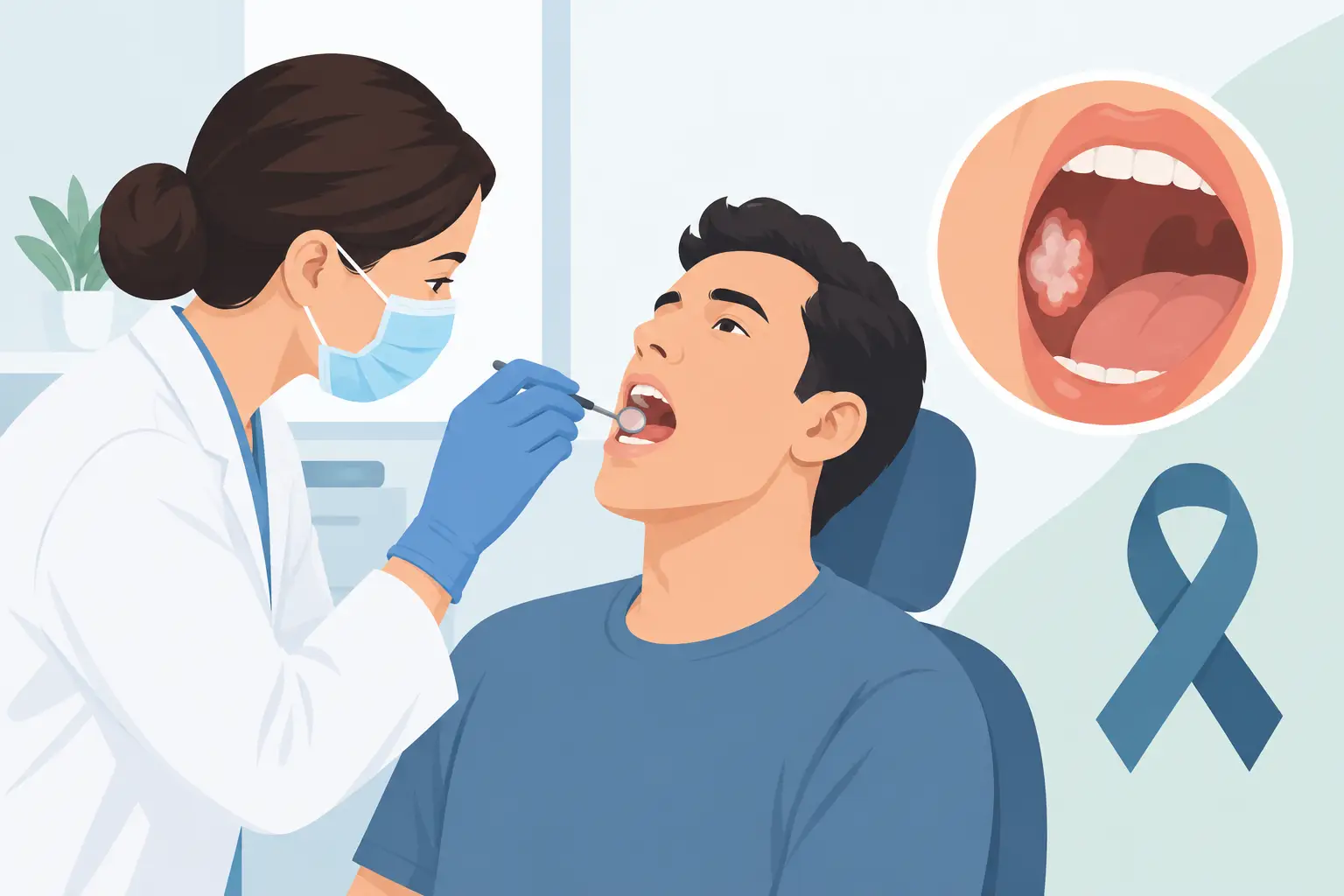
An oral cancer screening is a brief, careful clinical examination usually carried out as part of a routine dental check-up. It is non-invasive and should not be uncomfortable. Your dentist will ask whether you have noticed any changes, symptoms, tobacco or alcohol use, medical conditions, medicines and previous concerns affecting your mouth.
The examination begins with the face, jaw and neck. Your clinician may gently feel the lymph nodes beneath the jaw and along the neck, checking for swelling, tenderness or unusual firmness. They will then inspect the lips, gums, cheeks, palate, throat area and tongue under good lighting.
The tongue is particularly important because changes can occur on its sides and underneath. You may be asked to lift your tongue or move it from side to side so these areas can be seen clearly. The dentist may also use gauze to hold the tongue gently while checking its surface and surrounding tissues.
Screening is designed to identify changes that need closer attention. It does not diagnose cancer on its own. If an area looks unusual or has not resolved as expected, your dentist may review it after a short period, take photographs for comparison, or arrange a referral to an oral medicine, oral and maxillofacial, or ear, nose and throat specialist. A biopsy, where a small sample of tissue is examined in a laboratory, is the only way to confirm a diagnosis.
Why early review makes a meaningful difference
Mouth tissues can change for many benign reasons. A sharp tooth, an ill-fitting denture, accidental biting, infection or irritation can all cause soreness and ulcers. Often, the cause is straightforward and the area heals once the irritation is removed.
The difficulty is that potentially serious changes can initially resemble common problems. Waiting for pain is not a reliable strategy. Oral cancer may begin as a painless patch, small ulcer or thickened area, and the earlier it is assessed, the more treatment options may be available.
That does not mean every mouth sore is an emergency or a sign of cancer. Most are not. It does mean that persistence matters. A change that lasts longer than three weeks, recurs in the same area, or appears to be getting larger should be assessed promptly rather than watched indefinitely.
Signs you should not ignore
Between check-ups, take note of changes that do not have an obvious cause or do not settle. Book a dental appointment promptly if you notice:
- an ulcer, sore or area of irritation that has not healed within three weeks
- a red, white, mixed red-and-white, dark or unusually thickened patch in the mouth
- a lump, swelling or persistent pain in the mouth, jaw, lip, throat or neck
- difficulty chewing, swallowing, speaking, or moving the jaw or tongue
- numbness, unexplained bleeding, persistent hoarseness, or a change in the way dentures fit
A loose tooth without an obvious dental explanation, ongoing ear pain on one side, or unexplained weight loss also warrant medical or dental review. If you have difficulty breathing or swallowing, seek urgent medical care.
Try not to self-diagnose from photographs online. The mouth contains many normal variations, and a clinician needs to assess the appearance, texture, location and history of a change together. A calm examination is often the quickest route to reassurance and, where needed, decisive next steps.
Who may need closer monitoring?
Anyone can develop oral cancer, including people who have never smoked. However, some factors increase risk. Tobacco use, including smoking and chewing tobacco, remains a significant risk factor. Frequent or heavy alcohol use can add to that risk, particularly when combined with tobacco.
Human papillomavirus, or HPV, is associated with some cancers affecting the throat and tonsil region. Increasing age, significant sun exposure to the lips, a previous oral cancer diagnosis, immune suppression and a history of certain potentially malignant mouth conditions may also influence risk.
Risk factors guide the conversation, but they should never become a reason to dismiss someone who does not fit a particular profile. Young adults, non-smokers and people with excellent oral hygiene can still develop concerning lesions. Equally, having a risk factor does not mean you will develop cancer. It means regular checks and early reporting of changes become even more sensible.
How often should you have an oral cancer screening?
For most patients, an oral cancer check is incorporated into routine dental examinations. The right recall interval depends on your oral health, gum condition, previous dental treatment, risk factors and any ongoing concerns. Some people benefit from six-monthly visits; others may be advised to attend more or less frequently.
If you have had a suspicious lesion, previous oral cancer, substantial tobacco exposure, or an area being monitored, your clinician may recommend a more tailored review schedule. Keeping these appointments matters because comparison over time can be clinically useful. Digital records and clinical photographs may help document a changing area accurately.
A screening appointment is not a substitute for contacting your dentist between visits if something new appears. Do not wait months for a scheduled check-up if an ulcer or patch is persisting.
Preparing for a screening appointment
No special preparation is usually needed. If you have noticed a change, make a short note of when it began, whether it has altered in size or colour, and whether it hurts, bleeds or affects eating. Mention any recent dental trauma, new dentures, sharp teeth, illness or medication changes.
It can also help to be open about smoking, vaping, alcohol intake and any history of HPV-related illness. These are clinical questions, not a judgement. Accurate information helps your dental team decide whether an area can be monitored, needs a simple adjustment to remove irritation, or should be referred without delay.
For nervous patients, it is reasonable to say so when booking. An oral cancer screening is generally quick and gentle, and your clinician can talk through each part before proceeding. At Slievemore Dental, the focus is on careful assessment in a calm, supportive setting, with appropriate referral pathways when specialist investigation is needed.
Looking after your mouth between check-ups
Good daily oral hygiene supports healthy gums and makes it easier to notice changes, but it cannot replace professional examination. Brush twice daily with fluoride toothpaste, clean between your teeth, and attend recommended hygiene and dental visits. If you smoke, support to stop is one of the most meaningful steps you can take for your oral and general health. Keeping alcohol intake within lower-risk guidance may also reduce risk.
Once a month, look at your lips, cheeks, gums, tongue and palate in a mirror under good light. You are not trying to diagnose yourself. You are simply becoming familiar with what is normal for you, so a new patch, ulcer, swelling or change is easier to spot.
If something does not heal, do not let embarrassment or fear delay you. A prompt examination can provide reassurance when the cause is harmless and can help ensure that anything requiring further care is addressed at the earliest appropriate stage.