Pain at the very back of the mouth can make eating, sleeping and concentrating unexpectedly difficult. A wisdom tooth infection may begin as tenderness around a partly erupted tooth, then progress to throbbing pain, a bad taste, swollen gums or facial swelling. It is not something to simply wait out, particularly if symptoms are worsening.
Wisdom teeth are the last molars to develop, usually appearing in the late teens or twenties. Some erupt fully and function well. Others remain partly covered by gum tissue, grow at an angle, or become trapped beneath the gum and neighbouring tooth. These positions can create areas that are difficult to clean properly, allowing bacteria and food debris to collect.
What causes a wisdom tooth infection?
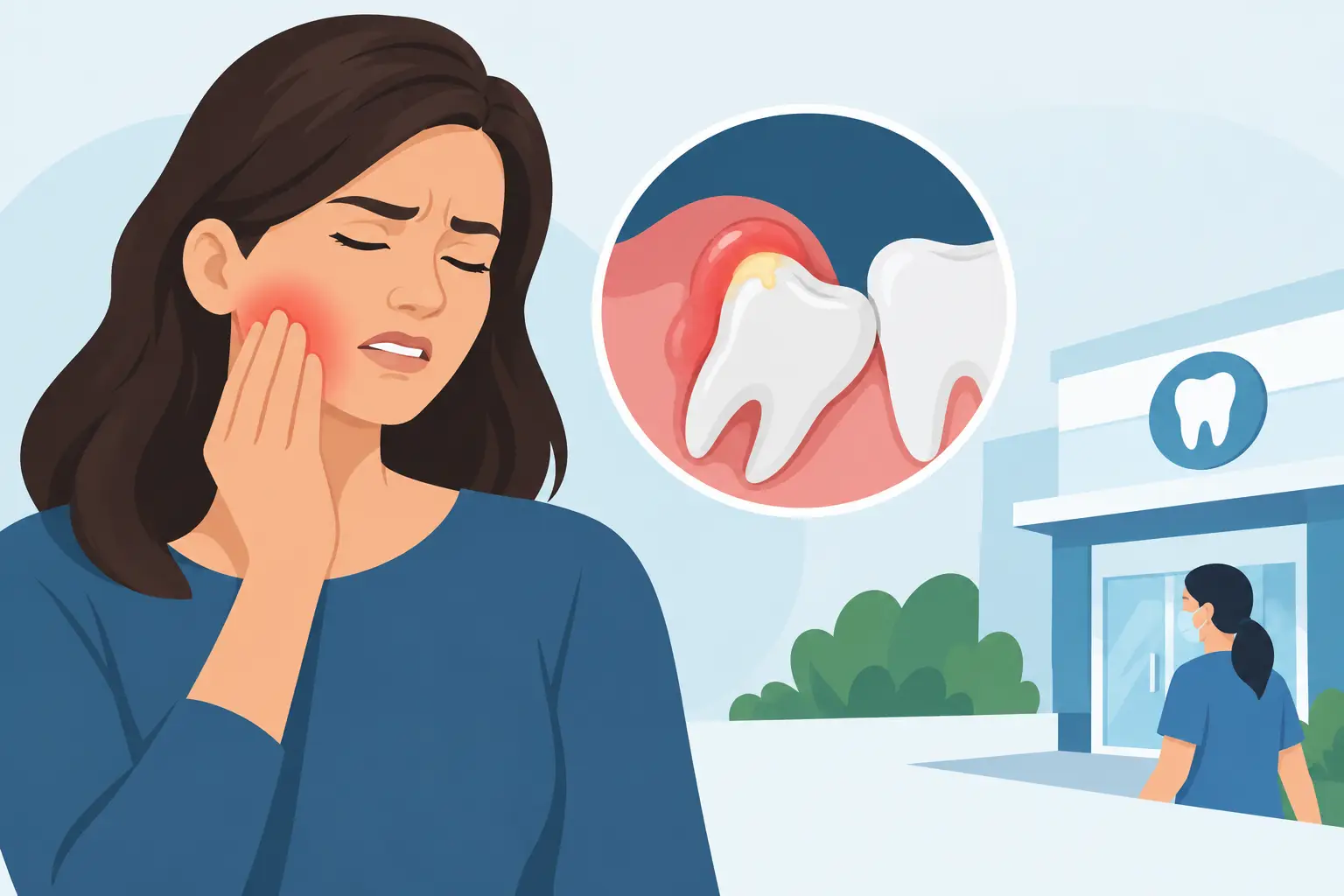
The most common problem is pericoronitis, an infection or inflammation of the gum tissue around a partially erupted wisdom tooth. A small flap of gum can sit over part of the tooth, trapping plaque and debris beneath it. Brushing may be uncomfortable and ineffective in such a confined area, so the inflammation can return repeatedly.
An infection can also develop when decay reaches the inner part of the wisdom tooth, or when decay and gum disease affect the tooth in front of it. Impacted wisdom teeth can be especially challenging because their position may be difficult to assess without a clinical examination and dental X-rays.
Not every painful wisdom tooth is infected. Pain can also arise from pressure during eruption, an ulcer, jaw clenching or a problem with a neighbouring tooth. This is why an accurate diagnosis matters. Treating the source, rather than only masking the symptoms, gives the best chance of a comfortable and lasting result.
Wisdom tooth infection symptoms to recognise
Symptoms vary considerably. Some people have localised soreness for a day or two, while others develop significant swelling and find it difficult to open their mouth. Common signs include a red, swollen or bleeding gum around the back tooth; persistent throbbing pain; pain when biting; an unpleasant taste or smell; pus or discharge; and swollen glands beneath the jaw or in the neck.
You may also notice that food repeatedly catches around the area, or that the discomfort radiates towards the ear, temple or throat on the same side. This can feel alarming, but referred pain is common in the jaw. A dentist can identify whether the wisdom tooth is responsible and assess the surrounding teeth and tissues.
When to seek urgent help
A dental assessment should be arranged promptly for severe or persistent pain, swelling, discharge, fever, or difficulty chewing. Same-day urgent care is particularly appropriate where symptoms are escalating or pain relief is no longer helping.
Seek emergency medical help immediately if swelling is spreading into the face, jaw, eye area or neck, or if you have difficulty breathing, swallowing, speaking or opening your mouth. Feeling generally unwell alongside facial swelling can indicate that an infection is spreading beyond the immediate tooth area. Do not delay in these circumstances.
For a painful or swollen wisdom tooth, our emergency dentist in Stillorgan offers same-day assessment. Call +353 1 283 1000.
What you can do before your appointment
Home care may ease discomfort temporarily, but it cannot remove an established source of infection. Keep the area as clean as comfort allows by brushing gently with a small, soft toothbrush. Warm salt-water rinses can help soothe inflamed gum tissue – dissolve half a teaspoon of salt in a glass of warm water, rinse gently, then spit it out.
If suitable for you, over-the-counter pain relief such as paracetamol or ibuprofen may help when taken according to the instructions on the packet. Ask a pharmacist for advice if you are pregnant, have asthma, stomach, kidney, liver or heart conditions, take prescribed medicines, or are unsure which option is appropriate. Never place aspirin or painkillers directly on the gum, as this can burn the soft tissue.
Choose softer foods, chew on the other side where possible, and avoid smoking and alcohol while the area is painful. Smoking can delay healing and irritate already inflamed tissues. It is also sensible to avoid repeatedly prodding the gum with a finger, toothpick or other object, however tempting it may be.
Antibiotics are not always needed for a wisdom tooth infection. They can be appropriate where there are signs that infection is spreading or a patient is systemically unwell, but they do not replace local cleaning, drainage where required, or treatment of the tooth itself. Taking leftover antibiotics or medication prescribed for somebody else is unsafe and can make future infections harder to treat.
How a dentist treats an infected wisdom tooth
Your appointment begins with a careful assessment of your symptoms, medical history and the affected area. Dental X-rays may be used to show the tooth roots, its angle of eruption, the bone around it and its relationship with the tooth beside it. This planning is particularly valuable for impacted lower wisdom teeth, which can sit close to important nerves.
For a first or mild episode of pericoronitis, treatment may involve thoroughly cleansing the area beneath the gum flap and giving tailored advice on keeping it clean while inflammation settles. If there is an abscess, drainage may be necessary. Where infection has spread, antibiotics may be prescribed alongside treatment of the cause.
If the wisdom tooth is healthy, fully accessible and likely to remain easy to clean, it may be possible to monitor it. However, recurrent infections, decay that cannot be predictably restored, damage to the tooth in front, cyst formation, or an unfavourable position can make removal the more reliable option.
Is wisdom tooth removal always necessary?
No. Removing every wisdom tooth as a precaution is not automatically the right approach. The decision depends on symptoms, X-ray findings, the tooth’s position, your oral health and the likely risks and benefits over time.
A tooth that has caused repeated infections is unlikely to become easier to maintain without intervention. Conversely, a deeply impacted tooth that is not causing disease may be best observed through appropriate dental reviews. Your clinician should explain why removal is or is not recommended, what the procedure involves, and what recovery is likely to look like in your individual case.
Where removal is needed, modern surgical planning, local anaesthetic and a calm clinical approach can make treatment far more manageable than many nervous patients expect. Sedation may be an option for suitable patients, particularly when anxiety is high or surgery is more complex. The aim is always careful treatment, clear communication and effective aftercare.
Protecting the teeth around a wisdom tooth
Wisdom teeth are easy to overlook because they are difficult to see and reach. Yet problems around them can affect the second molar in front – often a far more important tooth for everyday chewing. Regular examinations and hygiene appointments allow early changes to be identified before they become painful or compromise neighbouring teeth.
At home, give the back of the mouth deliberate attention. Angle your toothbrush towards the gumline behind the last visible tooth and take time to clean the biting surfaces. An interdental brush may help in some mouths, but the correct size and technique matter, so ask your dental team for personalised guidance. If food regularly becomes trapped or the gum bleeds in one area, mention it rather than assuming it is normal.
A wisdom tooth infection can feel overwhelming, especially when pain interrupts work, family life or sleep. Prompt, gentle assessment can bring relief and help prevent a recurring issue from becoming a more serious one. If you have swelling, persistent pain or concern about a wisdom tooth, arrange a dental appointment without waiting for symptoms to settle on their own.